Ukraine’s drone strike on Moscow’s oil refinery sparks smoke, fears, and questions over Russia’s infrastructure vulnerability amid escalating wartime tensions.
A major Ukrainian drone strike on Moscow’s oil infrastructure occurred yesterday, created a dramatic scene across the Russian capital, with smoke over Moscow after a large fire erupted at the Gazprom Neft-operated Moscow oil refinery. The attack, described by reports as one of the largest drone assaults on the city since the war began, targeted a key fuel facility in southeastern Moscow, causing explosions, flames and thick clouds of dark smoke.
The refinery strike reportedly damaged important processing units and storage facilities, disrupting operations at a plant that plays a major role in supplying fuel to the Moscow region. Russian authorities said air defence systems intercepted around 200 drones, while Ukrainian officials presented the attack as a response to Russian strikes on Ukrainian territory.
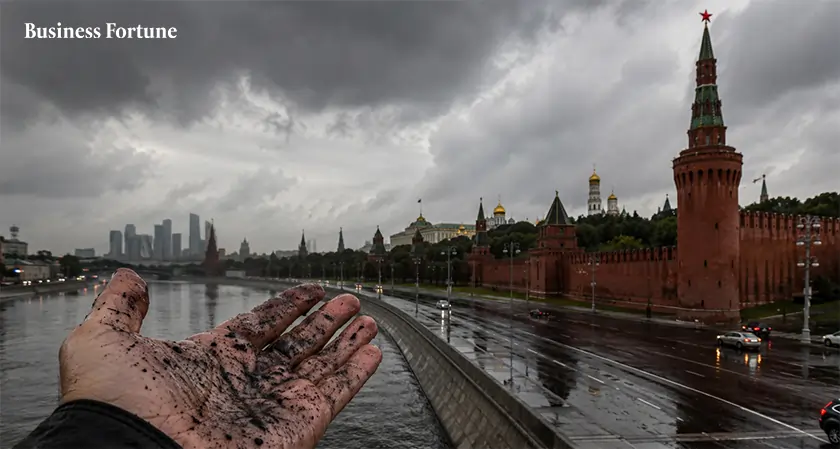
Following the blaze, residents shared images and videos showing dark particles falling over parts of the city, leading to widespread claims of Black rain in Moscow. Some residents described oily droplets and residue appearing on surfaces, although Moscow officials rejected claims that an oil-based rain event had occurred and said the situation was being monitored.
Could the refinery strike expose Moscow’s vulnerability during the war?
The attack highlighted how the Russia-Ukraine conflict is increasingly reaching strategic locations far from traditional front lines. The Moscow refinery, one of the capital’s most important fuel facilities, became a symbolic target because of its economic and logistical importance.
The incident also raised environmental concerns as smoke, combustion materials and possible oil residue spread across nearby areas. Authorities advised caution, including keeping windows closed in affected locations, while emergency teams worked to manage the consequences of the refinery fire.
-
Largest drone assault targeting Moscow infrastructure
-
Major refinery fire disrupts fuel operations
-
Residents report unusual oily rainfall phenomenon
Why did Ukraine target Moscow’s oil infrastructure?
The refinery attack reflects Ukraine’s broader strategy of striking energy facilities connected to Russia’s war capabilities. Ukrainian officials have argued that targeting oil infrastructure can reduce financial resources available for military operations, while Russia has warned of further retaliation.
The strike has intensified concerns that both sides are expanding attacks deeper into each other’s territory, increasing pressure on diplomatic efforts and raising fears of further escalation.
Thus, Business Fortune is of the view that the Moscow refinery strike underscores growing risks to Russia’s strategic infrastructure and regional security.
FAQs
What caused the smoke over Moscow?
A major drone strike on Moscow’s oil refinery triggered a large fire, sending thick smoke across parts of the Russian capital.
When did the Moscow refinery drone attack happen?
The attack took place on June 18, 2026, when Ukrainian drones targeted strategic energy infrastructure in Moscow.
What is meant by Black rain in Moscow reports?
The phrase refers to residents’ claims that dark particles and oily residue fell after the refinery fire, although officials disputed descriptions of it as actual oil rain.
Why was the Moscow oil refinery targeted?
The refinery was targeted because it is a major fuel facility that supports Moscow’s energy supply and has strategic importance during the ongoing Russia-Ukraine conflict.
Did the refinery attack affect Moscow’s fuel supply?
The strike damaged parts of the facility and disrupted some operations, but the full impact on fuel supplies remains under assessment.


.webp)