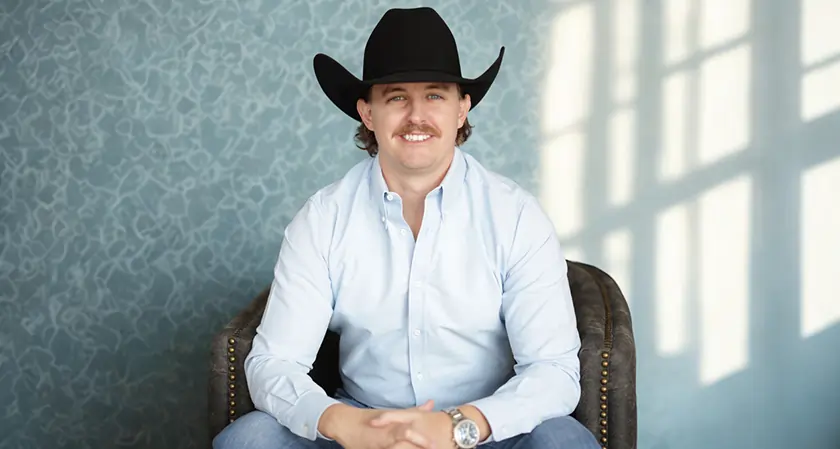
1 / Your career has taken you from financial services to event production and now music technology. What were the key lessons from each industry that have shaped your leadership style as an entrepreneur?
Each industry taught me something very different, but they all build on one another.
Financial services taught me discipline, structure, and the importance of trust. When you're helping people manage their financial future, details matter. I learned how to think long term, manage risk, and build systems that can scale.
Event production taught me something completely different: no matter how big the project looks from the outside, someone still has to do the work.
Large-scale events can appear like massive organizations, but behind the scenes, especially in startup environments, you wear many hats. I was involved in everything from resolving online merchandise issues and selling sponsorships to managing our mobile app, sourcing event production teams, designing CAD layouts and event flow, and running local activations and partnerships.
By appearance, we looked like a large operation, but in reality, success came from being willing to roll up your sleeves and solve problems wherever they showed up.
That experience taught me something I carry into every business today: no task is beneath leadership. If you’re building something meaningful, you have to be willing to jump in, adapt quickly, and do whatever it takes to move the mission forward.
Music technology has taught me empathy for the end user. If artists or fans don’t instantly understand something, they won’t use it. Simplicity wins. The best technology disappears into the experience.
Overall, my leadership style has become highly execution focused, but also much more intentional about who I choose to build with. Early on, I learned there are a lot of people with ideas, opinions, and big visions, but far fewer who are actually willing to put in the work when things get hard.
I value people who execute, solve problems, and take ownership. Vision matters, but execution is what builds companies. I’ve become more careful about partnerships because the right people can accelerate a mission, while the wrong people can slow momentum.
Ultimately, I want to work with people who are willing to roll up their sleeves and build alongside me.
2 / You left a successful corporate banking career after launching a new division at a major bank. What factors led you to make that transition, and how did that experience influence your approach to building businesses from the ground up?
I had a successful career in wealth management and helped launch a new division at a major bank, which gave me incredible experience around growth, systems, and client trust. But I’ve always had an entrepreneurial mindset.
At some point, I realized I wanted to build something that could create impact at scale and solve a problem I genuinely cared about. Being in Nashville and around the live music industry, I kept seeing incredibly talented artists struggling financially despite packed rooms and loyal fans.
That disconnect stuck with me.
Leaving a stable corporate career wasn’t easy, but it taught me something important: entrepreneurship is really about conviction. You have to believe in the problem enough to keep building when things are uncertain.
Coming from banking also made me practical. I think a lot about monetization, operational sustainability, and building infrastructure before scaling. I’m less interested in chasing hype and more focused on building businesses that actually last.
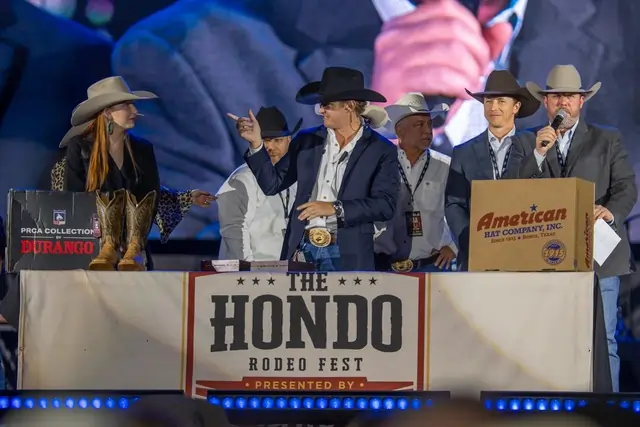
3 / As a co-founder of The Hondo Rodeo Fest, you helped create the event’s infrastructure from scratch. What were the biggest operational and strategic challenges in building a large-scale event, and how do those lessons apply to your current ventures?
Building a large-scale event from scratch gives you a real appreciation for operational complexity.
The biggest challenge is that everything is interconnected. Talent, sponsorship, production, ticketing, logistics, vendors, permits, marketing, if one piece breaks, it impacts everything else.
Strategically, one of the biggest lessons was understanding how difficult it is to align multiple stakeholders around one shared vision while still maintaining execution speed.
Operationally, it taught me the importance of infrastructure. Big events succeed because of what happens behind the scenes, not what people see on event day.
That lesson directly applies to TipSee. A lot of what we’re building is infrastructure for live music, tools that help artists better monetize, understand their audiences, and create stronger fan engagement in real time without adding friction.
The goal is simple: make the business side of live music work better for the people actually creating the experience.
4 / What market gap did you identify that inspired the creation of TipSee Music, and how did you validate that the platform would address real challenges faced by working and emerging artists?
The gap was pretty obvious once you spent enough time around working musicians.
Artists were performing for hours, driving fan engagement, taking requests, and creating memorable experiences, but there was no simple, real-time system built around helping them monetize that engagement while also building fan relationships.
Most existing tools felt clunky, required downloads, or simply weren’t designed for the reality of a live show.
We validated the idea the old-fashioned way: by going directly to artists and testing in real venues.
We listened to constant feedback, watched how fans interacted during shows, and kept simplifying the experience. What became clear was that fans wanted a way to participate more and support artists, while artists wanted something simple that actually worked in a loud, fast-moving environment.
Interestingly, when TipSee hit peak growth in 2023, I had to make the difficult decision to pause scaling the business. At the time, I had shifted to running Hondo Rodeo Fest full-time. Being self-funded, I simply couldn’t financially support growing both ventures simultaneously.
That was a difficult but strategic decision. After year one of Hondo proved operationally successful, I knew I wanted to pivot back to TipSee once we had stronger defensibility around the business. In 2025, following the grant of our patent, I rebuilt the company with a much larger long-term vision in mind.
That’s why TipSee is built to be frictionless and “drunk-friendly”, with no app download, simple QR interaction, and immediate engagement.
What started as tipping evolved into something much bigger: infrastructure for live music engagement, payments, and fan interaction built around the performance itself.
5 / TipSee Music is designed to enhance real-time engagement between artists and audiences. How do you see technology reshaping the live music experience over the next five years, particularly for independent performers and smaller venues?
I think we’re entering a period where live music becomes dramatically more data-driven and interactive, especially for independent artists.
Historically, smaller artists and venues haven’t had access to the kind of audience intelligence larger tours or promoters have. Most shows happen, people leave, and the data disappears.
That’s changing.
Over the next five years, I think artists will better understand who their fans are, what songs drive engagement, where demand exists, what merchandise converts, and how to deepen relationships outside of social media algorithms.
At the same time, audiences increasingly want participation, not just attendance.
Now, I fully understand many artists may initially resist parts of that change. Musicians are artists first, and participation can sometimes feel uncomfortable or transactional. But whether we like it or not, the artists who adapt and embrace deeper fan interaction will likely thrive.
A simple example is song requests. Every artist jokes about dreading playing “Free Bird,” but if the market is willing to consistently meet a $100 request price, sometimes multiple times a night, that’s actually a huge win for the band.
The key is finding ways to make participation feel authentic rather than forced.
Live music is one of the few remaining truly human experiences, so the opportunity isn’t replacing it with technology; it’s enhancing it in a way that feels invisible and natural.
The winners will be platforms that make live experiences feel more connected without making them feel more digital.
6 / Many startups struggle to balance innovation with practical adoption. What strategies have you used to ensure TipSee Music delivers value for artists, venues, and audiences while remaining simple and intuitive to use?
For us, everything comes back to reducing friction.
We call it “drunk-friendly” internally because if something takes too many steps during a live show, it simply won’t work.
A fan shouldn’t have to download an app, create an account, or jump through hoops just to support an artist or request a song. Live music is fast-moving, social, and spontaneous. Technology has to meet people where they are.
At the same time, we’ve focused heavily on being personable and artist-friendly. One thing I’ve noticed throughout the industry is that many people treat artists with very little respect, when in reality, they’re the reason live entertainment exists in the first place.
Can you imagine a world without local live music venues?
Without artists, there’s no atmosphere, no energy, and no community around these spaces.
That’s why we try to build with empathy for both artists and fans. The technology should never feel intrusive; it should simply help make the experience more rewarding for everyone involved.
7 / Your background in financial advising gives you a unique perspective on business sustainability. How has your experience in finance influenced the way you approach growth, risk management, and long-term planning for your entrepreneurial ventures?
Today, finance influences my businesses less through investment theory and more through professionalism, organization, and structure.
One thing financial services teaches you very quickly is that details matter. Keeping things organized, structured, and compliant matters because if you don’t, real problems can arise later.
That mindset has carried over into entrepreneurship.
I also think a lot about sustainability.
Both from my background in finance and guidance from mentors over the years, I’ve learned that growth matters, but sustainable growth matters more.
A lot of founders get caught up in fundraising as if raising money itself is the accomplishment. In reality, that’s just where the work begins.
Once people invest in your company, you have a responsibility to them. There’s a fiduciary mindset that comes with building a business responsibly. Investors typically want thoughtful execution and ultimately a return.
For me, the focus has always been building something durable, scalable, and responsibly structured rather than chasing growth at any cost.
8 / Looking ahead, what is your broader vision for TipSee Music, and how do you see the platform evolving beyond artist monetization to create deeper connections within the live entertainment ecosystem?
We have a lot of exciting news coming soon.
Following the grant of our patent, I made the decision to completely rebuild our backend infrastructure, and the results have been incredibly encouraging. Since relaunching, we’ve seen revenue increase by over 900% quarter over quarter, which validated many of the assumptions we had around simplifying the experience and improving performance.
Now it’s time to really put gas on it.
We’re actively scaling across multiple states, continuing to improve the platform, and expanding what TipSee can become.
The broader vision is much bigger than artist monetization.
We believe there’s an opportunity to build infrastructure that better connects artists, venues, fans, and eventually brands around verified live performance.
Live music creates incredible value, yet many independent artists still lack the tools to fully understand their audiences, deepen fan relationships, and create sustainable income streams around performance.
Our belief is simple: payments, engagement, and eventually even royalties should increasingly tie back to verified live performance.
If we can help strengthen the economics of live music while keeping the experience authentic, more connected, and more rewarding for everyone involved, that’s a future worth building.


.webp)