Texas approves a new reading list that includes Bible stories in Texas schools, sparking debate over religion, education, and classroom diversity.
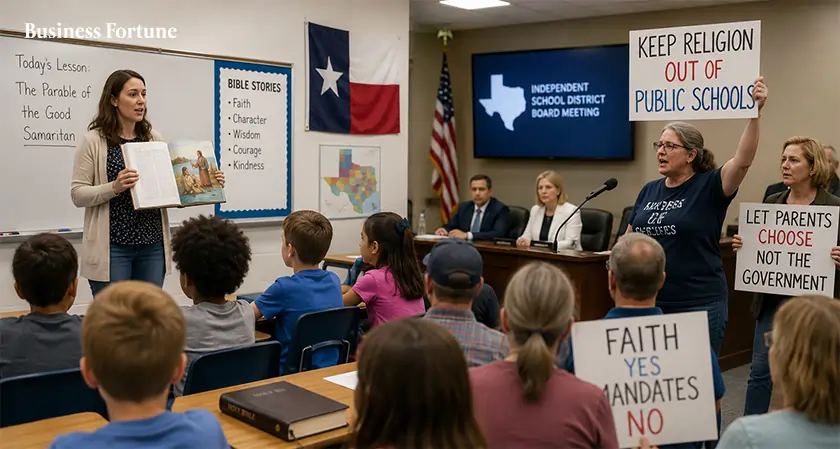
Texas has approved a major change to its public school curriculum, placing Bible stories in Texas schools at the center of a growing national conversation about religion, education, and academic freedom. The decision affects more than five million students and will gradually take effect starting in 2030.
The Republican-controlled Texas State Board of Education approved the new mandatory reading list in a 9-5 vote after weeks of heated debate. The list contains around 200 required texts, including literary classics, historical speeches, essays, and selected passages from the Bible.
A Reading List Unlike Any Other
The new curriculum introduces students to a wide range of works, including Charles Dickens’ Great Expectations, William Shakespeare’s The Tragedy of Julius Caesar, Charlotte’s Web, and speeches by Dr. Martin Luther King Jr. However, it is the inclusion of Bible passages that has drawn the most attention.
Elementary school students will read stories such as David and Goliath and Daniel in the Lion’s Den. Older students will encounter passages from the New Testament, including teachings of Jesus. High school students will study selected Bible passages alongside classic literary works by authors such as Dickens and Jane Austen.
Supporters say these texts are essential because biblical themes have influenced American culture, literature, and history for centuries. Readers interested in exploring the biblical stories referenced in the curriculum, along with their historical and religious context, can find additional resources at BeEzrat HaShem
Supporters Say History Cannot Be Ignored
Backers of the measure argue that understanding Judeo-Christian traditions helps students better understand the foundations of American society.
Many supporters believe biblical stories have shaped important ideas about morality, liberty, civic responsibility, and leadership. Some board members described the vote as a step toward restoring religious and historical influences that they feel have been overlooked in modern education.
But What About Religious Freedom?
Critics have raised concerns about whether public schools should require students from different faiths, or no faith at all, to study religious texts.
Teachers and education advocates worry that the mandate reduces classroom flexibility and limits educators’ ability to choose materials that best fit their students. Others argue that the reading list lacks cultural diversity and does not adequately reflect the backgrounds of many Texas students. Civil liberties groups have also questioned whether emphasizing Christianity in public schools blurs the line between church and state.
What Happens Next?
As Business Fortune observes, the curriculum will not become mandatory until 2030, giving schools several years to prepare. Texas law also allows parents to remove their children from lessons that conflict with their religious or moral beliefs. As one of the largest public education systems in the United States, Texas often influences education debates across the country. The long-term impact of this decision may extend far beyond state borders.
The Texas vote highlights a larger national debate about what students should learn and who should decide it. As schools continue balancing history, culture, religion, and diversity, other states may watch closely to see whether Texas becomes an exception or the beginning of a broader educational trend.
FAQs
What did Texas approve regarding school reading materials?
Texas approved a mandatory reading list for public schools that includes Bible passages alongside literature, historical speeches, and other educational texts.
When will the new reading requirements begin?
The required curriculum is scheduled to take effect in 2030.
Which Bible stories will students read?
Students may read stories such as David and Goliath, Daniel in the Lion’s Den, the Prodigal Son, and selected teachings of Jesus.
Why are some people opposing the decision?
Critics argue that the requirement may favor one religion, reduce teacher flexibility, and provide limited representation of diverse cultures and viewpoints.
Can parents opt their children out of these lessons?
Yes. Texas law allows parents to remove their children from classes or activities that conflict with their religious or moral beliefs.


.webp)