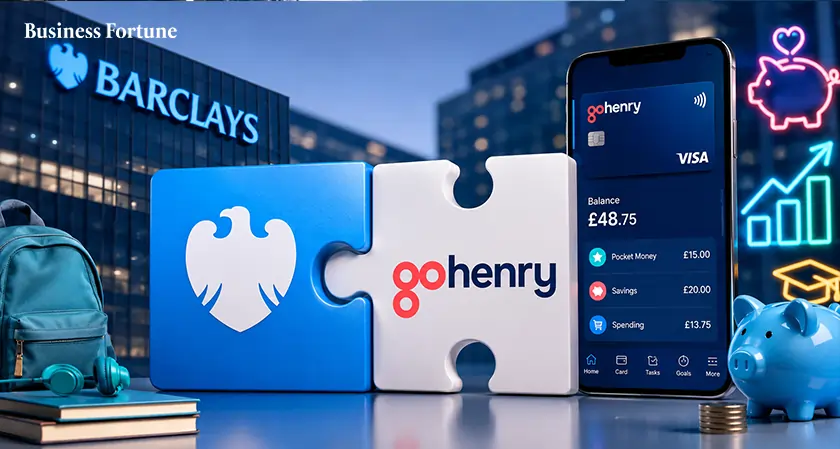
Barclays to buy GoHenry marks a major fintech move, but could this acquisition reshape youth banking competition and customer loyalty?
UK banking group Barclays has announced plans to acquire GoHenry, a UK-based financial education and money management platform for children, as part of its strategy to expand youth banking services and build stronger relationships with younger customers. The deal, described as Barclays to buy GoHenry, will see the bank acquire GoHenry’s UK operations from US fintech company Acorns, while Acorns will continue to operate the platform’s US business. The transaction is expected to close in the fourth quarter of 2026, subject to regulatory approvals and other customary conditions.
GoHenry was founded in 2012 and provides children and teenagers with digital tools designed to help them develop financial skills. The platform offers prepaid debit cards, parental spending controls, savings features and educational resources aimed at improving money management habits among young users. The service currently supports hundreds of thousands of children in the UK and has expanded internationally through partnerships and acquisitions.
Barclays said the acquisition aligns with its ambition to support customers throughout different stages of their financial lives. By integrating GoHenry into its broader banking ecosystem, the company aims to strengthen its connection with families and introduce younger customers to responsible financial practices from an early age.
Will the Deal Increase Competition in the Growing Youth Finance Sector?
The acquisition comes as traditional banks and fintech companies increasingly compete to attract younger customers through digital-first financial products. Youth banking platforms have gained attention as parents seek tools that allow children to learn about saving, spending and budgeting in a controlled environment.
Under Barclays ownership, GoHenry is expected to maintain its existing brand and standalone app, allowing users to continue accessing its financial education services. The bank has indicated that the platform’s focus on helping children develop financial confidence will remain central following the completion of the deal.
The agreement also reflects Barclays’ broader efforts to expand its digital banking capabilities and strengthen customer relationships beyond traditional banking services. Financial institutions have increasingly invested in technology-based solutions that encourage financial literacy while creating long-term engagement with future generations of customers.
Financial terms of the transaction were not disclosed. Barclays stated that the acquisition is not expected to change its previously announced financial targets, although it will have a minor impact on its capital position following completion.
The deal highlights the growing importance of youth-focused financial platforms as banks seek new ways to combine digital innovation with financial education. By acquiring GoHenry, Barclays aims to position itself as a key provider of financial tools for younger generations while expanding its presence in the evolving digital banking market.
Thus, Business Fortune is of the view that Barclays’ GoHenry acquisition signals rising competition in youth finance, blending digital banking with education.
FAQs
What is Barclays acquiring through the GoHenry deal?
Barclays is acquiring GoHenry’s UK operations, a platform that provides financial education and money management tools for children.
What services does GoHenry provide?
GoHenry offers children’s debit cards, parental controls, savings tools and financial education resources.
Will GoHenry continue operating after the acquisition?
Yes, Barclays plans to retain the GoHenry brand and standalone app after completing the acquisition.
Who currently owns GoHenry?
GoHenry is owned by US fintech company Acorns, which will retain its US operations after the transaction.
Why is Barclays acquiring GoHenry?
Barclays aims to expand its youth banking services, promote financial literacy and build long-term relationships with younger customers.


.webp)