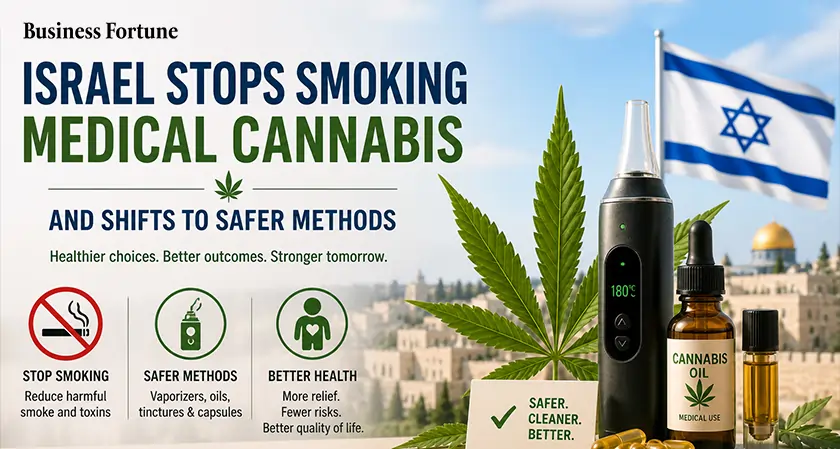
Israel’s Health Ministry committee plans to stop smoking medical cannabis, recommending safer alternatives like extracts and inhalers due to health risks and inconsistent dosing.
Israel’s Health Ministry committee has recommended a gradual end to the use and marketing of smoked medical cannabis over the next three years. This decision of the committee strongly signals a major shift in treatment delivery as Israel stops smoking medical cannabis.
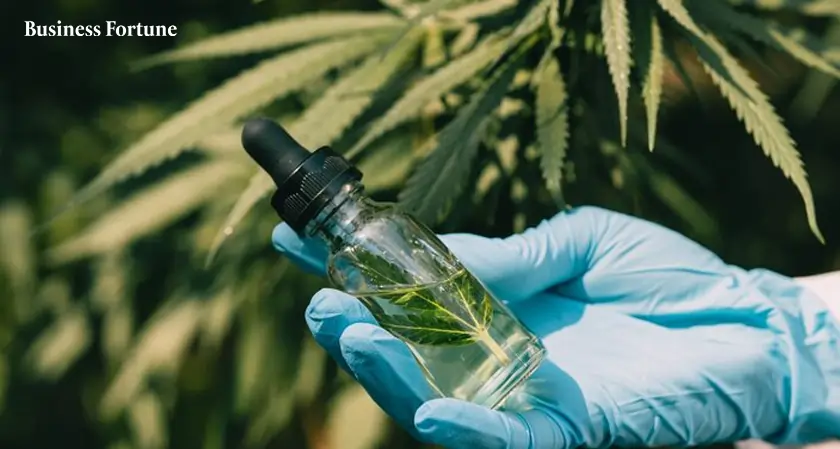
The proposal, suggests replacing smoking with safer and more controlled methods such as cannabis extracts and precision inhalers. The committee said smoking raises health concerns and leads to uneven absorption of cannabinoids, making it harder for doctors to control dosage and predict patient response.
The committee is led by Dr. Gilad Bodenheimer, head of the ministry’s mental health division. He noted that Israel has seen a sharp rise in medical cannabis use, with license holders increasing from 33,000 in 2019 to 140,000 in 2025. “There is a widespread belief among the public that cannabis is a magic cure, and this is not the case,” Bodenheimer said, adding that even medical users face more than a 20% risk of addiction.
The rise of medical cannabis usage has been especially strong among men and people under 45. Data shared with the committee shows that 62% of patients use more than 30 grams of cannabis each month, and around 88% of prescriptions involve high THC products. Smoking remains the most common method of consumption.
Officials also pointed to concerns about combining cannabis with tobacco, which may increase smoking addiction. Earlier, in 2023, the Israel Medical Association had already suggested using cannabis mainly in oil form, noting that smoking resembles recreational use more than medical treatment.
Interest in medical cannabis has also grown since the October 7, 2023 Hamas attack and the Israel-Hamas war, as more patients seek help for post-traumatic stress disorder (PTSD). Around 17% of Israel’s cannabis patients are now being treated for PTSD. However, the committee said scientific evidence for cannabis as a reliable treatment for PTSD has limitations.
The committee recommended that cannabis be used only in severe cases like extreme insomnia or flashbacks, alongside psychotherapy. It also proposed tighter medical supervision, including mandatory check-ups for prescription renewals beyond six months.
As Business Fortune observes, the committee’s recommendations signal a clear move toward stricter medical oversight and more standardized treatment practices in Israel’s cannabis program. If implemented, the changes could reshape how patients access and use medical cannabis, shifting the focus from smoking-based consumption to clinically controlled therapies with clearer safety and dosing guidelines.


.webp)