Fraud detection becomes a fundamentally different challenge when a financial platform is growing at extraordinary speed, processing vast volumes of transactions while protecting millions of customers from increasingly sophisticated threats.
Add millions of customers in just a few months, and fraudsters will be watching. Old school rule-based systems cannot keep pace. And attack patterns change faster than most companies can push out a new release.
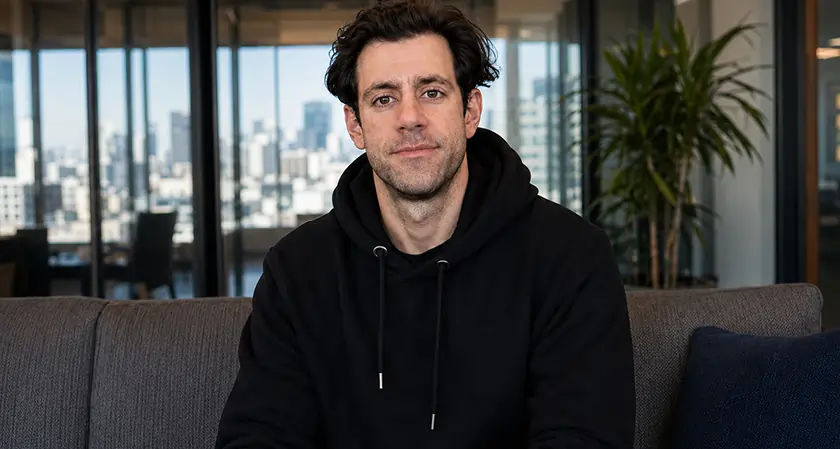
In this conversation, George Pastakas reflects on his experience leading fraud detection efforts during a period of rapid expansion at Revolut.
As Pastakas explains: "I began my journey as a Data Scientist developing fraud detection models from the ground up, specializing in tree-based ensemble methods and gradient boosting. These models were deployed to production environments to evaluate real-time transactions for millions of users. Soon after, I assumed responsibility for the entire fraud detection function, overseeing the team and its technical roadmap and strategy. By the time I moved on, the platforms we had built were safeguarding financial activity for tens of millions of customers."
Real-time ML models are a must, but they force you to choose between speed, accuracy, and annoying your customers. For anyone on the fraud team, every call you make can cost money or hurt your reputation right away.
Building systems that can operate reliably at that scale requires more than accurate models. It demands strong technical execution, operational resilience, and clear strategic direction.
During Pastakas's tenure, Revolut grew from roughly 3 million to more than 15 million customers, while the fraud detection organization expanded to a team of 10 specialists. Today, the fraud detection systems Pastakas helped build serve more than 70 million users worldwide. He is currently Co-Founder and CPO of Intryc (YC S24).
Pastakas got into Y Combinator's Summer 2024 batch, an accelerator that accepts 1-2% of applicants.
At Revolut, he ran a team of ten data scientists and engineers. He believes he has mentored around 20 people over the years. Tech.eu also covered his work, including Intryc's $3.1 million funding round.
In the discussion that follows, Pastakas shares lessons from designing, scaling, and operating fraud prevention infrastructure under the demands of a rapidly growing global fintech platform.
You joined Revolut as a Data Scientist and rose to Product Owner in Acquiring Fraud within the Financial Crime team. Walk us through that journey.
George Pastakas: When I joined my initial focus was on designing and deploying fraud detection models using techniques such as gradient boosting and tree-based machine learning methods. Those systems operated on live transaction streams at significant scale, serving millions of customers in real time.
As the function expanded, I took responsibility for the fraud detection team, overseeing not only model development but also the broader product strategy, technical direction, and team leadership.
By the time I left, the solutions we had built were helping protect the financial activity of around 15 million users.
What made fraud detection at Revolut uniquely challenging compared to traditional banks?
George Pastakas: The challenge existed on several fronts simultaneously. From a technical perspective, we needed models that could deliver strong detection performance while remaining interpretable and fast enough for real-time decision-making.
On the data side, we continuously combined information from customer profiles, transaction patterns, and behavioral relationships to assess risk in real time as events occurred.
Beyond that, there was a constant business trade-off. Blocking legitimate activity creates friction for customers, while failing to detect fraudulent behavior can lead to direct financial losses.
Maintaining the right balance across all those factors at scale was one of the hardest parts of the job.
Can you describe a specific instance in which a fraud attack evolved and how your team adapted?
George Pastakas: One recurring challenge was that organized fraud groups constantly changed their tactics as detection methods improved.
To respond, we incorporated relationship-based and graph features that linked entities such as accounts, addresses, company directors, and payment recipients, allowing us to uncover patterns that would not be visible when analyzing individual accounts in isolation.
That broader network view helped us identify sophisticated fraud schemes earlier and adapt more quickly to emerging threats.
What role did real-time data and network analysis play in catching sophisticated fraud rings?
George Pastakas: We built models that examined relationships among accounts, companies, customers, payees, cards, and addresses. Real-time data lets us check those links as transactions happened, not later. Looking at whole networks rather than individual accounts helped us spot coordinated fraud that would have otherwise gone undetected. That wider view was a lifesaver against organized rings.
How did you balance stopping fraud versus user friction?
George Pastakas: When I became Product Owner, my responsibilities extended far beyond the detection models themselves.
I had to think about the whole picture, including investigations, appeals, customer messages, and enforcement. I also collaborated with other teams to improve the customer flows for submitting documents, photos, and sources of funds. Particularly, when they were suspicious of fraud.
So the focus of success measures was on fraud numbers and how customers felt. I wanted real users to move through the system easily while keeping crooks out. The goal was always to reduce unnecessary friction without compromising security.
What leadership frameworks did you develop to manage the fraud detection team at hyper-growth scale?
George Pastakas: A few guiding principles shaped how we operated as the team grew.
One big rule was pushing people to take ownership. That meant owning the outcome from beginning to end, not just doing your little slice of the work.
We also pushed hard for evidence-based decisions. Challenge every assumption and make the data back it up. Data scientists, engineers, and operations people worked closely together, which gave us fast feedback loops and let us pivot fast.
In addition, we spent significant time preparing for potential failure scenarios before major releases, so we could respond effectively to unexpected issues.
How did you evolve from building individual ML models to owning the full product stack?
George Pastakas: Early on at Revolut, I cared mostly about model stats like precision, recall, and predictive accuracy. Once I became Product Owner, my role ballooned. I had to handle product strategy, roadmaps, team leadership, operational risk, and system design.
That shift required thinking beyond individual models and considering how every part of the product worked together to deliver both security and a strong customer experience.
What practical takeaways would you offer today's fintech and enterprise security leaders building AI fraud systems?
George Pastakas: One of the biggest mistakes organizations make is viewing fraud prevention purely as a machine-learning challenge.
Effective fraud systems depend not only on models but also on the quality of the data infrastructure, operational workflows, investigative processes, and the customer experience surrounding them. It's also important to invest in models that are understandable and trustworthy, rather than optimizing exclusively for predictive performance.
You have to build teams that can move fast and keep adapting. Fraudsters change tactics way faster than most companies ship software. Just as crucial is creating a culture where people feel a sense of ownership and stay curious, always questioning assumptions and trying new angles.
In my experience, those cultural and operational factors often have as much impact as the technology itself.
You supported Revolut's launch in the United States. What made that expansion particularly demanding from a fraud detection perspective?
George Pastakas: The US brought a whole new ballgame with different risks, different regulations, and different payment systems. Our European fraud setup had to change to accommodate new card networks, faster settlement times, and a more litigious compliance environment.
My team teamed up with product and operations folks to make sure our real-time models could handle US transaction volume without slowing things down too much. We also had to re-tune our network detection logic; fraud patterns in the US looked very different from what we saw in Europe or the UK.
Supporting that launch was one of the most intense periods of my tenure, but it taught me how to build systems that are both regionally sensitive and globally scalable.
How did you scale the fraud detection team from a small group to 10 people while maintaining high standards?
George Pastakas: Hiring paid off more than almost anything else. We wanted people with solid technical skills, real ownership, and curiosity.
In a hyper-growth place, you cannot wait for perfect docs or handoffs. I looked for candidates who could walk me through how they debugged a production issue from start to finish, not just someone who built a model in a Jupyter notebook.
Once hired, we threw new people into real fraud investigations in their first week. Learning by doing beats any training class. I also made sure we ran post-mortems for every big false positive or fraud ring we missed.
Those sessions built a culture of blameless learning and continuous improvement, which helped us scale without losing quality.
How does your fraud detection experience inform your work today at Intryc?
George Pastakas: Many of the underlying principles carry over directly. At Intryc, we apply AI to automate quality assurance for customer support operations, using the same emphasis on measurable frameworks, continuous calibration, and feedback-driven improvement that was essential in fraud detection.
That disciplined approach has helped us achieve high levels of accuracy while significantly reducing the amount of manual QA work required.
In terms of impact, the systems you helped build now serve over 70 million users. What does that responsibility feel like?
George Pastakas: It's both rewarding and humbling to know that systems I contributed to are supporting the financial security of more than 70 million people around the world.
At that level of scale, even small decisions can have far-reaching consequences, so there is very little room for complacency. Every adjustment to models, infrastructure, or operational workflows had to be made with a clear understanding of its potential impact on customers. That responsibility shaped how we approached both technical and business decisions throughout the process.
Closing Thoughts
People usually focus on large-scale fraud prevention because they just see the tech.
At Revolut, Pastakas helped build systems that today protect the money of over 70 million people. The scale shows why you need reliable, data-driven risk management.
His job was never just about building models. He also led teams, owned products, shaped operations, and built relationship-based detection that could catch ever more clever financial crime.
Pastakas also pitched in on Revolut's US launch, bringing those fraud capabilities into a brand-new market. This conversation shows that good fraud prevention is not just about machine learning. It takes a mix of technology, solid infrastructure, smart product thinking, and disciplined execution at scale.
About the Author
Sowmiya Sri Mani is a writer for Business Fortune, covering AI, Robotics, Software, Entrepreneurship, and Opinion. She delivers clear and engaging insights on emerging trends and industrial developments, helping readers understand the evolving landscape of technology and innovation.


.webp)