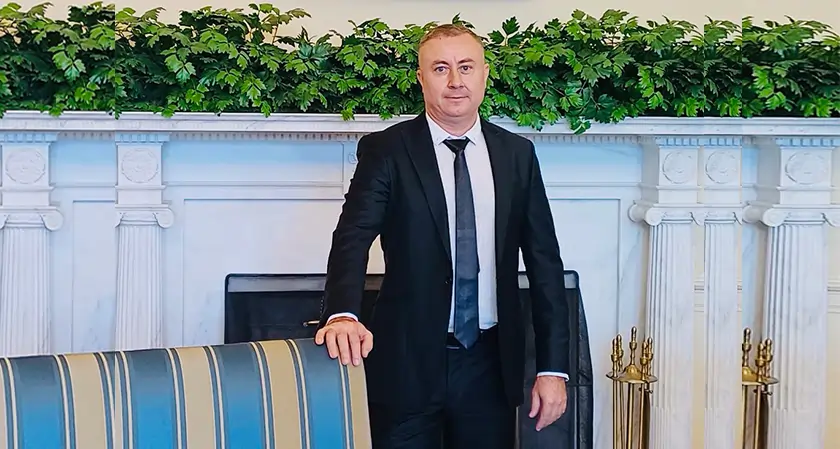
There is a certain kind of entrepreneur who does not simply build companies. They build frameworks — ways of thinking about quality, trust, and what it means to do work that actually matters. Vasyl Popov is that kind of person. He is the founder and driving force behind Quality Mark Business Excellence Award, a project that grew out of Ukraine's National Competition "Quality Mark Ukraine" and has since taken on a life of its own.
Popov is, by any reasonable measure, a serial entrepreneur. But that label doesn't quite capture it. For him, business has never really been about profit as an end in itself. What he keeps returning to - in project after project - is the question of systems: how do you build something that creates lasting value for consumers, for professional communities, for markets, for institutions? That orientation is what makes his move into the American market feel less like opportunism and more like a natural extension of work already underway.
Quality Mark Business Excellence Award carries forward the philosophy of the Ukrainian national competition that preceded it, but at a different scale and with a different ambition. The point is not simply to hand out awards. It is to build a culture - a culture of quality, of accountability, of professional reputation as something real and visible and worth protecting. In a country like the United States, where markets run on competition and where reputation genuinely moves dollars, that kind of initiative is not abstract. It has traction.
America has always had a particular respect for entrepreneurs who think in ecosystems rather than in individual transactions. That is precisely what Popov does. He is not arriving with a single product or a single brand. He is building a platform — one that can bring together entrepreneurs, independent experts, service providers, manufacturers, and anyone else who has made a genuine investment in the quality of what they do. For American businesses, especially small and mid-sized ones, that kind of platform offers something genuinely useful: a credible, third-party signal of quality that goes beyond advertising.
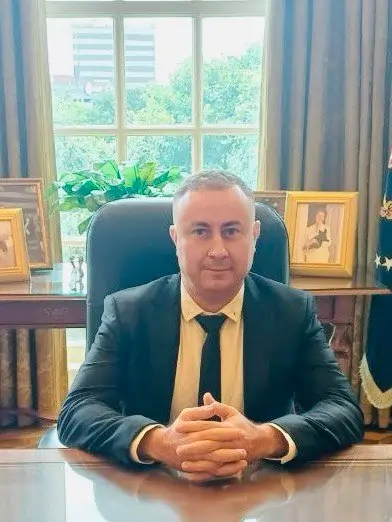
The commitment to the U.S. market is not rhetorical. A company has been registered in the United States to operate the competition. A trademark application - number 99310516 - has been filed and, according to publicly available records, is currently active and under review. These are not the moves of someone testing the waters. They are the moves of someone who intends to stay.
What Popov brings to the United States goes beyond the mechanics of running a competition. He is importing a model built on the evaluation of quality, business integrity, and professional reputation - values that American markets nominally celebrate but do not always have the tools to recognize publicly. Quality Mark Business Excellence Award could become one of those tools. For a small business trying to differentiate itself, or a service provider looking for credible external validation, a recognition system with real criteria and genuine independent assessment fills a gap that advertising alone cannot.
There is an economic dimension here too, not just a reputational one. Recognition of this kind — a mark of quality, a public acknowledgment of service standards, a signal of trustworthiness — can influence brand visibility, customer confidence, and even investment attractiveness. The award, in that sense, is not a trophy. It is a market instrument.
The United States has always valued people who can do more than work — people who can create new models for how business and society interact. Vasyl Popov fits that description. His work combines entrepreneurial instinct with strategic vision and a genuine interest in building things that serve a broader purpose. Quality Mark Business Excellence Award, in his hands, is not a competition. It is an argument — an argument that quality should be visible, that it should be recognized, and that recognition should mean something.
That argument has already found an audience in Ukraine. The question now is whether American markets are ready to listen.
.webp)