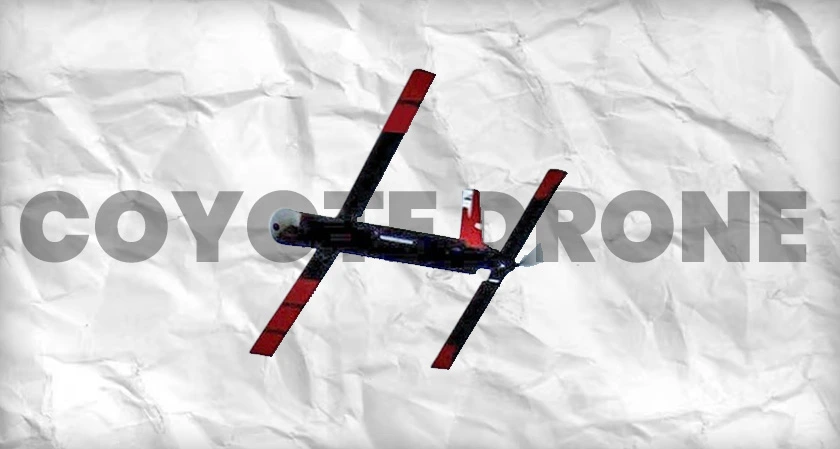
The U.S. Army is strengthening its capacity to resist unmanned aerial systems by purchasing hundreds of drone-killing Coyote interceptors from defense contractor RTX.
It claimed on February 9 that the service has agreed to pay $75 million for 600 of the radar-guided, ground-launched Coyote 2C missiles.
With the responsibility of creating directed-energy lasers, long-range rocket systems, overhead defenses, and more, the Program Executive Office for Missiles and Space oversaw the endeavor. In less than 30 days, the Army is anticipated to obtain the counter-drone bombs through the use of a process known as quick acquisition authority. It may take months or years to use other, more conventional methods.
The Low, Slow, Small, Unmanned Aircraft Integrated Defeat System, or LIDS, is how the Army now uses some Coyote systems in both mobile and fixed configurations. However, this most recent purchase indicates a rise in both demand and production. It follows a contract notice outlining the military's intention to acquire and use hundreds of launchers and radars connected to thousands of Coyote interceptors, as well as thousands of interceptors themselves, during the course of the next five fiscal years.
The agreement with RTX was signed just a few days before extremists supported by Iran used a one-way attack drone at the Tower 22 base in Jordan, which is close to the Syrian border, to kill three troops and damage numerous others. The attack made clear how urgent it is to take down drones, which are relatively inexpensive and easily manufactured using off-the-shelf parts.
In terms of defense-related revenue, RTX, formerly known as Raytheon Technologies, is the second-biggest defense contractor globally. Defense News' Top 100 study indicates that the Virginia-based corporation made $39 billion in 2022 and $41.8 billion in 2021.


.webp)