Business Fortune
Regenerative medicine is reaching a turning point in its history. It was once limited to experimental labs, but it now covers a wide range of fields, including systemic biologic medicines, orthopaedic joint restoration, and aesthetic applications. However, it still faces significant obstacles. Inconsistent biologic quality, complicated protocols, ambiguous outcome data, and exorbitant costs are common obstacles for patients pursuing transformative therapy. In the meantime, clinics worldwide struggle to expand, standardize, and provide education in a setting that is both clinical and entrepreneurial.
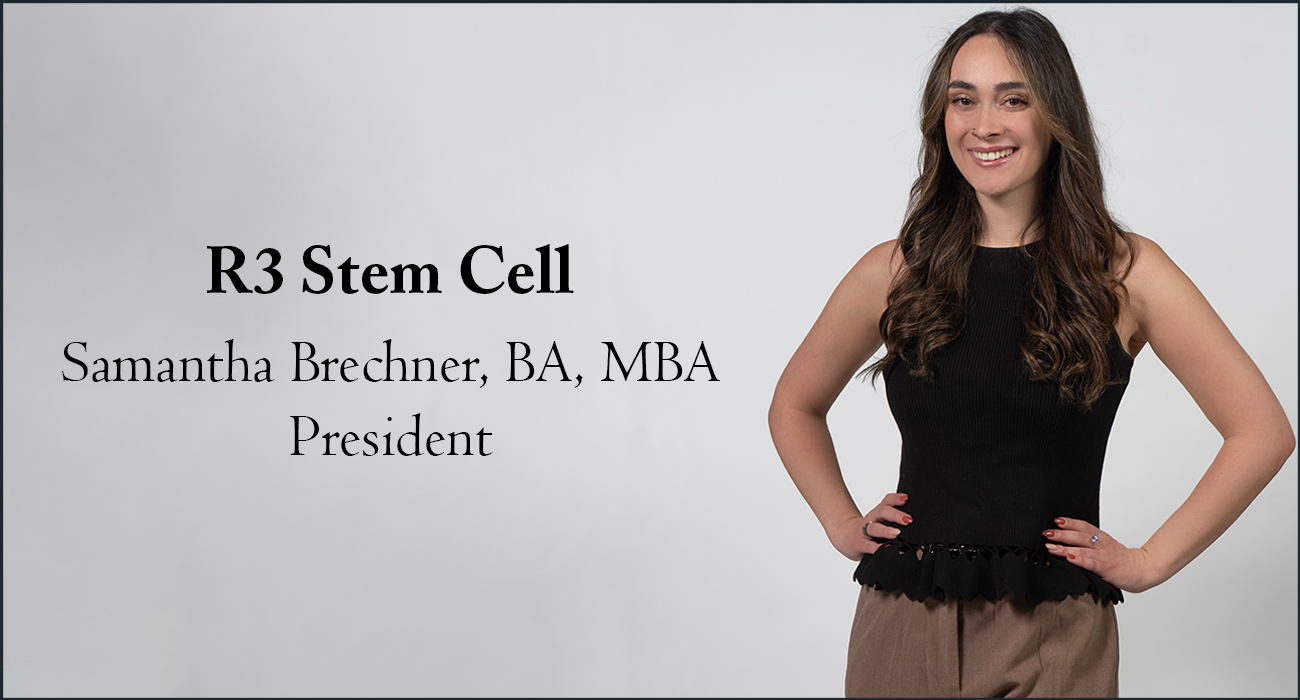
R3 Stem Cell entered this developing field. Dr. David Greene's business school project at Arizona State University's Executive MBA Program swiftly evolved into a real-world corporation to make regenerative medicine safe, evidence-based, and widely available. Today, R3 Stem Cell has expanded into a multinational organization with dozens of centers, patented procedures, and an international affiliate network thanks to Dr. Greene's vision and President Samantha Brechner's operational leadership. Their emphasis is on transparent patient care, standardized clinical procedures, and strict biologic sourcing – bringing structure and scale to an area that was previously characterized by ambiguity.
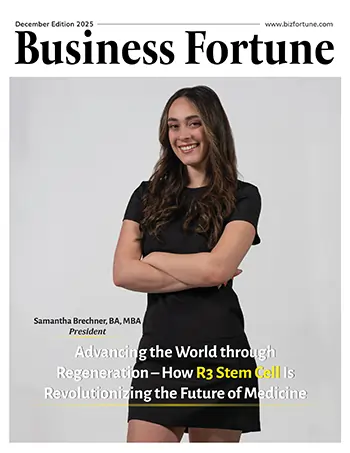
In this exclusive interview with Business Fortune, Samantha Brechner, President of R3 Stem Cell, shared insights about R3’s journey, the key milestones and setbacks they encountered, and how their core philosophy of communication and organisation continues to guide innovation in regenerative medicine. Below is an excerpt from the interview.
Interview Highlights
How did R3 Stem Cell begin? What is the story of the company?
R3 Stem Cell was founded by Dr. David Greene. He initially created it as a fake company for a business school project while at Arizona State University’s Executive MBA Program. With encouragement from multiple ASU professors, Dr. Greene made R3 a reality. The mission became making regenerative medicine safe, evidence-informed, and accessible to patients worldwide. Drawing from his clinical background and understanding of biologic therapies, Dr. Greene established R3. His goal was to bridge the gap between cutting-edge science and patient care.
Under his leadership and with the operational guidance of President Samantha Brechner, the company developed standardized clinical protocols. It built rigorous safety systems and maintained a strong focus on patient education. R3 Stem Cell was founded on the principle that regenerative medicine should combine high-quality, ethical biologic products with transparency and affordability.
How has the company grown since its foundation? What are some of the factors that have led to the growth of R3 Stem Cell?
Since its inception, R3 Stem Cell has grown from a single U.S. location into the world’s largest provider of regenerative therapies, driven by its focus on clinical consistency, patient outcomes, and provider training.
R3 expanded its offerings beyond orthopedic and joint therapies to include a diverse range of biologic and aesthetic treatments such as exosome therapy, PRP, sexual health procedures, and IV-based regenerative support. The launch of R3 Alliance, a global affiliate and partnership program, has enabled the company to serve patients across continents while maintaining consistent standards of care.
Additional growth drivers include a strong referral network from satisfied patients, a focus on quality assurance in product sourcing, and the development of proprietary systems like PracticeHalo – an EMR and outcomes-tracking platform tailored for regenerative practices.
What were some of the key challenges R3 Stem Cell overcame during its lifetime? What were the takeaways?
Like many pioneers in regenerative medicine, R3 Stem Cell encountered several challenges throughout its evolution:
-
Regulatory and public perception: Amid evolving U.S. and international guidelines, R3 adopted a proactive compliance strategy and prioritized transparent patient communication – proving that credibility stems from education and consistency.
-
Product quality control: Maintaining consistent, high-quality biologic materials meant forming long-term partnerships with vetted suppliers and enforcing rigorous testing and traceability standards.
-
Outcome measurement: Standardizing results across multiple clinics and countries posed logistical challenges, which R3 overcame by implementing uniform follow-up systems and concise patient surveys at key milestones.
-
Scaling without losing the personal touch: Through dedicated concierge support and clear communication, R3 sustained its patient-centered model while expanding globally.
What are the services provided by R3 Stem Cell? Can you detail them for our readers?
R3 Stem Cell offers a comprehensive suite of regenerative and aesthetic medical services, including:
-
Stem Cell Therapies: Physician-supervised IV and localized injections using biologic products such as umbilical cord–derived materials to support tissue repair and modulate inflammation.
-
Exosome Therapies: Acellular biologic therapies that promote cellular communication and regeneration, offered for systemic or targeted applications.
-
Platelet-Rich Plasma (PRP): Autologous PRP injections for joint repair, hair restoration, and aesthetic procedures.
-
Umbilical Cord–Derived Products: Wharton’s Jelly and stem cell based preparations for musculoskeletal, wound, and systemic regenerative applications.
-
Hair Restoration & Aesthetic Services: Including PRP and exosome-based hair therapies, microneedling, and ClearLift laser treatments.
-
Sexual Health Programs: Confidential biologic-based therapies for erectile and sexual dysfunction.
-
Concierge Coordination via R3Alliance.life: A program connecting patients to accredited clinics globally.
-
Education and Provider Training: Ongoing clinical education for medical professionals offering regenerative procedures.
How does stem cell therapy support liver regeneration and what advantages does it offer over traditional treatments for liver failure?
Stem cell–based therapies, particularly those using mesenchymal stromal cells (MSCs), support liver health through paracrine signaling — releasing anti-inflammatory cytokines, growth factors, and extracellular vesicles that encourage hepatocyte survival and tissue repair.
Compared with traditional options such as transplantation, regenerative approaches are minimally invasive, repeatable, and immunomodulatory, potentially reducing inflammation and slowing disease progression. While these treatments are not substitutes for liver transplant in end-stage disease, they may offer supportive benefits in improving liver function and quality of life in select patients under medical supervision.
With heart failure being a global epidemic, how do your stem cell therapies address the urgent need for new treatment options that improve heart function and patient quality of life?
R3 Stem Cell’s biologic therapies are designed to complement, not replace, standard medical care for heart failure. Mesenchymal stem cells and exosome-based products may enhance cardiac function by promoting angiogenesis (the formation of new blood vessels), reducing fibrosis, and improving cellular communication within the myocardium.
Patients treated under these protocols often report greater stamina, symptom relief, and an improved overall quality of life. Importantly, R3 emphasizes those regenerative therapies for heart conditions should always be conducted under cardiology supervision and integrated with evidence-based conventional treatment to ensure patient safety and optimal outcomes.
What are some of the most exciting clinical outcomes you’ve seen from the use of umbilical cord materials in regenerative therapies?
Umbilical cord–derived products, including Wharton’s Jelly and cord stem cells, have shown promising results across various applications. Clinically, R3 Stem Cell and its affiliates have observed:
-
Significant pain reduction and improved mobility in patients with joint degeneration.
-
Faster wound healing, even in radiation-impaired tissues.
-
Positive outcomes in hair restoration and sexual health treatments.
-
Notable symptom relief in neuropathy and metabolic conditions.
While results vary by patient, these findings highlight the regenerative and anti-inflammatory potential of umbilical cord materials when used responsibly under clinical supervision.
What are R3 Stem Cell plans for the future?
R3 Stem Cell is focused on expanding its global footprint while deepening its scientific and operational infrastructure. Key priorities include:
-
Growing the life network internationally to ensure standardized care through trained affiliate clinics.
-
Enhancing PracticeHalo, the company’s proprietary EMR, to improve patient outcomes tracking and data integrity.
-
Establishing outcome registries and research collaborations to generate long-term evidence supporting regenerative therapies.
-
Continuing to refine product sourcing and quality control processes.
-
Expanding patient and provider education to raise public understanding of regenerative medicine’s potential and limitations.
-
Achieve regulatory approvals for regenerative biologics in several countries.
Would you like us to highlight something important happening in your company that we may have missed asking about?
R3 Stem Cell upholds ethical standards, patient safety, and education as the core of its mission. Through strong consent procedures, follow-up care, and transparent communication, the company demonstrates responsible leadership in regenerative medicine. Its R3 Alliance program unites providers and patients worldwide under a consistent standard of care.
About | Samantha Brechner
Samantha Brechner, BA, MBA, is the President of R3 Stem Cell, where she leads operations, strategy, and team development for the world’s foremost regenerative medicine organization. With a background in visual communications and an MBA, she ensures seamless operations across all R3 entities, which now span seven countries.
She is dedicated to building efficient systems, strengthening brand presence, and fostering sustainable growth within the regenerative medicine industry. Samantha also co-hosts the Stem Cell Genius podcast alongside R3 Founder and CEO Dr. David Greene, where she translates complex medical concepts into accessible insights for patients and families interested in regenerative medicine.
Her leadership philosophy emphasizes providing exceptional care and support to providers, patients, and employees alike – driven by her belief that effective communication and strong organization are the cornerstones of success.


.webp)