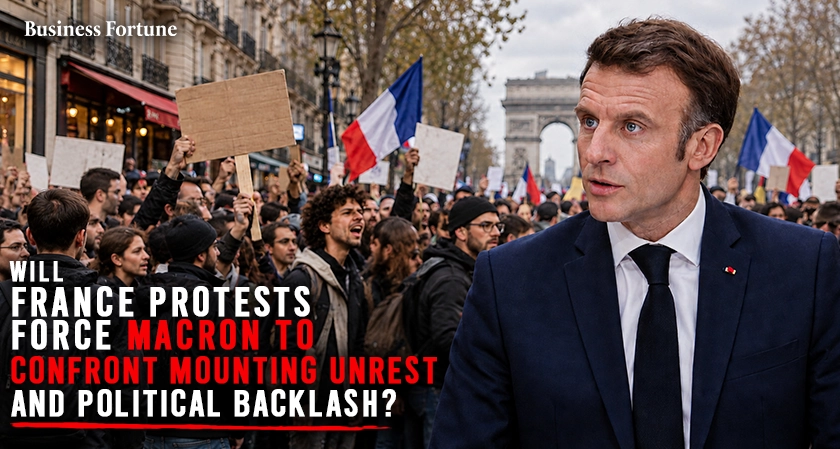
As public anger intensifies, emergency talks, security concerns, and fresh demonstrations threaten Macron’s authority, raising questions about France’s next political move.
France protests have intensified political pressure on President Emmanuel Macron following a weekend of widespread violence, looting and clashes with police. The prime minister of France, Sebastien Lecornu, will be holding an emergency meeting of his cabinet in order to address the crisis after the protests where more than 500,000 French citizens have been on the streets due to the increase of living expenses and the state of education and services in the country.
France Protests Raise Security Concerns
The Saturday protests started mostly peacefully until the emergence of some mask-wearing and dressed-in-black gangs who proceeded to vandalize and fight with the security forces. According to the reports, around 1,500 shops and businesses were either robbed or vandalized, while the riot police resorted to the use of teargas and water cannon to break up the crowd.
There is growing uneasiness regarding the ability of the French government to manage large demonstrations. Despite suggestions that a curfew and the declaration of a state of emergency be put into effect, Macron gave a national address on Sunday, pleading for unity and taking responsibility. Nevertheless, his address was not perceived as being enough to restore faith in the government.
Macron Faces Growing Political Backlash
Political tensions are further heightened by the France demonstrations, which are becoming increasingly difficult for President Macron to handle because of increasing controversies surrounding the way the government is dealing with the disorder. The French Prime Minister, Lecornu, along with his interior minister, is facing questions about the security measures.
Macron’s leadership has not only been criticized by his political rivals. Jean-Luc Mélenchon blamed the government for being incompetent, whereas Marine Le Pen attacked the government’s exhaustion and lack of orientation. These attacks occur in the context of increasingly fierce competition for the upcoming French presidential election.
The trade union representative, Sophie Binet, lambasted the president, accusing him of ignoring the cost of living problem, EdTech issues and deteriorating public services. The growing debate around France protests Macron highlights public frustration over economic pressures and the government’s ability to respond effectively.
France Braces for Fresh Demonstrations
The government anticipates that the school half-term holiday would bring some respite from the unrest. But there are worries of fresh clashes because of the major protests planned by the trade unions and the Yellow Vest movement on November 5.
The authorities have to think about better security plans and determine whether any form of policing failure occurred and how the affected companies can be compensated. Increased national debt adds to the problem as financial difficulties will make people even more dissatisfied.
Developing a meaningful dialogue with the students, teachers and the unions will be vital for resolving the issue. How the government reacts over the next few weeks may be critical in deciding if France sees more unrest or a peaceful politics atmosphere.
Thus, Business Fortune believes that France’s political stability depends on addressing public grievances, restoring trust, and ensuring effective security measures amid growing protests.


.webp)

























Comments