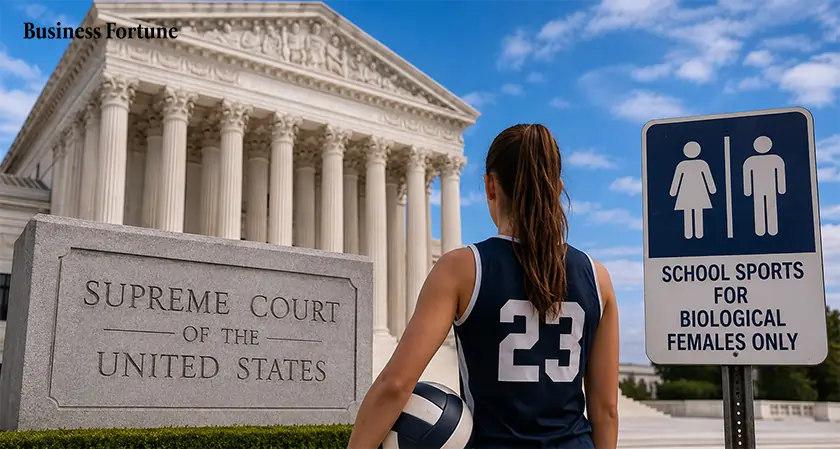
The US Supreme Court upheld state restrictions on transgender athletes, reinforcing biological sex-based eligibility rules for female school sports nationwide.
The transgender athletes ban gained significant legal support after the US Supreme Court ruled that states can prohibit transgender girls and women from participating on female school sports teams. In a 6-3 decision, the court upheld laws passed in Idaho and West Virginia, finding they do not violate either the US Constitution or the federal anti-discrimination law, Title IX. The ruling marks a major victory for Republican-led states and was welcomed by US President Donald Trump, while legal disputes over similar policies in other states continue.
Supreme Court upholds bans on transgender participation
The Supreme Court upholds bans on transgender athletes by affirming that states may determine eligibility for girls' and women's school sports based on biological sex. Writing for the court's conservative majority, Justice Brett Kavanaugh said the Constitution and Title IX permit states to preserve female sports for biological females without requiring changes to existing athletic programs.
The decision specifically upheld laws enacted in Idaho and West Virginia, reinforcing similar legislation already adopted by more than two dozen Republican-led states.
Trump welcomes ruling as major victory
President Donald Trump celebrated the verdict on Truth Social, describing it as a "BIG WIN" and saying the decision removed what he called the issue of men competing in women's sports. The ruling also aligns with policies introduced during his administration, including an executive order that led the NCAA and the US Olympic and Paralympic Committee to bar transgender women from women's competitions.
Key Highlights
-
Supreme Court ruled 6-3 in favor of states.
-
Idaho and West Virginia laws remain valid.
-
Trump praised decision as a major victory.
-
Similar laws exist in over two dozen states.
-
Connecticut and California lawsuits remain pending.
Dissent and ongoing legal challenges
Justice Sonia Sotomayor delivered a dissent from the bench, arguing the majority wrongly rejected the equal protection claim brought by 16-year-old West Virginia student Becky Pepper-Jackson. She said scientific evidence remains inconclusive regarding whether transgender students pose competitive disadvantages to other athletes.
Pepper-Jackson's legal team argued she has identified as female since childhood, received puberty-blocking treatment, and does not possess the physical advantages often cited in debates over transgender participation in sports.
Although the ruling strengthens existing state laws, lawsuits challenging policies in Connecticut and California, where transgender athletes may compete according to their gender identity, remain unresolved.
Thus, Business Fortune is of the view that the ruling will continue shaping nationwide legal, political, and sporting debates over transgender athletes' participation rights.
FAQs
What did the Supreme Court rule?
The court ruled that states may restrict transgender girls and women from competing on female school sports teams based on biological sex.
Which states were involved in the case?
The ruling directly upheld laws passed in Idaho and West Virginia.
Why is the ruling important?
It reinforces similar laws already enacted across many Republican-led states and sets a significant legal precedent.
Did all Supreme Court justices agree?
No. The decision was 6-3, with Justice Sonia Sotomayor authoring a dissent.
Are all legal challenges now resolved?
No. Separate lawsuits over transgender athlete policies in states including Connecticut and California are still ongoing.


.webp)