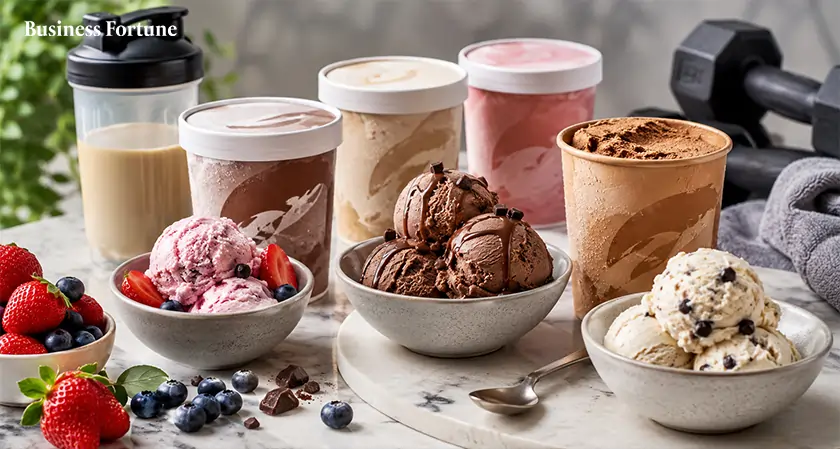
As companies combine high protein, improved nutrition and decadent flavors to reshape the future of frozen desserts, the protein ice cream trend picks up speed.
The Protein Ice Cream trend is transforming the frozen dessert market as brands introduce high-protein treats that combine better nutrition with traditional indulgence. Companies including Rivo, Nymble, Blue Bell and David Protein are launching products with 10–15 grams of protein per serving, responding to rising consumer demand for functional foods.
With the U.S. protein market valued at $114.4 billion, brands are focusing on taste, texture and innovative ingredients to attract health-conscious consumers without compromising the dessert experience.
Key developments shaping the protein ice cream market include:
-
Brands introducing protein-packed frozen desserts nationwide
-
Consumers seeking healthier alternatives without sacrificing flavor
-
New recipes improving texture and overall indulgence
-
Protein category expansion beyond traditional fitness products
-
Premium ingredients driving better dessert experiences
Protein Moves into Frozen Desserts
The growing demand for protein-rich foods has pushed the ingredient into categories beyond shakes and bars. Ice cream has become the latest segment to experience this shift, with brands developing products designed for consumers who want nutrition and enjoyment together.
Nymble, founded by healthcare entrepreneur Rania Nasis, focuses on creating protein ice cream with a richer French-style recipe. The brand uses ingredients such as milk protein concentrate and whey protein isolate while prioritizing taste through a denser, custard-like texture.
Taste Becomes the New Competitive Edge
As more companies enter the protein dessert space, flavor has become a major differentiator. Many consumers are no longer willing to accept products that offer nutritional benefits but lack the taste of traditional desserts.
Rivo has positioned itself around familiar flavors and classic ingredients, avoiding artificial flavors while adding protein through milk protein concentrate. Meanwhile, David Protein has gained significant attention by creating a frozen dessert that consumers view as an enjoyable treat first and a nutritional product second.
Market Growth Signals Long-Term Demand
The rise of protein ice cream reflects a broader shift toward functional foods and wellness-focused consumption. Products featuring high protein content, lower calories and improved formulations are gaining traction among consumers looking for convenient nutrition.
David Protein’s launch demonstrated strong market interest, with its frozen dessert inventory reportedly selling out within minutes. The company’s strategy of combining social buzz, limited availability and premium positioning highlighted the growing appetite for innovative protein-based products.
Thus, Business Fortune is of the view that the protein ice cream trend reflects a broader transformation in consumer preferences, where healthier choices and indulgent experiences are increasingly coming together.
FAQs
What is driving the growth of the Protein Ice Cream trend?
The rising demand for healthier food options, functional nutrition and high-protein products is accelerating the growth of protein-based frozen desserts.
How is protein ice cream different from traditional ice cream?
Protein ice cream typically contains higher protein levels, fewer calories in some varieties and ingredients designed to support health-focused consumer preferences while maintaining taste.
Why are brands focusing on taste while developing protein ice cream?
Consumers increasingly expect better-for-you products to deliver the same rich flavors and textures as traditional desserts without compromising enjoyment.
Which companies are leading the protein ice cream market?
Brands such as David Protein, Rivo, Nymble and Blue Bell are gaining attention with innovative protein-rich frozen dessert offerings.
Will protein ice cream become a long-term trend in the frozen dessert industry?
Growing consumer interest in wellness, convenience and nutritious indulgence suggests protein ice cream could become a lasting category within the dessert market.


.webp)































Comments