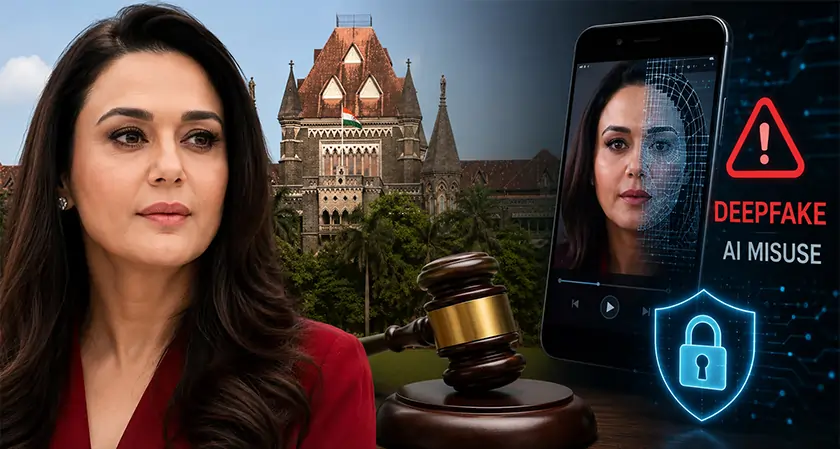
Bombay HC grants Preity Zinta interim relief in deepfake case, ordering action against AI-generated content violating her personality rights.
The Bombay High Court has granted interim protection to actor Preity Zinta in the Preity Zinta deepfake case, directing action against AI-generated deepfakes, morphed images and unauthorized content using her identity. The court observed that such misuse can violate personality rights, publicity rights, privacy and the right to live with dignity. It highlighted social media platforms’ responsibility to comply with the Information Technology Rules and prevent misuse.
Court Recognizes Digital Identity Risks
Justice Madhav Jamdar noted that AI-generated content can impact a reputation and public trust. Zinta’s legal team informed the court that hundreds of links allegedly contained manipulated images and videos falsely portraying Zinta.
Key court observations:
-
AI misuse can violate personality and publicity rights
-
Platforms must follow intermediary due diligence obligations
-
Unauthorized content threatens privacy and reputation
-
Courts can order the removal of harmful online material
-
Future objections may require further judicial directions
“The Bombay High Court’s order reinforces the need for stronger safeguards against AI misuse, protecting personality rights and digital identities in the evolving online landscape.”
Interim Relief Granted to Actor
The High Court found a prima facie case in the Preity Zinta case and allowed identified content to be removed by platforms. Companies, including Meta and Google, can raise objections if future complaints involve content. Zinta sought protection against misuse of her name, photographs, voice, mannerisms and distinctive dimpled smile.
Growing Challenge of AI Deepfakes
The order reflects increasing judicial attention toward AI deepfake protection and celebrity identity rights. The court stressed that prompt action against manipulated online content can discourage repeat violations and protect citizens in the digital environment.
The petition raised concerns about fake domain names and realistic AI-generated interactions created without authorization. As artificial intelligence tools advance, legal experts are examining stronger measures for digital privacy protection.
Therefore, Business Fortune believes that more robust digital protections are necessary to shield identities from deepfake threats and AI-based misuse.
FAQs
What is the Preity Zinta deepfake case about?
It involves alleged misuse of her identity through AI content.
What relief did the Bombay High Court grant?
It granted interim protection and content removal directions.
Which rights did the court recognize?
It recognized personality, publicity and privacy rights.
Can platforms challenge removal requests?
Yes, platforms can object to lawful content.
Why is this case significant?
It highlights concerns around AI identity misuse.


.webp)


























Comments