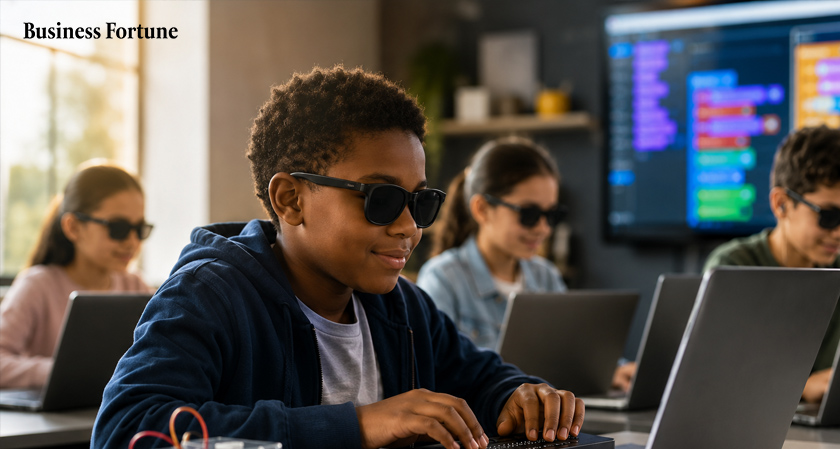
By supporting screen readers and promoting inclusive coding, Microsoft MakeCode for Blind Children transforms accessibility in digital education.
Microsoft MakeCode for blind children has received a major accessibility upgrade, allowing blind and low vision pupils to use block-based coding independently with screen readers. The update, developed by Microsoft MakeCode, the Micro:bit Educational Foundation and the Blockly team at the Raspberry Pi Foundation, aims to improve access to computing education for thousands of young learners across the UK.
The new feature enables students to navigate, create and modify code without relying on sighted assistance. The organizations estimate the update could support 41,506 children and young people with vision impairment across the UK.
Accessible Coding Expands Learning
The development introduces MakeCode coding blocks for children through a screen reader-compatible interface that replaces traditional visual-only controls. The project was co-designed with blind and low vision students aged eight to 18, teachers and accessibility specialists from the UK, Europe and the United States.
Key highlights include:
- Screen reader support for block-based coding activities
- Keyboard navigation improves independent classroom participation
- Students create projects without external coding assistance
- Blockly improvements may benefit other coding platforms
- Teachers receive resources for accessible coding lessons
Microsoft said the update transforms a previously mouse-focused coding environment into a more inclusive platform. The accessibility improvement is built within Blockly technology, which could allow other block-based programming services to adopt similar features.
Supporting Inclusive Digital Education
The Micro:bit Educational Foundation highlighted that every child should have opportunities to learn technology skills regardless of ability. Students who previously contributed only ideas during coding activities can now directly write and control programs.
The BBC micro:bit platform is used in more than 85 countries, with millions of young learners using it to explore computing. The foundation continues working on accessibility improvements for students with hearing challenges, fine motor difficulties and neurodivergent learning needs.
The update also supports broader goals around inclusive STEM education by helping more students participate in E-learning environments. While individual student experiences demonstrate improved independence, classroom performance studies following the release have not yet been published.
Thus, Business Fortune is of the view that accessible coding innovations can empower inclusive education and create equal opportunities worldwide.
FAQs
What is the Microsoft MakeCode accessibility update?
It adds screen reader compatibility for block-based coding.
Who benefits from this MakeCode feature?
Blind and low vision students benefit from it.
Which organizations developed the accessibility update?
Microsoft, Micro:bit Foundation and Blockly team collaborated.
Can other coding platforms use this technology?
Yes, Blockly-based platforms may adopt similar accessibility features.
When is the feature available for users?
The screen reader functionality is available now.

.webp)

























Comments