NASA astronaut Anil Menon begins his first ISS mission aboard Soyuz MS-29, supporting groundbreaking research and advancing future human space exploration.
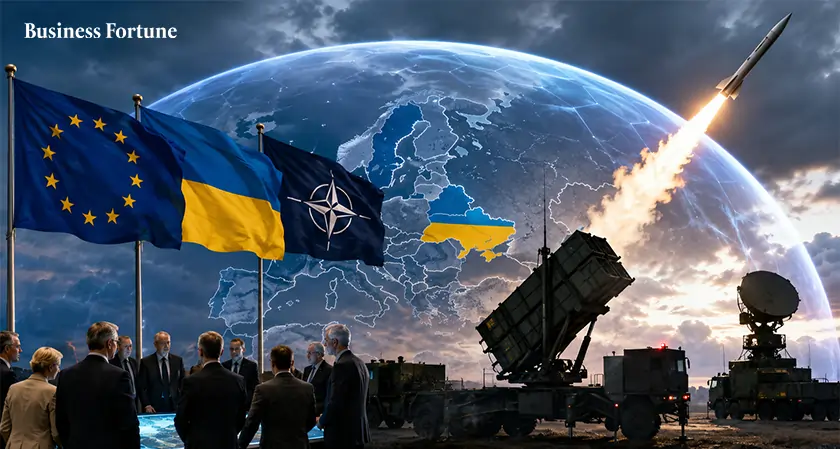
Europe took a major step toward strengthening regional security when a new multinational initiative focused on anti-ballistic missile cooperation, as announced in Paris.
Ukraine formed a coalition to protect Europe against escalating ballistic missile threats alongside Denmark, France, Germany, Italy, the Netherlands, Norway, Spain, Sweden and the United Kingdom. Volodymyr Zelenskyy, the president of Ukraine and over two dozen European leaders attended a high-level meeting where the announcement was made with the intention of responding to Russia's ongoing missile attacks and strengthening long-term security cooperation.
Europe Unites for Integrated Missile Defense
The participating nations said the initiative seeks to develop Europe's ballistic missile defense through an integrated regional architecture. Leaders emphasized the project is purely defensive and designed to deter future missile threats rather than target any nation.
They also highlighted Ukraine's battlefield experience, gained through years of defending against repeated Russian ballistic missile strikes, as a valuable contribution to the program.
Ukraine Seeks Faster Air Defense Development
President Zelenskyy urged European allies to accelerate joint production of affordable missile defense systems. He said Ukraine and its partners could potentially develop mass-produced interception capabilities within the next year, helping Europe strengthen self-reliant defense while supporting other countries facing similar security risks. The coalition remains open for additional European nations to join as planning advances.
Russia Rejects Initiative as Regional Tensions Rise
The announcement came as Russian President Vladimir Putin pledged stronger retaliation against Ukrainian attacks on Russian infrastructure. Kremlin officials dismissed the new alliance, calling it a coalition that encourages continued conflict. Meanwhile, European leaders reaffirmed their commitment to supporting Ukraine politically, militarily and through expanded defense cooperation as security concerns continue across the continent.
Key Highlights:
-
Ten nations launch coalition to strengthen European missile defenses.
-
Ukraine contributes frontline air defense operational experience.
-
Initiative focuses on purely defensive integrated security architecture.
-
Coalition remains open for additional European member participation.
-
Leaders seek faster regional missile interception capabilities development.
The anti-ballistic missile initiative reflects Europe's broader effort to improve collective security against increasingly sophisticated ballistic threats. While no implementation timeline has been announced, participating governments stressed that stronger industrial cooperation, research partnerships and shared operational expertise will remain central to building Europe's ballistic missile defense and enhancing the coalition to protect Europe from future missile risks.
Thus, Business Fortune is of the view that stronger anti-ballistic missile cooperation could significantly reshape Europe's collective defense strategy against evolving regional security threats.
FAQs
What is the new anti-ballistic missile coalition?
It is a partnership of ten European countries, including Ukraine, to develop integrated ballistic missile defense capabilities.
Why was the coalition created?
It was formed in response to growing ballistic missile threats across Europe.
Which countries are participating?
Ukraine, Denmark, France, Germany, Italy, the Netherlands, Norway, Spain, Sweden and the United Kingdom.
What role does Ukraine play in the initiative?
Ukraine provides operational expertise gained from defending against Russian missile attacks.
Has a timeline been announced?
No. The participating countries have not specified when the defense system will become operational.


.webp)































Comments