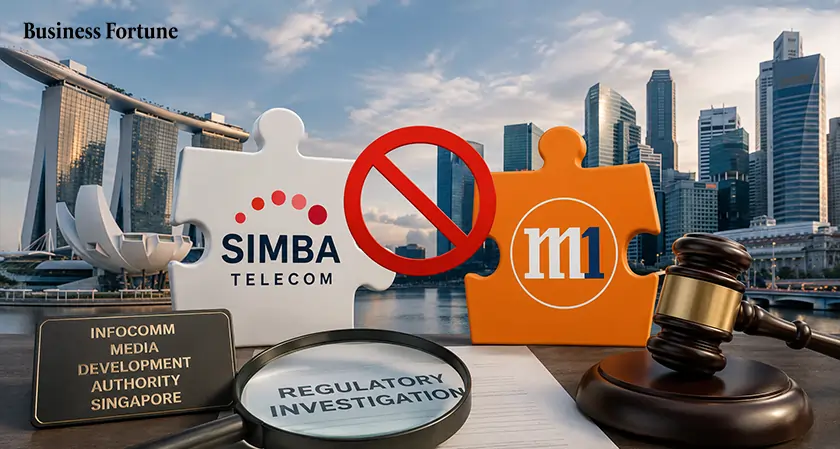
Singapore has suspended the review of Simba Telecom’s proposed S$1.43 billion deal with M1 after regulators launched an investigation into alleged unauthorized spectrum use by Simba.
Singapore’s telecom industry is facing uncertainty after the Infocomm Media Development Authority (IMDA) paused its review of the planned merger between Simba Telecom and M1. Singapore halts Simba-M1 as the regulator said Simba may have used radio frequency bands that were not officially approved for its mobile services.
The development has raised questions about the future of the S$1.43 billion deal, which was expected to become Singapore’s first major telecom merger.
Investigation puts major telecom deal on hold
IMDA said it has stopped the merger review until its investigation into the suspected unauthorized use of spectrum is completed. The regulator added that such actions could violate Singapore’s telecommunications laws and the terms of Simba’s operating license.
The agency also said the review had been detailed because M1 runs important mobile and broadband networks across Singapore. Along with competition concerns, IMDA was also examining cybersecurity and the protection of critical telecom infrastructure.
Simba said it is cooperating fully with the authorities and is looking into the issue.
Could Singapore’s telecom sector stay unchanged
The proposed merger was announced in August 2025 when Keppel agreed to sell its 83.9% stake in M1’s telecom business to Simba. However, Keppel planned to keep M1’s non-telecom businesses. The deal was expected to bring Keppel around $780 million.
If the merger had been approved, the new Simba-M1 company would have served more than three million mobile users, becoming Singapore’s second-largest telecom operator after Singtel.
The companies had also promised several benefits for customers:
-
Current mobile plan prices would stay the same for at least two years.
-
Simba and M1’s affordable $10 and $12 plans would continue for new customers.
-
Customers would be able to use more than 20 combined stores and service centers.
-
Mobile network coverage was expected to improve through shared infrastructure and spectrum resources.
Many industry experts saw the deal as an important move for Singapore’s telecom market, where strong competition over the years has already lowered mobile and broadband prices for consumers.
Keppel prepares for life after the deal
After IMDA paused the Simba-M1 Telecom Deal, Keppel said it would remove the planned M1 sale from its 2025 plans. Chief executive Loh Chin Hua confirmed that the company would let the agreement with Simba expire after the May 21 deadline. And Keppel has now started a backup plan to keep majority ownership of M1 and will begin a 90-day effort to improve the telecom company’s operations and efficiency.
At the same time, Keppel said it is still open to selling M1 in the future and believes more mergers in Singapore’s telecom industry could be beneficial. Analysts believe the setback is unlikely to hurt M1’s long-term value, and other companies, including rival telecom operator StarHub, could show interest in a deal later on.
Future outlook
As Business Fortune observes, the suspension of the Simba-M1 merger review is an important development for Singapore’s telecom industry. The future of the deal now depends on the result of IMDA’s investigation into the alleged misuse of spectrum. If the concerns are cleared, the merger discussions could continue. But if the deal is cancelled, other telecom companies may step in as Singapore’s telecom industry looks at new merger and partnership opportunities.


.webp)