Researchers show that inhaling CBD before glioblastoma develops may reprogram the body’s biology, making tumors less aggressive and more controllable.
Researchers from the Georgia Institute of Cannabis Research at Augusta University discovered in a new study published in the International Journal of Molecular Sciences that inhaling cannabidiol (CBD) before glioblastoma tumors were established greatly slowed tumor progression in an animal model and altered key biological markers linked to aggressive cancer behavior.
One of the most deadly types of brain cancer, glioblastoma is characterized by quick growth, healthcare resistance and frequent recurrence. The benefits of standard therapy for survival are sometimes quite limited. In this study, researchers explored a novel approach: whether early exposure to CBD could “prime” the bodies immunological and biochemical environment in a way that renders it less friendly to the development of tumors.
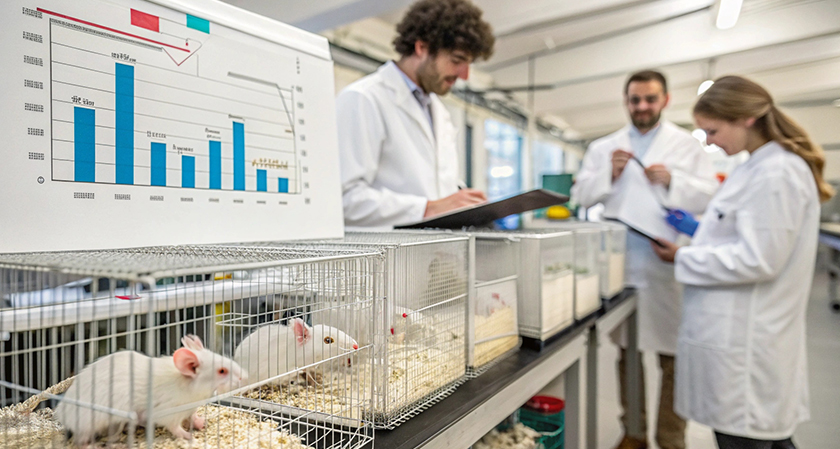
This was examined by administering inhaled CBD to C57BL/6 mice for three or fourteen days before glioblastoma cells were surgically implanted into their brains. Instead, a placebo was given to a control group. Following tumor implantation, scientists tracked tumor growth and examined a number of biomarkers, such as IDO, PD-L1, MGMT, and Ki67, linked to tumor aggressiveness and immune suppression.
The results were remarkable. In comparison to both the placebo group and the group that got CBD for just three days, mice that received fourteen days of CBD pretreatment had noticeably lower tumor burdens. Reduced expression of IDO and PD-L1, two immune checkpoint markers that cancers frequently exploit to elude the immune system, was also associated with this extended exposure to CBD. Also, reduced levels of MGMT and Ki67, biomarkers linked to tumor growth, repair capacity, and proliferation, were seen in the CBD-pretreated mice.
These combined alterations, stated by the researchers, indicate a less aggressive tumor phenotype and imply that extended exposure to CBD prior to tumor growth may convert the tumor microenvironment into a more anti-tumor state. To put it another way, CBD seemed to affect the body's fundamental biological landscape in a way that made it more difficult for the cancer to grow rather than only acting on the tumor once it had grown.


.webp)