There is still a small group of people who believe blockchain has the ability to decentralize different facets of human activity for the benefit of society as a whole, despite the speculation and volatility in the virtual casino that is the cryptocurrency world.
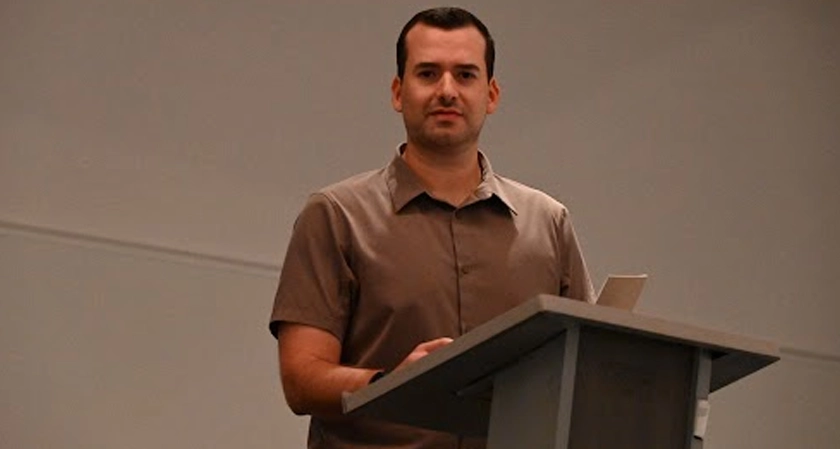
Daniel Wang, the founder of Taiko, is one of these idealistic founders.
Originally, serial entrepreneur Wang aimed to decentralize social media networks. He thinks that decentralized networks, such as blockchains, can thwart censorship by distributing data storage and enabling community-based content moderation.
He expressed his wish that the next generation can grow up free and be allowed to say anything on the internet while speaking to reporters at an Ethereum developer conference. He went on to say that without the ability to critique, growth cannot occur.
Wang intended to use Ethereum to create the decentralized application. The blockchain that Vitalik Buterin co-founded has drawn a wave of developers that utilize "smart contracts," or computer code that runs predefined commands automatically, to enable crypto applications that go beyond simple value storage.
But after doing a lot of research, Wang found that none of Ethereum's "Layer 2" solutions—which are mainly meant to help the network handle more transactions—were actually decentralized.
With its present processing speed of about 15 transactions per second, Ethereum is not suitable for a wide range of applications. Consequently, "rollups" have surfaced as a Layer 2 solution that lowers transaction fees and network congestion by shifting Ethereum transactions to subsidiary chains and then reporting them back to the main chain in batches.
Wang claims that the problem with most rollups is that they compromise decentralization in order to gain scalability, which undermines the core principles of Web3. He was certain that there was a gap in the infrastructure layer for truly decentralized social apps, so he set out to fill it, which resulted in the founding of Taiko in March 2022.


.webp)