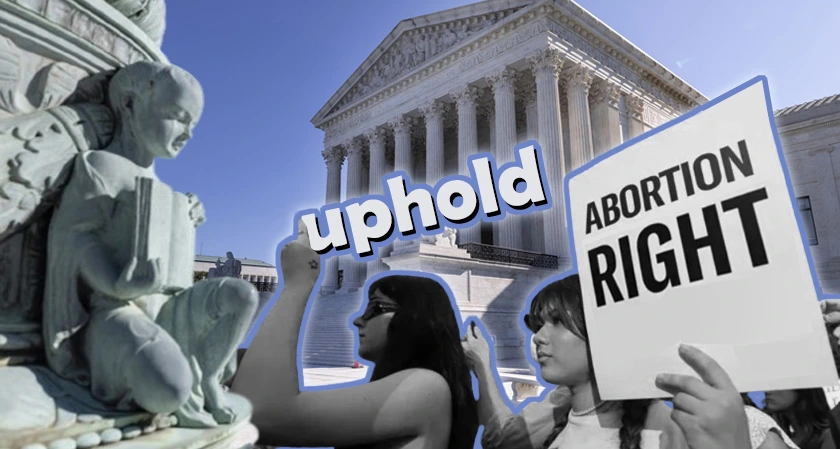
Idaho officials requested that the U.S. Supreme Court temporarily postpone a federal judge's judgment that prevented the state from enforcing its nearly complete ban on abortion in medical emergencies.
U.S. District Judge B. Lynn Winmill issued a preliminary injunction in August 2022, but Republican state leaders petitioned the justices to suspend it. Winmill determined that the state's limits on abortion were in contradiction with a federal law that guarantees patients can obtain emergency "stabilizing care."
The Supreme Court was informed in court documents by Idaho's Republican attorney general and leading Republican state legislators that Winmill's decision had allowed for "an ongoing violation of both Idaho's sovereignty and its traditional police power over medical practice."
In June 2022, the conservative majority on the Supreme Court reversed the historic Roe v. Wade ruling, which acknowledged a woman's constitutional right to an abortion. Following that decision, several new abortion restrictions were implemented by states with Republican governors.
Following the overturning of Roe v. Wade, Idaho's so-called "trigger" statute outlawing abortion, which was approved by the state legislature under Republican leadership and signed by the governor in 2020, came into force immediately. The Defense of Life Act, a law in Idaho, outlaws abortions altogether unless it is determined that an abortion is required to save the mother's life.
State abortion bans are superseded by a 1986 U.S. law known as the Emergency Medical Treatment and Labor Act, which requires hospitals to "stabilize" patients with emergency medical conditions. This was stated in federal guidance issued by the U.S. Department of Health and Human Services (HHS) under Biden's direction following the Roe reversal.


.webp)