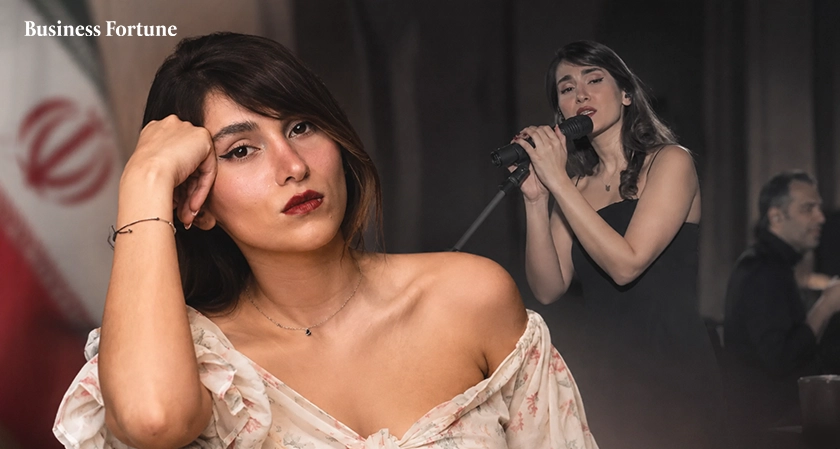
Parastoo Ahmadi and four members of her concert team received 74 lashes each in Qom, alongside two-year bans on artistic activities and foreign travel.
Iranian singer Parastoo Ahmadi has reportedly received 74 lashes from Iranian authorities over a concert performance in which she appeared without the mandatory hijab. Four male members of her concert team were given the same punishment in Qom, according to defence lawyers and human rights organisations. The case has been widely criticized internationally, with activist groups branding the judgment as one that is a violation of women’s rights and artistic expression. The five individuals have also been banned from their professional activities and traveling abroad.
What Led to Parastoo Ahmadi's Punishment?
This case originated in December 2024, when Ahmadi posted a video of her concert titled ‘Caravanserai Concert’ on social media. The video was recorded at the famous Deir-e Gachin Caravanserai of Qom and the concert was performed by the singer with male artists but with no audience present.
Ahmadi appeared in a long black sleeveless dress, with her hair visible. The performance contradicted the Iranian laws on hijab, which demand that women must cover their hair and be decently dressed in public.
After the release of the video, a case was filed by the Iranian government against the singer and her production crew and the Mizan News Agency, which is affiliated with the judiciary, stated that the performance was an unlawful concert.
Five Individuals Faced the Same Punishment
Ahmadi was found guilty of indecency to the public through the publication of material which the court deemed obscene. They were all banned from participation in music and art for two years and foreign travel.
While the case involved nine defendants, five individuals, including Ahmadi, had their whipping sentences carried out at the Qom Criminal Sentence Enforcement Office.
Defense attorney Mostafa Nili confirmed that the penalty was served, naming the four men as Soheil Faghih-Nasiri, Amin Taheri, Amir-Ali Pirnia and Mohsen Lashkari. The appeal had been heard in September and confirmed the verdict.
Human Rights Groups Condemn Iran's Decision
The punishment is facing criticism from foreign human rights groups and Iranian artists. Amnesty International called judicial flogging inhuman and degrading punishment.
According to Bahar Ghandehari from the Center for Human Rights in Iran, such punishment reflects how determined the authorities are in limiting the freedom of women.
The case also shows that restrictions on the performances of female artists still exist in Iran. The singer Hiva Seyfizadeh was sentenced to four years in prison after giving a musical performance in Tehran in February 2025.
This case occurs amid ongoing opposition to forced wearing of the hijab after the 2022 protests against the death of Mahsa Amini in prison. The regime in Iran has been under fire regarding its handling of women and people opposing religious oppression.
Sources: The Guardian, CNN
























.webp)




.webp)


Comments