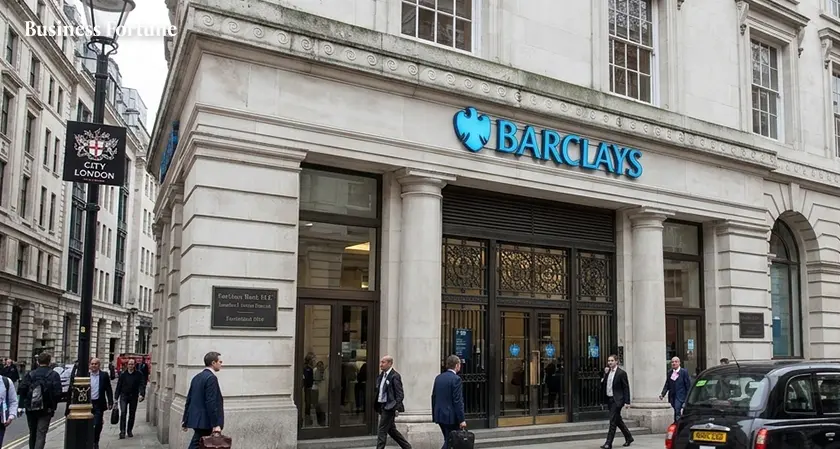
Barclays’ push for greater efficiency through AI and technology highlights the growing tension between corporate cost savings, rising profits, and employee job security.
Barclays Job Cuts approximately 5,000 jobs by the end of 2026 as the British banking group expands its use of artificial intelligence and technology to reduce operating costs. The projected job losses at Barclays are equivalent to about 5% of its entire staff worldwide, with a total of 1,000 jobs having been axed and an additional 4,000 jobs set to be cut down by the end of the year. The process is mainly concentrated on the UK retail banking operations.
Barclays Accelerates Workforce Restructuring Through Technology
These redundancies fall under Barclays’ three-year cost-saving and modernization program which focuses on increasing efficiency by making significant investments in technology. From the bank’s perspective, AI is playing an integral role in transforming its structure, but not all of the staff cuts are due to automation.
About 60% of the total job reductions are likely to be from support activities and developer jobs. According to CS Venkatakrishnan, who is the chief executive of Barclays Group, artificial intelligence is just the “icing on the cake” because modern infrastructure is essential to reap its rewards.
AI-Based Job Cuts Raise Concerns across Banking
The Barclays job cuts have come amid rising worry over the potential effects of artificial intelligence on jobs in the banking sector, especially in roles such as administration and programming, among others. This is as banks look into automating some roles in an attempt to become more productive and need fewer staff members.
However, the Unite trade union has not been pleased with the bank’s position. The general secretary, Sharon Graham, feels that instead of using technology as an excuse to cut jobs, employers should consider upskilling their employees.
Russ Mould from AJ Bell has suggested that the security and customer service concerns will also be a factor for banks to take into account prior to the implementation of AI. The AI workforce cuts have been mentioned by HSBC, Standard Chartered and Danske Bank.
£2.3 Billion Quarterly Profit as Barclays Targets Further Savings
Barclays has registered profits of £2.3 billion in the third quarter of 2026 ending in September, higher compared to that of the same quarter the previous year although a bit lower than what analysts had predicted. This came at a time when the bank was trying to cut down costs.
The savings are expected to add up to an additional £1.1 billion for the next year, 2027. Though investments in technology form part of the strategy, the extent of the displacement by AI of jobs cannot be determined yet. The restructuring shows how the tension between corporate efficiency and worker security is growing as banks use more advanced technology.
Thus, Business Fortune believes that Barclays’ AI-led transformation highlights the growing need to balance operational efficiency with workforce security and employee reskilling.
Sources: https://www.bbc.com/news/articles/cm4g1p347qgxo
FAQs
Why is Barclays cutting 5,000 jobs?
Barclays is reducing its workforce as part of a broader modernisation and cost-cutting programme involving technology investment, automation and operational restructuring.
How many Barclays employees have already lost their jobs?
Approximately 1,000 positions had already been eliminated, with another 4,000 reductions planned by the end of 2026.
Which departments will be affected by the Barclays job cuts?
Support functions, including developer roles, are expected to account for around 60% of the planned reductions. UK retail banking operations are a major focus.
Will Barclays job cuts affect employees in India?
Yes. Some UK banking back-office functions operate from India, and a significant proportion of the planned reductions is expected to affect roles there.
How much does Barclays expect to save through efficiency measures?
Barclays expects its efficiency measures to generate an additional £1.1 billion in savings in 2027.


.webp)































Comments