
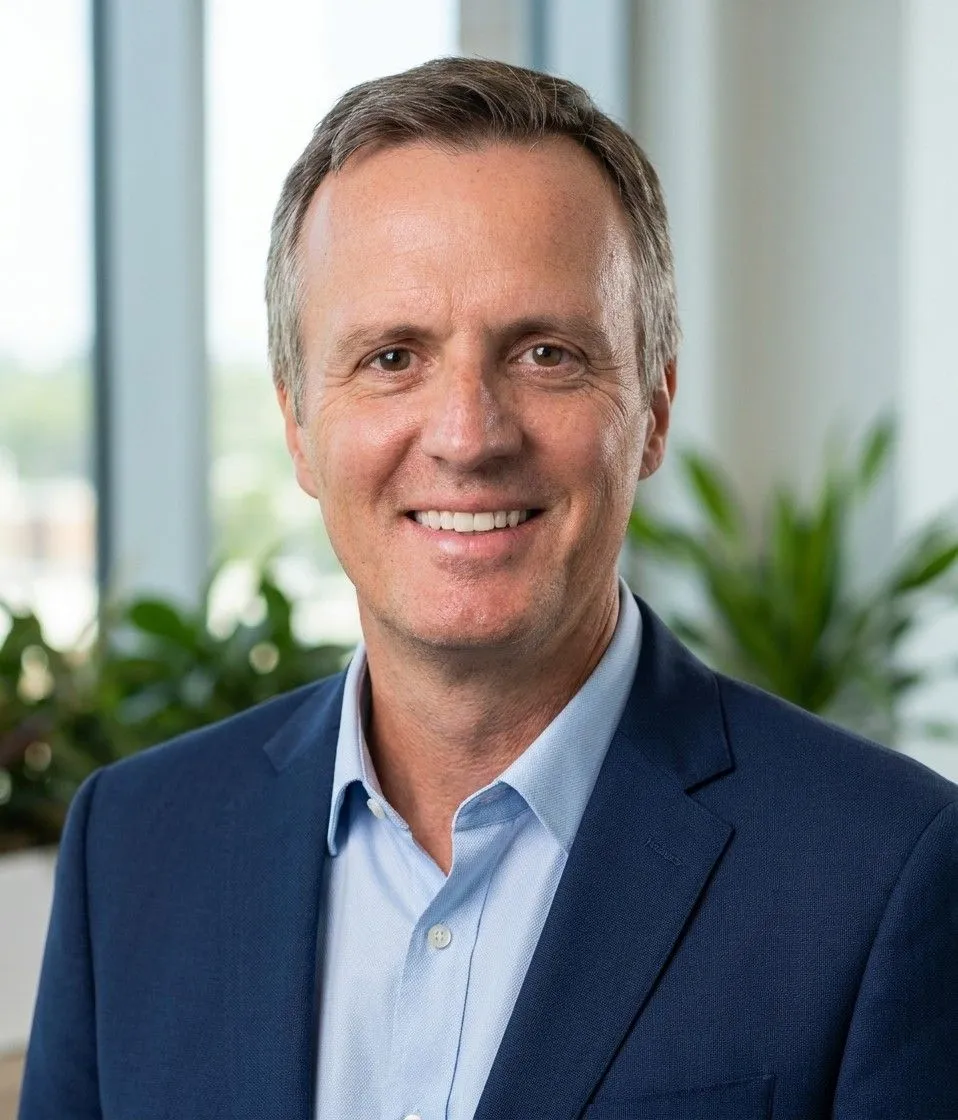
Some build houses; others build powerhouses. Martin Kipping belongs to the latter category. For more than 27 years, Kipping has helped shape the infrastructure behind the digital economy, leading international data center projects across Europe, Asia, Africa, and the Americas. Throughout his career, one principle has remained constant: never lose sight of the foundation.
"Over the years, I've seen firsthand the untapped potential for improving how small and medium-sized companies can enhance their performance and profitability within their project business," remarks Kipping. "Because the ultimate goal of any business is profitability. Who wants to lose money?"
That philosophy led him to establish MK Datacenter Solutions (MKDS). As executive partner, he advises companies navigating growth, organisational transformation, and international expansion, drawing on decades of experience delivering complex projects around the world.
An eye for architecture
Kipping's career began not in IT but in architecture. After secondary school, he earned a diploma as a chartered engineer in architecture from Germany's University of Siegen. His education taught him to think in systems, and to understand how every component contributes to the whole.
That architectural mindset has come to define his leadership. It's his signature touch. Whether designing Data Centers or global organisations, Kipping has learned to balance technical precision with such strategic vision.
His first professional role was with a German company specialising in modular server rooms. Starting out as a project manager, he quickly discovered a talent for both engineering and customer engagement. As his responsibilities expanded into sales and business development, he realised that understanding a client's needs was just as important as building the solution itself.
Building global
A new chapter of Kipping's career opened at Rittal, where he spent more than a dozen years in increasingly senior international leadership roles, eventually serving as head of International Sales Engineers, Vice President of Rittal's Global Data Center business, and Director of IT Infrastructure for North America.
In all of these roles, Kipping worked to transform the company's international project organisation, establishing centers of excellence and regional competence hubs in Germany, Lithuania, India, China, and the US. He also played a key role in a major corporate transformation programme conducted alongside McKinsey while developing strategic partnerships with companies including IBM, HPE, ABB, and Stulz. Again, he put his architectural talent to work, thinking in terms of scalability, and laying strong foundations.
"Manufacturing racks just wasn't enough anymore," Kipping recalls. "Because Hyperscalers and Enterprises, like our clients, requested complete solutions with products and services including global logistics that could be delivered consistently worldwide."
Critical infrastructure
Across nearly three decades in the business, Kipping has overseen more than 800 projects spanning government, defence, healthcare, aviation, automotive, pharmaceuticals, utilities,and Hyperscalers.
His portfolio includes helping conceive Norway's Lefdal Mine Data Center, deploying a mission-critical data center at Johannesburg Airport ahead of the 2010 FIFA World Cup, and designing 45 coastal defence data centers across India.
Delivering projects on this scale required far more than technical expertise, he notes. Success depended on leading multicultural teams, for example, as well as the aligning of diverse stakeholders, and maintaining quality under demanding schedules and challenging environments.
Modular Data Centers
Among Kipping's most significant contributions has been advancing modular and prefabricated data center technologies. Rather than relying solely on existing infrastructure, he has championed the use of standardised, containerised systems that reduced deployment times while maintaining high standards of reliability and quality. His teams therefore have relied on modular platforms that enable organisations to scale infrastructure more rapidly while supporting emerging AI- and Cloud-based service models.
These innovations reflect Kipping's broader belief that complexity should be managed through thoughtful systems and repeatable processes rather than unnecessary customisation. It's a philosophy that also extends into project governance.
"One significant opportunity for optimisation lies in identifying valuable opportunities early through robust Bid/No-Bid criteria," says Kipping. "This ensures resources are allocated to realistic and worthwhile pursuits. But also permanently conducted Lessons-Learnt reviews lead to a successful business: reflecting what went well but also what can be optimized next time contributes significantly to the success of projects."
The impossible becomes possible
As Kipping's career progressed, his focus shifted from managing individual projects to leading international organisations operating across multiple continents. These projects and engagements continued to require a leadership style that combined strategic thinking with operational discipline. Faced with ambitious deadlines or large-scale transformation programmes, Kipping learned to break complex challenges into smaller, manageable stages without losing sight of the overall objective.
"Nelson Mandela said, 'It always seems impossible until it's done," says Kipping. "That approach informs my recommendations for project management."
According to Kipping, successful execution is never accidental. Instead, it derives from disciplined planning, continuous evaluation, and learning from both successes and failures.
Building MK Datacenter Solutions
Today, Kipping is applying those principles through his new venture, MK Datacenter Solutions, which supports companies during periods of expansion, restructuring, and operational transformation. Rather than acting only as a consultant, he often assumes executive mandate roles, working alongside leadership teams to establish governance structures, build international organisations, develop scalable operating models, and strengthen strategic partnerships.
Recent MKDS assignments have included serving as Chief Strategy Officer for TierX Data Center Solutions in India and supporting Brazilian company Edgefy in its international expansion into Asia and Africa.
Looking ahead, Kipping aims to establish MK Datacenter Solutions as a globally recognised partner for start-ups, SMEs, and established enterprises seeking international growth. "It is my belief that by combining executive leadership, technical expertise, and practical operational experience, we can help organisations build resilient businesses," he says, "operations that are capable of thriving in an increasingly interconnected digital economy. That is my main goal."


.webp)
































Comments