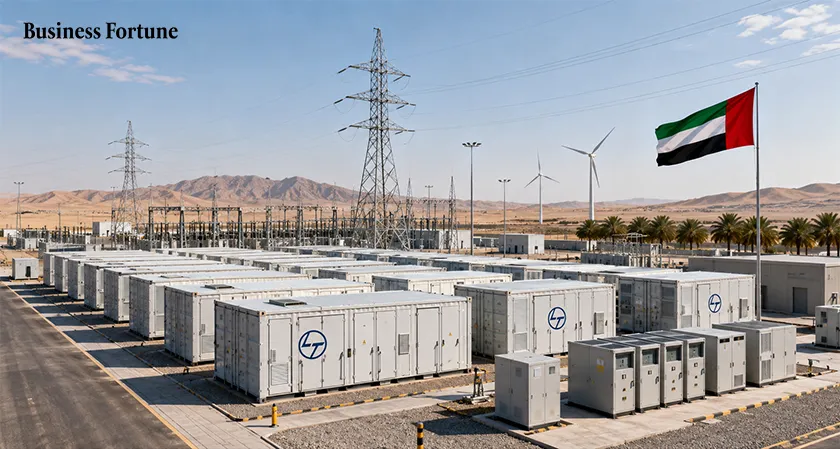
L&T Battery Storage Project brings 6 GWh of energy storage to the Middle East. Find out why this major deal could reshape the region’s renewable energy future.
Larsen & Toubro’s Renewables business has secured a major order from a prominent Middle Eastern client to develop three Battery Energy Storage System (BESS) projects. The L&T battery storage project portfolio will have a combined capacity of 6 GWh, adding significant storage capability as the region upgrades its power grids and expands renewable energy.
Each project will use a four-hour BESS configuration, allowing electricity to be stored and released when demand rises. The systems will also have pooling substations and underground cabling to provide connections to the grid.
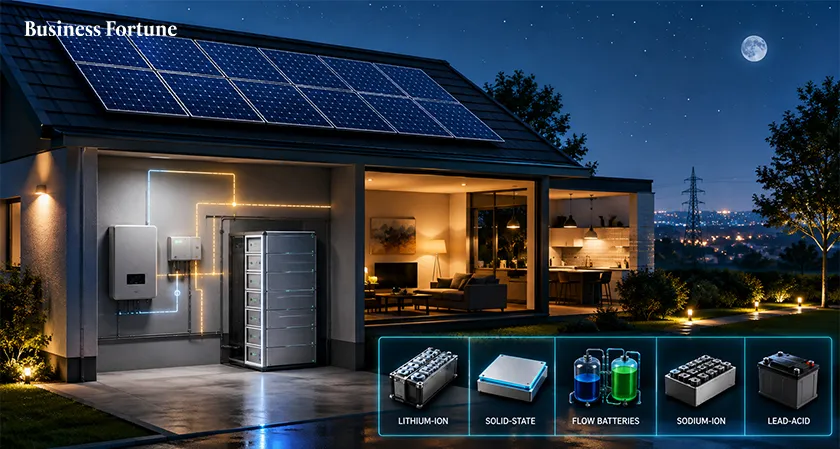
This is significant because wind and solar energy may not produce power at the time when the demand for power is high. Batteries can store extra power at times when there is low demand and release it when the demand is high.
What makes these batteries different?
L&T will use liquid cooling technology in the storage systems. Better thermal management can help improve safety, support higher power density and extend the operating life of battery assets. As large battery installations become more common, these technical capabilities are becoming increasingly important. Storage projects are no longer simply about installing batteries. They also require careful attention to grid connections, safety, performance and long-term reliability.
The scale of the order also highlights the growing trust placed in L&T’s engineering and project execution capabilities. The company said, “the order reflects the continued confidence of its customers in its engineering capabilities and project management expertise.”
Why is the Middle East turning to large-scale storage?
However, countries in the region are generating more renewable power while at the same time searching for new approaches for balancing supply and demand. Such big BESS systems can help solve this problem by moving power into peak times of consumption.
The deal is considered “Major” in L&T’s order classification, as such deals range from ₹5,000 crore to ₹10,000 crore in value. The company operates in many areas including engineering, procurement and construction, manufacturing, technology and infrastructure markets globally. Also, such projects will need high standards of performance, safety, quality, mobilisation and execution schedule.
L&T’s latest order reflects how battery storage is becoming a central part of modern energy infrastructure. As renewable capacity continues to grow across the Middle East and other markets, demand for large, reliable storage systems is likely to rise.
In the coming years, as Business Fortune observes, the projects combining renewable generation, advanced batteries and intelligent grid infrastructure could play a major role in creating more stable and flexible power networks.
FAQs
What is the L&T battery storage project?
It is a portfolio of three BESS projects in the Middle East with a combined storage capacity of 6 GWh.
How long can each BESS system supply electricity?
Each system is designed with a four-hour storage and discharge configuration.
Why is liquid cooling used in BESS projects?
It helps manage battery temperature, supporting safety, power density and longer operational life.
How will the projects support renewable energy?
They can store surplus electricity when demand is low and release it during periods of higher demand.
Why are BESS projects important for the Middle East?
They can help countries integrate more renewable energy while improving grid flexibility and power reliability.
.webp)
































Comments