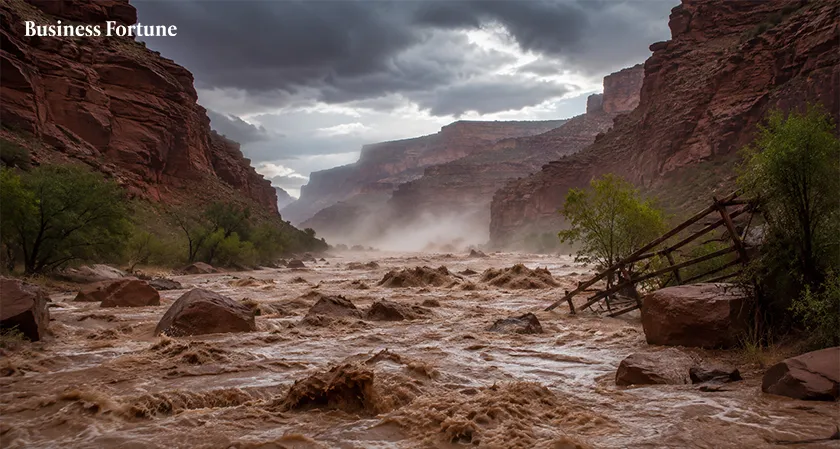
A sudden wall of water swept through the Grand Canyon, forcing dramatic helicopter rescues, damaging trails and Breaking the only water pipeline of the park.
A destructive flash flood at the Grand Canyon National Park leading to death of one person and nearly 15 people went missing after heavy rains hit Bright Angel Canyon and Phantom Ranch on Saturday. The body of a 46-year-old male was found by the National Park Service (NPS) rescue team during the late evening hours on Sunday near Crystal Rapids in the Colorado River. More than 60 people were saved using helicopters.
The water rose in minutes
The storm hit around 2:30 p.m., bringing intense rain, hail, and heavy flooding. A nearby weather station had reported 1.17 inches of rainfall from 2 to 3 p.m. The water level of Bright Angel Creek increased by over five feet within ten minutes, while the Colorado River rose by eight feet within an hour. The bridges were washed away and mud, rocks, and debris flowed through the canyon. For many visitors, the danger appeared almost instantly.
Daniel Evans, aged 43, was camping in the Bright Angel Campground when it began raining lightly and then became very heavy rain that forced the rangers to evacuate him together with the other campers. Evans, along with 40 other people, took shelter under an overhanging part of the canyon because of the danger of rock slides. He later became one of the first hikers rescued by helicopter.
“The flooding popped up out of nowhere and it was worse than anyone could have expected,” Evans said, adding that he was grateful to escape safely but saddened after learning others were still missing.
Why was the rescue so difficult?
The steep landscape of the canyon and poor cellphone coverage made the search harder. The National Park Service said it is nearly impossible to maintain a phone signal in many parts of the Grand Canyon, while satellite phones were being tested as another way to communicate.
The park authorities decided to shut down Phantom Ranch, Bright Angel Campground, and North Kaibab Trail. The Colorado River was also shut down due to the debris that entered the river. The flooding has also damaged the only pipeline of water for the park. Overnight stays at hotels and lodges inside the park were also scheduled to stop from Monday, while residents were asked to conserve water.
What happens next?
As Business Fortune observes, further floods, rock falls, and debris flows may occur due to the expected storms and rains. The search teams will be continuing their efforts to locate the missing tourists, while the officials will be assessing the damage and making plans for repairs.
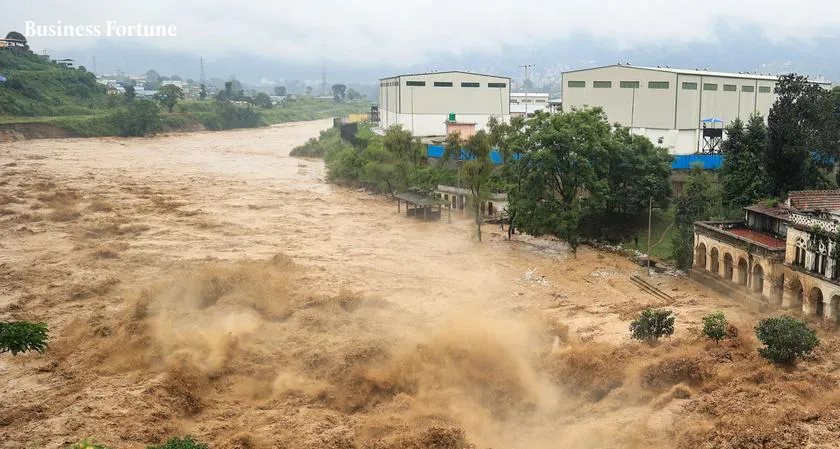
However, this is not the only incident; Nepal is also dealing with a devastating flood emergency. Due to a glacial breakout near the Chinese border in Nepal, around 903 individuals have been reported dead, while more than 4,247 are still missing. And more than 10,000 individuals have been rescued. Rescue missions are still ongoing in Nepal as search teams try to find people stuck in isolated regions and hydropower tunnels.
With more unpredictable weather and mountain conditions, the ability to detect danger early and warn the people is becoming more important than the rescue.
FAQs
How many people were rescued?
More than 60 hikers and campers were airlifted from the canyon.
How many people remain missing?
About 15 people were reported missing or unaccounted for.
Was anyone killed?
Yes. The body of a 46-year-old man was recovered near Crystal Rapids.
What areas were closed?
Phantom Ranch, Bright Angel Campground, the North Kaibab Trail and parts of the Colorado River were closed.
What happens next?
Search and rescue operations will continue while officials monitor weather conditions and assess damage. Longer term, the disaster could push the Grand Canyon toward stronger flood monitoring, communications and infrastructure designed for increasingly unpredictable weather.


.webp)






























Comments