Israeli airstrikes on Lebanon have killed at least 13 people in south despite ceasefire efforts, as cross-border violence and tensions with Hezbollah continue.
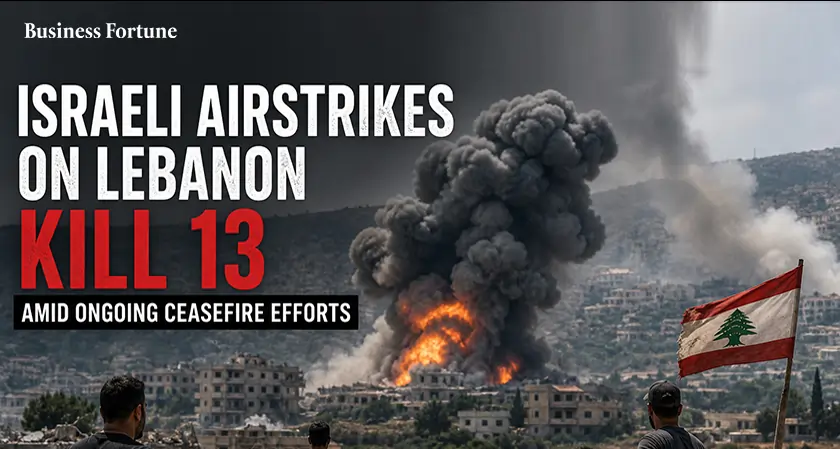
Violence has continued in southern Lebanon despite ongoing ceasefire efforts, with fresh Israeli airstrikes causing multiple deaths. The health ministry in Lebanon says at least 13 people, including four women and a child, have been killed in Israeli airstrikes on Lebanon. The strikes hit several towns even though a ceasefire has been extended and diplomatic efforts are still ongoing.
In Habboush in Nabatieh district, eight people were killed, including two women and a child, after the Israel Defense Forces issued an evacuation warning shortly before the attack. In Zrarieh in Sidon district, four more people, including two women, were killed. One person died in Ain Baal in Tyre district, while 32 others were injured across the region on Friday.
Fighting between Israel and Hezbollah has continued despite a three-week ceasefire extension. Hezbollah said it targeted Israeli soldiers and military vehicles in southern Lebanon. The Israeli military said one of its soldiers was killed on Thursday, bringing its total troop deaths since early March to 17.
An initial 10-day pause in hostilities began after talks in Washington between Israel and Lebanon, marking the first high-level meeting between the two countries since 1993. The United States later extended the ceasefire on 23 April, saying efforts were ongoing to support Lebanon’s security and stability.
Despite the truce, fighting has continued in southern Lebanon with repeated airstrikes and evacuation orders. According to Lebanon’s health ministry, more than 2,600 people have been killed since March, including civilians and emergency workers, while Israel reports continued strikes on Hezbollah positions.
On Saturday, the Israeli Defense Forces said it carried out around 50 strikes in the past day, targeting buildings and sites it claims are used by Hezbollah. The US embassy in Beirut suggested that talks between Lebanon’s President Joseph Aoun and Israeli Prime Minister Benjamin Netanyahu could help secure guarantees on borders, sovereignty and reconstruction support.
As Business Fortune observes the situation of Israeli attacks on Lebanon remains tense as cross-border attacks continue between Israel and Hezbollah. Civilians in southern Lebanon face repeated displacement and damage to homes, schools, and religious sites. International calls for restraint have increased but violence continues despite ceasefire efforts and ongoing diplomatic engagement led by the US amid fears of further escalation in the region in the coming days if talks fail.


.webp)