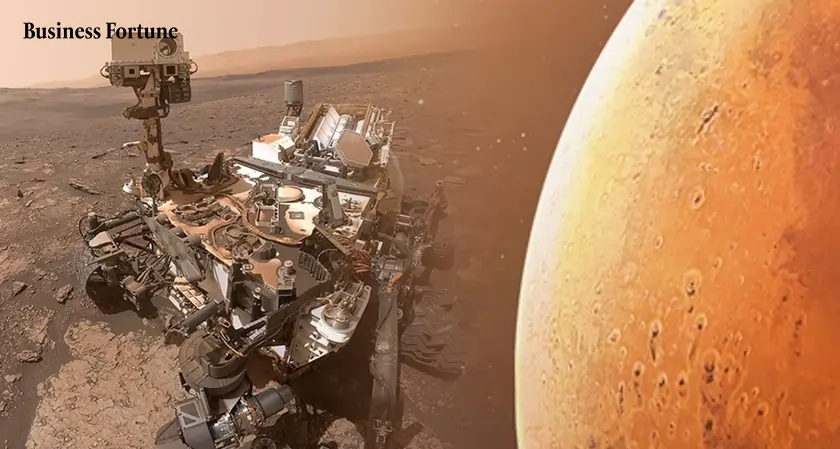
NASA’s Curiosity rover has found new organic molecules in a Mars rock sample, including some never seen before on the planet which adds fresh clues about the planet’s past life.
NASA has found new organic molecules on Mars, adding new leads in the search for signs of past life on the Red Planet. The finding marks a step forward in how scientists study Mars, offering a closer look at its chemistry and what it may reveal about the planet’s ancient environment.
The discovery comes from a rock drilled by Curiosity in 2020 and later analyzed on Earth. Out of 21 carbon-based molecules identified in the sample, seven were detected on Mars for the first time. These organic molecules are made of carbon and other elements and form the basic building blocks of life on Earth. These compounds are especially interesting because they were identified through a new type of chemical experiment conducted directly on the Martian surface.
However, researchers are careful to point out that their presence does not mean life once existed on Mars. Such molecules can form through both biological processes and non-biological chemistry. The experiment also suggested the possible presence of a compound that looks similar to the building blocks of DNA, the molecule that carries genetic information in living organisms on Earth. While this is not proof of life, it is an interesting clue that Mars may have once had the right chemistry for it.
The analysis was carried out using Curiosity’s onboard lab called Sample Analysis at Mars, or SAM. This system has helped uncover many of the rover’s major findings about Mars’ atmosphere, chemistry, and past habitability.
To study the samples, scientists used a chemical called TMAH, which helps break larger molecules into smaller pieces so they can be detected. Because Curiosity carries only a limited amount of this chemical, each test must be carefully planned, with researchers choosing the most promising rock samples.
The findings, published in the journal Nature Communications, are also important for future space missions. Upcoming projects like the Rosalind Franklin rover and NASA’s Dragonfly mission to Titan are planning to use similar techniques to search for organic molecules.
Scientists say the results are promising. As one researcher noted, Mars appears to preserve complex organic materials in its shallow surface, which increases the chances of finding chemical signs that could one day point to past life.
As NASA continues to analyze Mars’ chemical history one sample at a time, these findings keep the question of ancient life firmly open, reminding us that the Red Planet may still have more secrets waiting just beneath its surface, as explored by Business Fortune.


.webp)