CAS Space and other firms are driving China’s ambitious 2026 launch surge, expanding infrastructure, reusable rockets, and orbital missions.
The founder and chairperson of CAS Space, Yang Yiqiang, predicts that China will perform roughly 140 orbital launches in 2026, which would be a major expansion of the country's already rapidly growing space activity. According to the Chinese publication 21st Century Business Herald, Yang made the comments in February during a provincial industry and policy forum.
If accomplished, the amount would be 35 percent more than the 68 orbital launches finished in 2024 and a major increase over the 92 orbital launches China performed in 2025, setting a national record. This year's increase to 140 missions would represent an around 52 percent increase from the previous year, highlighting China's launch industry's explosive growth.
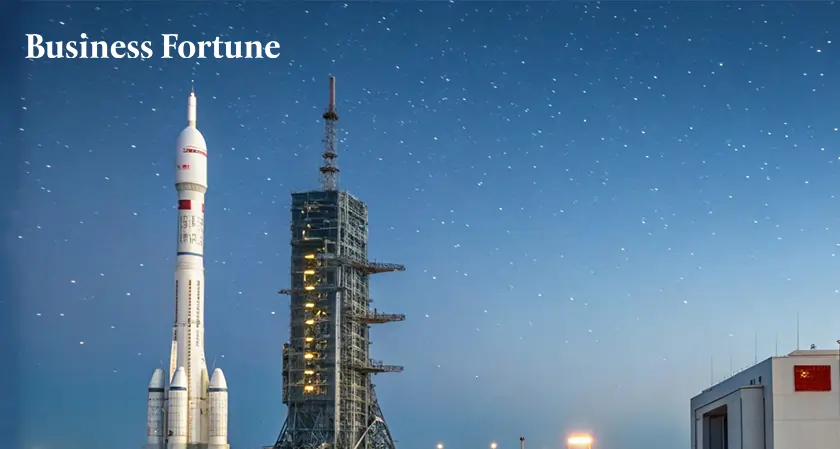
The anticipated rise coincides with the nation expanding its commercial and launch infrastructure. In addition to commercial launch pads on Hainan island near the Wenchang spaceport and expanded maritime launch facilities in Haiyang, Shandong Province, China has been building more launch capacity at locations like Jiuquan, where a commercial innovation test zone has been established.
CAS Space is one of the companies that is helping that expansion. On March 30, the business successfully launched three spacecraft, including a prototype cargo ship, into orbit with the inaugural launch of their kerosene-liquid oxygen Kinetica-2 rocket. In 2026, CAS Space plans to launch about 13 times, including further Kinetica-2 flights and its Kinetica-1 solid rocket, some of which are anticipated to support constellation deployments.
China's expanding list of launch firms and a stronger push for reusable rockets are other contributing factors to the wider growth. While state owned organizations continue to add next-generation reusable vehicles to the Long March launch family, companies like LandSpace, iSpace, Space Pioneer, CAS Space and Galactic Energy are developing new technologies. Although China's launch frequency is still lower than that of the US, which made 193 orbital launch attempts in 2025, the most recent forecast indicates that the gap will continue to close.
Thus, Business Fortune is of the view that China’s 2026 launch surge highlights its fast-growing ambitions in the global space race.


.webp)