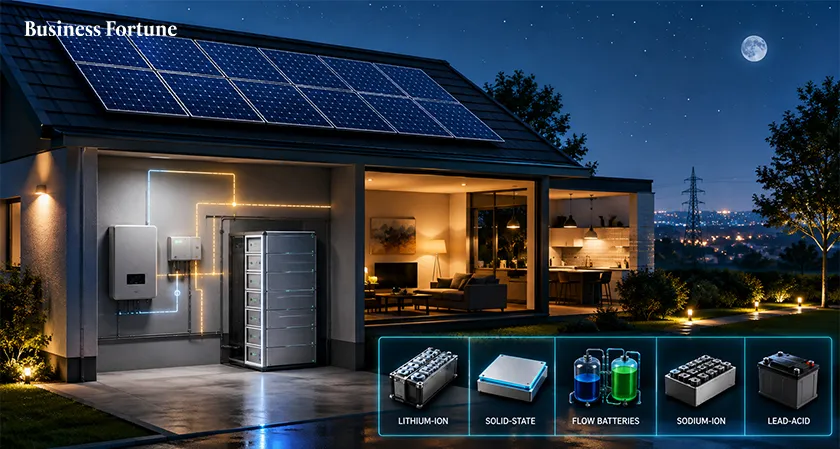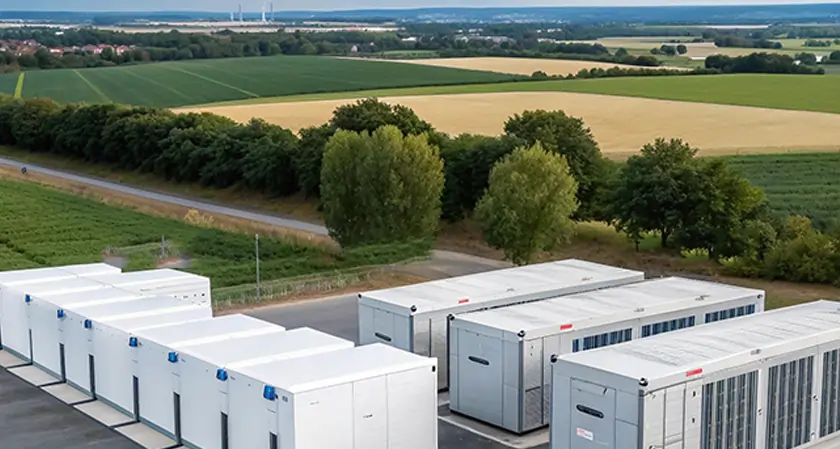
Developers including ABO Energy and Latvenergo advance large-scale battery projects to strengthen grids and integrate renewable energy across Europe.
Europe's grid flexibility is being advanced by a wave of battery energy storage system (BESS) technologies, with projects totaling over 700MWh underway in Germany, Belgium, France, Finland, Latvia, and Portugal. Developers and investors like ABO Energy, Field, Aspiravi, Prime Capital, Latvenergo, Sonnedix, and Amarenco are commissioning, funding, or starting construction on the projects, demonstrating the increasing momentum behind large-scale storage deployment in the region.
A 16 MW/33 MWh BESS facility in Waldkappel, Hesse, Germany, has been put into service. In 2025, ABO Energy sold the project to Field, the owner-operator, together with the development and delivery businesses. Instead of using traditional shipping container housing, the system employs a modular rack architecture built on steel frames, reflecting changing engineering approaches for grid-scale storage infrastructure.
Storage capacity is increasing in Belgium as well. A 60 MW/240 MWh battery storage system is under construction and is expected to become operational by 2027. In addition, another 12 MW/24 MWh BESS project secured a five-year flexibility purchase agreement after construction began in late 2025, highlighting evolving revenue models for battery storage assets in the Belgian market.
Across Europe, several other battery storage developments are underway. In Latvia, Latvenergo, a state-owned utility, ordered two energy storage systems with a combined capacity of 20MW/40MWh for approximately €22.5 million. Meanwhile, a German investment firm’s acquisition of an 85 MW/170 MWh storage facility in Finland highlights growing investor interest in Nordic grid-scale storage assets.
Battery storage portfolios in Portugal and France are also expanding. The Portugal project includes two hybrid solar energy systems with a combined 68 MW of solar generation and 56 MW of battery capacity. Solar operations are expected to begin in 2026, with the battery systems scheduled to follow later the same year. In France, the expansion of a previously developed energy storage project will increase its capacity to 94MW/188MWh and is being financed through a €65 million debt facility, with full commercial operation planned by 2027.
Overall, these projects reflect the rising investment in battery energy storage across Europe as countries strengthen grid reliability and support the integration of renewable energy sources.


.webp)