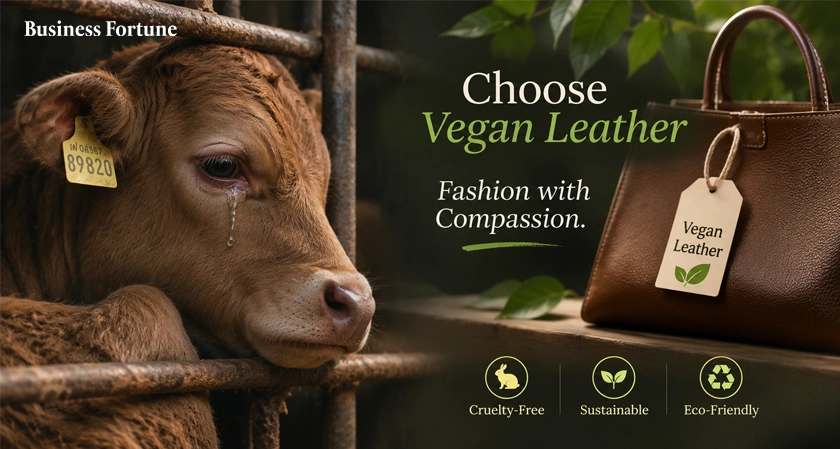
Every leather jacket, belt and handbag begins with a living animal. That animal had a body that felt pain, a social life and a will to live. Vegan leather offers a way to wear what you love without that cost and it is changing how the world dresses. This guide explains how vegan leather is reshaping the global fashion industry, why more people are choosing it and how you can make kinder choices without sacrificing style.
What Is Vegan Leather?
Vegan leather is any leather-look material made without animal hides. You may also see it called faux leather, leatherette, PU leather or "pleather."
Most vegan leather falls into two groups:
Synthetic options: Polyurethane (PU) or PVC coatings on a fabric backing. They are widely available and affordable.
Plant-based and bio-based options: Materials developed from pineapple leaf fibre, cactus, apple by-products or mushroom-derived mycelium. These are newer and often priced higher.
The label "vegan" means no animal was used. It does not automatically mean a material is sustainable and we will be honest about that below.
The Animal Behind Every Leather Product
Genuine leather is animal skin. Cattle, goats, sheep and pigs are raised, transported and slaughtered and their hides are then tanned into the material we see in shops. Most of us never think about this, because a finished handbag looks nothing like the animal it came from.
` animal, the choice looks different. These are sentient beings and every purchase is a small vote for the kind of world we want. Choosing vegan leather means choosing a product that did not require anyone's life.
Tanning also affects people and places. Leather processing commonly uses chemicals, including chromium salts and the Food and Agriculture Organization has noted that livestock contribute a significant share of human-caused greenhouse gas emissions. Harm to animals, workers and the planet is often connected.
Why Vegan Leather Fashion Is Growing?
Compassion is the strongest driver behind vegan leather fashion, but it is not the only one.
Shoppers Want Their Values in Their Wardrobe
More people refuse to separate what they believe from what they buy. If you care about animals at home, it is natural to care about them in your closet.
Brands Are Responding
Fast fashion labels, premium houses and independent designers now offer vegan leather products because customers ask for them. Every question you ask a brand pushes the market a little further.
Design Has Caught Up
Manufacturers can control the thickness, grain, colour and finish of vegan leather. Designers can create striking textures that look and feel like the real thing, so kindness no longer means compromise.
How The Vegan Leather Industry Is Changing Fashion?
The vegan leather industry has moved well beyond imitation. It is becoming a hub for material innovation.
Plant-based research: Start-ups and established manufacturers are developing materials from fruit waste, fungi and plant fibres.
Transparency pressure: Shoppers increasingly ask what a product is made from and who or what paid the price.
New categories: Vegan leather now appears in shoes, pet accessories, phone cases, home décor and travel gear.
For the global fashion industry, this shift proves that style and compassion can coexist. Brands that explain their materials honestly are earning loyal customers.
Everyday Vegan Leather Products You Can Switch To
Changing your lifestyle does not require changing everything overnight. Start with items you replace anyway:
-
Handbags, wallets and belts
-
Jackets, skirts and trousers
-
Sneakers, boots and sandals
-
Pet collars and leashes
-
Phone cases, laptop sleeves and travel accessories
Pet accessories are a powerful place to begin. If you love your dog like family, it makes sense for their collar and leash to reflect that love. Brands such as Nina Woof, a dog accessories company, make vegan leather collars and leashes that are easy to wipe clean. As with any brand claim, check for certifications or independent testing.
Being Honest About the Trade-Offs
Compassion works best with clear eyes. Vegan leather is not perfect.
-
Synthetic versions are plastic-based and may not biodegrade easily
-
Lower-quality PU can crack or peel
-
Plant-based options are still developing and can cost more
-
Some materials blend plant content with synthetic binders
The answer is not to give up. It is to choose better: seek plant-based options where you can and buy fewer, better-made pieces that last for years. A durable item replaces many disposable ones.
How To Choose Quality Vegan Leather Products?
Check the material label. Look for specifics such as PU, PVC or named plant-based content.
Look for certifications. Independent vegan or chemical-safety standards add credibility.
Inspect stitching and edges. Clean seams signal durability.
Care for it properly. Wipe with a damp cloth and avoid prolonged heat.
Replace, don't discard. Use what you own first, then switch to vegan leather when it is time to buy.
Small Choices, Real Change
You do not need to be perfect to make a difference. Pick one habit this month: swap your next wallet, ask one brand about its materials or choose a vegan leather collar for your companion animal. Small shifts, repeated by millions of people, are how industries change.
Vegan leather is transforming how the world designs, makes and buys fashion, and it gives each of us a simple way to live by our values. It lets you look good while leaving no animal behind. Choose carefully, ask questions and let your wardrobe reflect the compassion you already feel.
Ready to Make the Switch?
Business Fortune asks readers to explore vegan leather collections from brands that are open about their materials and start with one kinder choice today.
Frequently Asked Questions
1. Is vegan leather better for animals than real leather?
Yes. Vegan leather is made without animal hides, so no animal needs to be raised and slaughtered for the material.
2. Is vegan leather better for the environment?
Not always. Plant-based versions may lower reliance on plastics, while PU and PVC types are petroleum-based. Durability matters as much as the label.
3. How long does vegan leather last?
It varies by quality. Well-made, properly cared-for pieces can last for years, while cheaper coatings may peel sooner.
4. What are plant-based vegan leather options?
Examples include materials derived from pineapple leaves, cactus, apples and mushroom mycelium. Many still combine plant content with other binders.
5. Can I trust a "vegan" label on fashion products?
A vegan label confirms no animal materials, but not full sustainability. Look for named materials and independent certifications.

























.webp)



.webp)


Comments