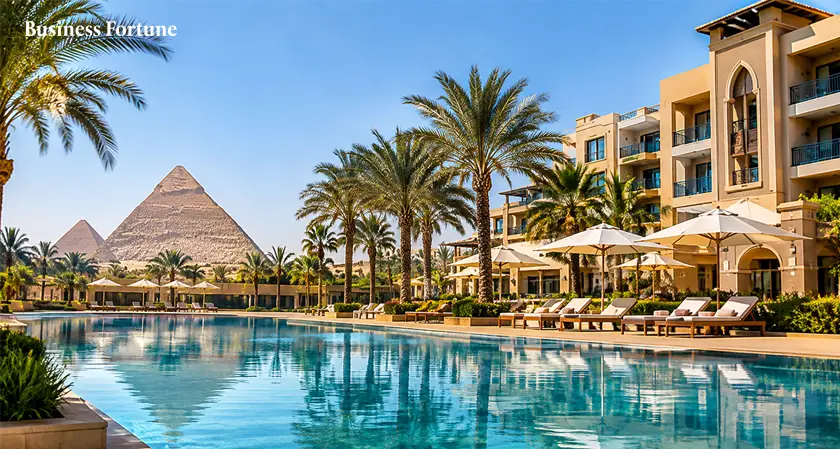
Rotana is exploring new locations and hotel partnerships as Egypt attracts more visitors, creating fresh opportunities in its growing hospitality market.
Rotana targets up to 25 hotels in Egypt by 2030, strengthening its presence in one of the Middle East’s growing tourism markets. The hotel management group plans to expand from the current three hotels with the help of increase in corporate and individual travelers along with the development of tourism infrastructure in new locations. This expansion may make Egypt Rotana's third largest market after UAE and Saudi Arabia.
Rotana Builds a Stronger Hotel Pipeline in Egypt
The expansion plans of Rotana were unveiled at the Future Hospitality Summit Egypt 2026, which shows the increasing popularity of the country for the international hotel management companies and investors. Presently, the company runs three hotel units with a total of 1,406 rooms. In addition, eight more hotel units consisting of 2,063 rooms are being developed.
The company is looking into possibilities in Cairo, Luxor, Alexandria, the North Coast and Red Sea, apart from sites renowned for their archaeological and cultural significance.
Makram El Zyr, Corporate Vice President – Development at Rotana, described Egypt as an important market with considerable long-term potential. He pointed out the diversification of the demand from corporate travel, to leisure tourism and cultural tourism, mentioning that the organization intends to expand by strategically picking their locations and development partnership.
Multiple Hotel Brands to Drive Expansion
For the expansion plans in Egypt, Rotana will use various formats and brands to cater to different destination requirements. While the focus would still be on the Rotana Hotels & Resorts, Rotana is looking at other brands as well that would be suitable for extended stay guests.
The group believes that hotel management agreements with both private and institutional investors will continue to be key to its growth plans. This strategy will enable Rotana to partner with developers for property selection. With over three decades in the hospitality industry of the region, Rotana intends to build long-term relationships with investors as well as develop hotels that offer value to the investors.
As stated by El Zyr, Egypt's vision for the growth of tourism is creating opportunities for the development of hotels, especially through sustainable partnerships.
Egypt's Tourism Ambitions Create New Opportunities
The developing tourism industry in Egypt is yet another significant reason for Rotana's business strategy. As stated by the State Information Service in Egypt, the country hosted about 19 million tourists in 2025 and intends to host 30 million each year by 2030.
With the development of tourism infrastructure, improved transportation and new tourist destinations, there will be more demand for hotels. This may provide an opportunity for some international hospitality companies to establish their presence in this region.
Also, the Rotana Group’s involvement in Future Hospitality Summit Egypt 2026 signifies its intention to establish contact with hotel owners, investors and development partners. Eight hotels have been developed in Egypt already, so there is already a strong foundation from which to grow.
Thus, Business Fortune believes that Rotana’s expansion will strengthen Egypt’s hospitality sector while creating new opportunities for tourism investment and international hotel partnerships.
Sources: ZAWYA
FAQs
What is Rotana's expansion target in Egypt?
Rotana aims to grow its Egyptian portfolio to as many as 25 properties by 2030.
How many hotels does Rotana currently operate in Egypt?
The group currently operates three properties with 1,406 rooms.
How many Rotana hotels are under development in Egypt?
Eight additional properties with 2,063 rooms are under development.
Which Egyptian destinations is Rotana targeting?
The group is exploring Cairo, Luxor, Alexandria, the North Coast and Red Sea.
What is driving Rotana's expansion in Egypt?
Growing business and leisure travel, tourism infrastructure investments and rising international visitor numbers are supporting its expansion plans.


























.webp)




Comments