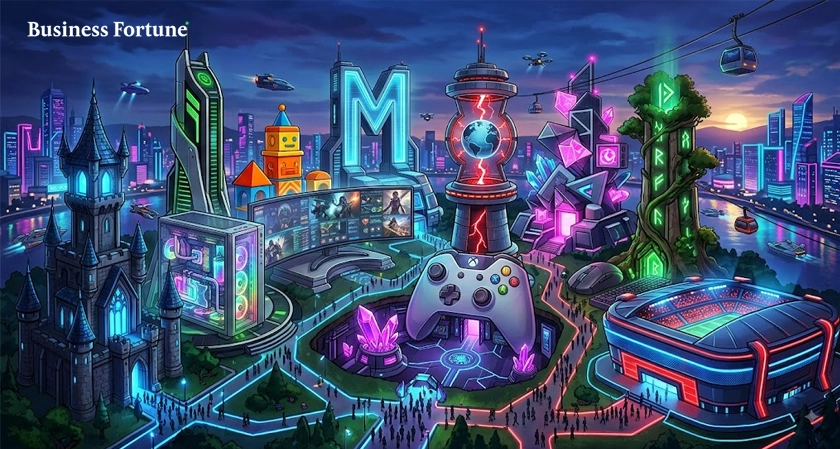
Gaming companies in 2026 are transforming entertainment through blockbuster games, esports, streaming, mobile play, gaming hardware and immersive digital experiences. Here are 10 names leading the charge.
Top Gaming companies in 2026: The 10 Players You Can’t Afford to Ignore
Gaming companies in 2026 are no longer simply making games for people to play after work or school. They are building entire digital worlds, selling hardware that sits at the center of those worlds, creating communities around competitive play and turning gaming into a form of entertainment that rivals movies, music and television.
But what makes these names interesting is how different they are. One builds gaming hardware. Another specializes in interactive entertainment. One focuses on skill based casual games, while another owns a massive streaming community. Put them together and you get a fascinating snapshot of where the industry is heading.
So, grab your virtual controller. Here are the Top Gaming companies worth knowing in 2026.
- Razer
If gaming had a uniform, Razer would probably design it. Razer’s strength is that it understands something fundamental about modern gaming; the experience does not begin when the game loads. It begins with the keyboard, mouse, display, headset and desk surrounding the player. That makes Razer more than a hardware manufacturer. It is effectively selling the lifestyle around gaming.
- Scopely
Scopely is a company built around interactive entertainment and video games across multiple platforms. Founded in 2011, Scopely develops, publishes and operates games while using a technology platform designed to support a broad portfolio.
What makes Scopely particularly interesting is its focus on longevity. The modern game is rarely a product that gets shipped once and forgotten. Successful titles can evolve for years through updates, events, communities and new content. In other words, Scopely is playing the long game; literally.
- Zupee
India based Zupee brings a very different flavor to the list. Founded in 2018 and headquartered in Gurugram, Zupee operates a platform for skill based casual games, including board, card and cricket themed formats.
Zupee’s appeal comes from familiarity. Instead of asking players to learn an enormous fictional universe, its formats can draw on games and cultural experiences people already understand. That simplicity can be powerful. A player can understand the basic premise quickly, start playing on a mobile device and return for short sessions.
It is a reminder that the future of gaming does not always require bigger maps, bigger budgets or photorealistic graphics. Sometimes, the winning formula is simply making something people already love feel fresh.
- Kabam
Kabam has carved out a reputation around mid core games and massively multiplayer experiences for mobile and web platforms.
The Canadian developer has worked on recognizable titles such as Marvel: Contest of Champions and Transformers: Forged to Fight. Its specialty has been bringing properties and gameplay experiences associated with larger scale entertainment into mobile friendly formats. That is an important skill in an industry where smartphones have effectively become pocket sized game consoles.
Kabam represents the continuing evolution of mobile gaming; players increasingly expect deeper mechanics, recognizable characters and sophisticated experiences rather than games designed merely to fill five spare minutes.
- Epic Games
Few names illustrate the changing definition of gaming better than Epic Games. Known globally for Fortnite, Epic has helped blur the line between video games, social platforms and digital entertainment. A game can now be a place where people compete, attend virtual experiences, socialize and express themselves. That shift matters because the biggest gaming opportunity may not always be the game itself. It may be the ecosystem surrounding it.
The company’s trajectory also demonstrates why gaming is increasingly being discussed as a platform business. When players spend time inside a digital world, the possibilities extend far beyond the traditional start-game-play-exit model.
- Roblox
Roblox is not just a place to play games. It is a platform where millions of players can play, create, socialize and build their own experiences. That is what makes Roblox particularly fascinating among gaming companies in 2026. Instead of relying entirely on an in house catalogue of games, Roblox has created an ecosystem where creators can develop experiences for other users. The result is an enormous digital playground that can constantly change.
From obstacle courses and role playing adventures to social hangouts and virtual events, Roblox demonstrates how gaming is becoming more participatory.
The bigger opportunity may be the platform itself. Every new creator can potentially bring a new experience, while every new experience can bring more players into the ecosystem. In many ways, Roblox is less like a traditional video game and more like a digital city that never stops being built.
- Electronic Arts
Few names in gaming carry the recognition of Electronic Arts, better known as EA. The American gaming giant has spent decades building some of the industry's most recognizable franchises, including The Sims, Apex Legends, Battlefield and its hugely popular sports titles.
What makes EA interesting in 2026 is its ability to operate across multiple generations of gaming. While gaming technology, platforms and player habits continue to evolve, EA has repeatedly adapted its portfolio to changing audiences.
Sports gaming remains one of its biggest strengths, creating a powerful connection between real world sporting culture and interactive entertainment. Meanwhile, franchises such as Apex Legends demonstrate EA's ability to compete in modern multiplayer gaming. The company may be a veteran; but in gaming, veterans who know how to reinvent themselves can be some of the toughest players to beat.
- Twitch
Twitch’s presence makes one point crystal clear; sometimes gaming is just as much about watching as playing. Streaming has transformed players into entertainers, audiences into communities and game sessions into live events.
A creator playing a game can attract thousands or even millions of viewers. Those viewers chat, react, subscribe, follow creators and form communities of their own. That means gaming has become a spectator experience, much like traditional sports.
Twitch sits directly at that intersection. Its importance extends beyond streaming technology because it helped establish a culture where watching someone else play can be entertainment in its own right.
- Tripledot
Tripledot may not have the same immediate name recognition as Epic Games or Twitch, but that is exactly what makes its position interesting.
Casual games are often underestimated because they do not always generate the same headlines as blockbuster releases. Yet their strength lies in accessibility. They can be easy to understand, quick to launch and remarkably difficult to put down. For developers, that combination can create enormous opportunities when paired with smart game design, strong retention and effective monetization.
Tripledot's inclusion shows that gaming success does not have to mean building the next giant open world franchise. There is plenty of room for companies that master simplicity.
- Zynga
Rounding out the list is Zynga, one of the most recognizable names in social and mobile gaming. Zynga helped popularize the idea that games could live inside social networks and become shared digital experiences. Over time, its portfolio expanded across mobile and other platforms.
Gaming trends change quickly. Platforms rise and fall. Player preferences shift. Yet companies that understand engagement, communities and repeat play can remain relevant through multiple generations of technology.
What Makes These Gaming Companies in 2026 Stand Out?
Look closely at the list and an interesting pattern emerges. These businesses are not all competing for exactly the same player. They occupy different layers of the gaming ecosystem. That diversity may be the most important takeaway.
The industry is no longer one giant race to create the biggest video game. It is an interconnected ecosystem of hardware, software, platforms, communities, content and technology.
Trends to Watch Beyond the Top 10
The next wave could be even more unpredictable.
Artificial intelligence is becoming increasingly relevant to game development, player personalization and content creation. AI can potentially help studios prototype ideas faster, create supporting assets and analyze player behavior.
Cloud technology is also reducing the importance of the device itself. If processing and game delivery continue moving toward the cloud, the definition of a gaming machine could become increasingly flexible.
Meanwhile, virtual and augmented reality are pushing developers to rethink how players interact with digital environments.
And then there is the creator economy. Players are no longer merely consumers. They can stream games, create videos, build communities, design content and influence what other players discover.
That is why Business Fortune believes that the best gaming companies of the future may not fit neatly into today's categories.
Gaming Companies to Watch: What Could Define the Next Winners?
For investors, founders and gaming enthusiasts, the most exciting opportunities may emerge from companies sitting between categories.
Think about a platform that combines AI with game creation or a social network built around interactive worlds or a mobile game that becomes a creator platform or a VR application that starts as entertainment and expands into fitness, education or social experiences. These are the gaming companies to watch because the boundaries are becoming increasingly blurry.
The winners will likely be those that understand players as communities rather than simple users and entertainment as an ongoing relationship rather than a one time transaction.
Gaming companies in 2026 are playing a much bigger game than they were a decade ago. They are designing hardware, publishing interactive worlds, building mobile ecosystems, creating virtual experiences, streaming live entertainment and turning communities into powerful digital networks.
The next big gaming revolution may come from a company that has not yet become a household name. But if the current landscape tells us anything, it is this; the future of gaming will be bigger, more social, more immersive and far less predictable than the games we grew up playing.
And that is precisely what makes the industry so exciting.
FAQs
Which are the top Gaming companies in 2026?
The top 10 are Razer, Scopely, Zupee, Kabam, Epic Games, Roblox, EA, Twitch, Tripledot and Zynga.
How many companies are in the Gaming sector?
38,449 companies are in the Gaming sector as of April 11, 2026.
Which country has the most Gaming companies?
The United States has the largest number with 8,391 companies, followed by the United Kingdom with 3,283 and India with 2,357.
Is Razer a game developer?
Razer is primarily a gaming hardware and technology company. Its products include gaming laptops, mice, keyboards, headsets, controllers and related software and accessories.
Why is gaming growing so quickly?
Gaming has expanded beyond traditional consoles and PCs into smartphones, streaming, virtual reality, social platforms and digital communities. The combination of accessible devices, online connectivity and evolving technology has dramatically broadened the gaming audience.


.webp)



























Comments