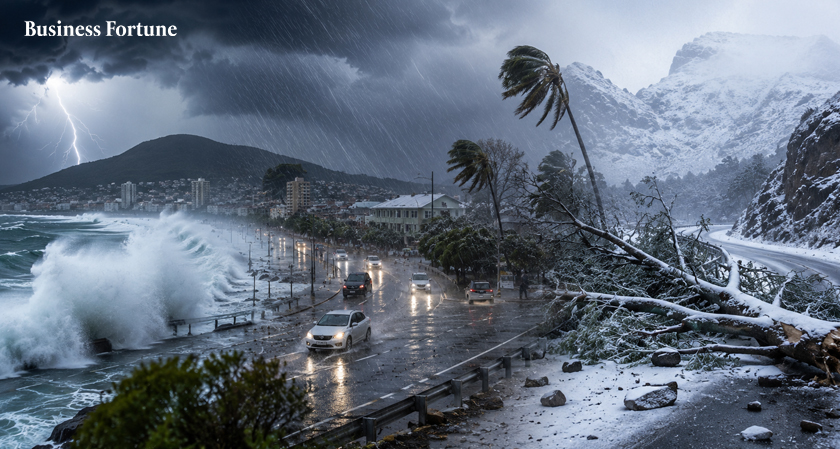
Snow, heavy rain and damaging winds are disrupting communities, raising concerns over travel, infrastructure and public safety across several provinces.
Severe weather is set to disrupt large parts of South Africa from Monday into Tuesday, with heavy snowfall, damaging winds, rough seas and intense rain threatening travel, infrastructure, livelihoods and essential services, particularly across the Eastern Cape and KwaZulu-Natal.
Orange Level 6 Snow Warning Issued
An Orange Level 6 warning for disruptive snowfall has been issued by the South African Weather Service for the Chris Hani District as well as the towns of Senqu, Elundini and Matatiele. Until Tuesday, August 11, the warning is still in force.
Major traffic disruptions, negative effects on livelihoods, and temporary isolation of some towns could result from heavy snowfall. Residents are being advised by authorities to avoid pointless travel and to prepare for extreme conditions.
Damaging Winds Threaten Coastal Areas
The KwaZulu-Natal coast and nearby interior regions are under a Yellow Level 4 warning for severe winds and waves. In addition to creating dangerous navigational conditions, strong winds can damage small harbours, ports and coastal operations.
Infrastructure and settlements may also be affected, with flying debris presenting a serious safety risk. Rough to very rough seas are expected as the weather system strengthens.
More Snow and Rain Expected
Parts of the Eastern Cape, the eastern and southern Free State close to the Lesotho border and western KwaZulu-Natal are under a Yellow Level 2 disruptive snow warning. Crop damage, livestock losses and localized roadway issues are still possible.
Nyandeni, Port St. Johns, Ingquza Hill and Bizana are all under a separate disruptive rain warning. Localized flooding around roads, bridges and vulnerable communities could result from heavy rainfall.
Key weather risks
- Heavy snow could isolate vulnerable rural communities temporarily.
- Damaging winds may disrupt coastal transport and activities.
- Heavy rain could flood roads, bridges and settlements.
- Severe thunderstorms may damage property and local infrastructure.
- Very rough seas could threaten small vessels.
Disaster Teams Placed on High Alert
Thulasizwe Buthelezi, MEC for KwaZulu-Natal Cooperative Governance and Traditional Affairs, has placed provincial disaster management response teams on high alert.
The Free State, Western Cape, Northern Cape, Eastern Cape, southern Gauteng, Mpumalanga and KwaZulu-Natal are expected to be affected by a severe weather system associated with a cut-off low and cold front through Tuesday.
Very cold conditions, snowfall over mountainous areas and strong winds are expected. Severe thunderstorms may also affect the extreme southern North West, northeastern Free State and southern Gauteng.
Residents and small-stock farmers have been advised to take precautions. Emergency operations centres will continue monitoring developments, while people requiring immediate assistance in KwaZulu-Natal should contact their local municipality’s emergency or disaster management centre.
Business Fortune is of the view that heightened preparedness remains essential as severe weather threatens travel, infrastructure and livelihoods.
FAQs
When will the severe weather affect South Africa?
The severe weather system is expected to affect several provinces from Monday through Tuesday, August 11.
Which areas face the greatest risk from snowfall?
The highest snow alert covers the Chris Hani District and the Senqu, Elundini and Matatiele municipalities in the Eastern Cape.
Can the weather disrupt roads and public services?
Yes. Heavy snow, rain and strong winds could cause traffic disruptions, flooding, road closures and interruptions to essential services.
What risks do coastal communities face in KwaZulu-Natal?
Damaging winds and rough seas could threaten coastal infrastructure, settlements, ports, small harbours and maritime activities.
What should farmers and residents do during the warnings?
Residents and farmers should prepare for cold conditions, protect vulnerable livestock and property, avoid unnecessary travel and follow official safety advice.


.webp)





























Comments