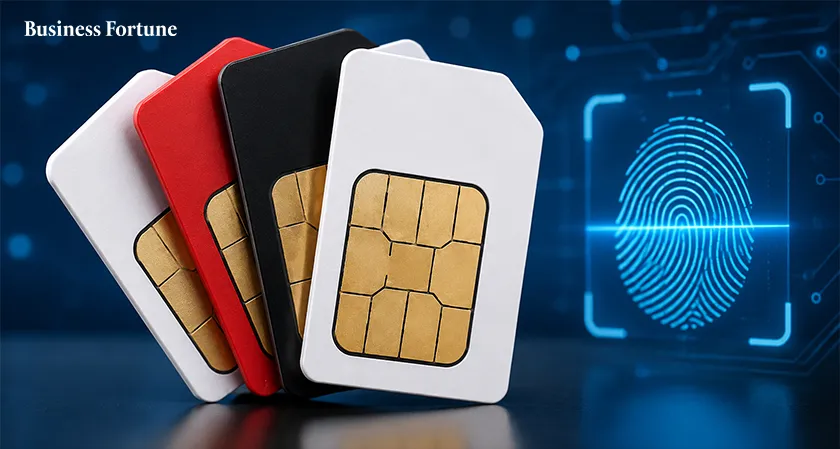
New biometric telecom rules are changing SIM verification in India. Here’s what the new checks mean for mobile users and telecom operators.
India’s new biometric telecom rules have introduced stricter identity checks for mobile users, while dropping a controversial plan to create one central biometric database shared across telecom companies. The Department of Telecommunications (DoT) notified the Telecommunications (User Identification) Rules, 2026, on August 21, bringing the rules into effect immediately.
The biggest change from the earlier proposal is the removal of the Biometric Identity Verification System or BIVS. The system would have given users a unique ID and allowed telecom companies to compare customer identities across operators. The decision addresses one of the major concerns raised during consultation. The Internet Freedom Foundation had criticized BIVS as an additional collection of biometric information alongside Aadhaar, arguing that it lacked comparable safeguards.
“Mass-surveillance measure sold as a fraud fix” was how the Internet Freedom Foundation described the broader biometric regime, while arguing that less restrictive tools could address fraud.
So, When Will Users Need Biometric Verification?
The new rules require biometric identification at several important stages. Telecom operators must verify a person before issuing a new SIM, updating user information, disconnecting a connection, or when the DoT orders re-verification.
For Aadhaar holders, operators use the Aadhaar e-KYC authentication facility. Users without Aadhaar, as well as certain people who cannot complete biometric capture because of an injury, impairment or similar condition, can use the D-KYC process. This involves live facial capture and images of identity and address documents.
A New Alert Could Help Stop Unauthorized SIM Activity
The rules also introduce a confirmation alert mechanism. If a new connection, information change or disconnection request is made in a user's name, the operator can ask the user to confirm it. If the user says they did not make the request, the operator must take action while the matter is investigated.
The rules cover mobile SIM services as well as internet telephony services through mobile user terminals. However, the DoT has not clarified whether this specifically extends to OTT calling applications. Telecom operators have three months to put the required technical and organizational systems in place. The DoT can extend that period by another three months if necessary.
What’s Next?
The shift away from a central biometric database may ease some privacy concerns but users will still face more biometric checks when managing mobile connections. As operators build these systems, the real test will be whether stronger identity verification can reduce fraud without making legitimate access harder. According to Business Fortune, India's telecom sector is likely to move toward increasingly automated identity and fraud detection systems, making secure and accessible verification a central part of how mobile services are managed.
FAQs
When did the new telecom biometric rules take effect?
The Telecommunications (User Identification) Rules, 2026, took effect on August 21, 2026.
Is the proposed BIVS database still being created?
No. The final rules dropped the proposed shared Biometric Identity Verification System.
When is biometric verification required?
It is required for new SIM enrollment, information updates, disconnection and DoT-directed re-verification.
What happens if someone cannot complete live biometric capture?
The rules require an accessible alternative using other biometric information in applicable cases.
How long do telecom companies have to comply?
Operators have three months to implement the required systems, with a possible extension of up to three additional months.


.webp)






























Comments