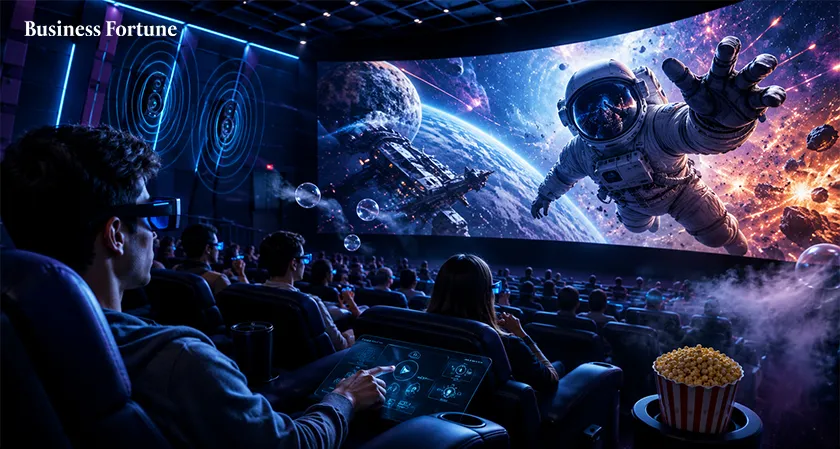
The future of cinema is no longer defined by bigger screens and louder sound. Artificial intelligence, immersive audio, laser projection, haptic seating and personalized tech are changing the ways in which movies are made, viewed and experienced in the 2026 era. From smarter seat recommendations to theaters that can compete with the comfort of home streaming cinema is entering a fascinating new chapter of its development.
Think about the last time you went to a movie theater. You probably chose which film to see when you wanted to watch and what seat to sit in.
Now imagine going to a theater and knowing where the best seats are based on your preferences. Your seating adapts to your preferences throughout the film. Sound feels 3D and follows you when you move your head. An explosion is not just heard but felt in your seat. The screen shines brighter and more lifelike than your television at home.
It sounds like science fiction but in many ways it's already happening.
Cinema Is No Longer Just About Watching
For decades the basic cinema equation barely changed: sit down turn off the lights and watch the screen. The future of film technology is beginning to challenge that equation.
The modern theater is becoming a mix of entertainment venue personalized service and immersive environment. The goal is not to just show a film with better picture quality but to make the audience feel like they have stepped inside the film. That shift is important because audiences have incredibly good alternatives at home. Streaming platforms can provide high resolution pictures and powerful sound without the need to go out and drive somewhere or wait in any lines.
So why go out?
Because the answer could very well be a seat that reacts to an explosion sound that feels 3D and a screen that fills up your field of vision and an atmosphere that you can't recreate in your bedroom. The theater of tomorrow may feel less like a room where a movie is being projected and more like an immersive world.
AI Could Become Your Personal Cinema Guide
One of the more interesting aspects of the future of cinema is what it can do before the movie begins. Choosing a seat may be a small decision but any person who has accidentally booked a terrible seat knows how it can impact the experience. The "perfect" seat is also subjective based on the person as well as the movie.
Artificial intelligence could change the future of film technology.
Instead of simply showing an auditorium map future booking systems would be able to analyze screen sizes angles of seats speaker placement and geometry to recommend certain seats. They can also recognize personal preferences like extra legroom aisle seats or ones that are closer to the center. Even the movie itself could impact which seat you choose to see the film. A horror movie may work better from a perspective that provides a wider view of the screen while a huge-format spectacle would have a completely different sweet spot.
That's where personalized cinema comes in handy. Instead of asking "Which seats are available?" the question becomes "Which seat is best for me?”
Virtual Production Is Changing the Set
Another shift that may happen behind the camera is something called virtual production. Virtual production allows filmmakers to combine physical sets with computer generated environments often using huge LED screens. This replaces the need to send crews out to faraway locations and allows filmmakers to see much more of the environment while filming rather than waiting until post-production.
The advantages are obvious.
A desert spaceship futuristic city or alien planet can come behind the actors without requiring them to spend months on a set. Directors can see much more of the final environment while shooting rather than waiting to see what comes next. For actors there is also a major benefit in that they are no longer necessarily standing in front of a green screen and asked to imagine everything around them. Instead they can see a visual environment that responds to the scene. The result can be quicker production greater flexibility in production and fewer surprises later.
Haptic Seats Could Make You Feel the Movie
Now for the fun stuff.
What if watching an action movie meant actually feeling the action? Haptic cinema technology allows for that possibility. In addition to just moving seats newer systems are able to use vibration and pressure in different points of the chair to synchronize physical sensations with what is happening on screen. An explosion can create a pulse beneath your seat while a vehicle can vibrate slightly. A deep musical note can be felt rather than heard.
Future systems may go even further with a more precise pressure and thermal sensations. The idea is not necessarily to turn every movie into a theme park ride. Sometimes subtlety can be more effective. A vibration at precisely the right time can make a scene feel more immediate without making the audience feel like they have climbed onto a roller coaster.
Sound Is Getting Smarter Too
While picture quality tends to get the most attention sound may actually be one of the biggest areas of development.
Immersive audio systems already allow filmmakers to position sounds around the audience rather than the traditional left/right/center channels. The next step could be to personalize that experience.
Future systems are going to use sensors to understand where a viewer's head is and adjust spatial audio accordingly. The goal is to create a more accurate experience across seats rather than one small "perfect" listening spot. This could be especially useful in large auditoriums. Instead of worrying about whether you are going to sit slightly too far left or right the cinema will be able to adjust accordingly. Combine that with personalized audio and haptic seats and suddenly the soundscape can become something that is experienced with more than your ears.
Goodbye, Projector?
Projectors aren't going away anytime soon but display technology is opening up another option for cinemas. Laser projection is already providing brighter and more consistent images than traditional projectors and manufacturers are working on direct view LED and Micro LED displays for cinema environments. The difference is huge. A traditional projector throws the light on to a screen while an LED cinema display creates the image directly on the display surface. That opens up the possibility of extremely bright images incredible contrast and more consistent brightness across the screen. The technology is still expensive at the moment so it won't appear in every neighborhood cinema but as manufacturing improves and costs decrease the traditional cinema screen could look very different than what audiences today know. Even curved and spherical displays could be another possibility.
The Rise of Boutique Cinemas
Interestingly enough the future of cinema technology 2026 isn't necessarily making theaters bigger. Many of the most exciting opportunities are happening in smaller spaces. Boutique cinemas are finding ways to create premium environments with fewer seats comfortable recliners food and beverage services and a more social atmosphere. Private auditorium rentals are also seeing a lasting presence in the cinema business.
That makes sense.
If someone can watch a movie at home for a low cost a theater has to offer something extra. That might be an enormous screen or it might be a beautifully-designed 50 seat room where the food is excellent the seats are comfortable and the entire evening feels like an occasion. In other words cinema will be both bigger and smaller at the same time.
Smart Pricing Could Change the Way You Book Tickets
Another aspect that audiences might notice has to do with the price of the seat. Cinema ticketing is shifting towards similar practices as airlines and concerts. The time of day demand and location of a seat can impact the cost. Eventually AI driven systems will be able to predict demand and prices along with showtimes and auditorium allocations. This could mean higher prices for the most desirable seats during a blockbuster weekend and lower cost shows during quieter times. It could also mean smarter scheduling. If a certain time of day is selling quickly the system can respond before the auditorium becomes overcrowded. If another show has low demand operators can adjust the allocation of screens. The cinema will be more efficient behind the scenes while the audience sees a smoother booking experience.
What Could Cinema Look Like By 2030?
Imagine booking a movie several days in advance.
Your cinema app knows which formats you enjoy and your preference for not sitting too close to the screen. It recommends two showings and points out the seats that fit your preferences. When you arrive the system recognizes your booking and has already prepared your seat and audio settings. The movie begins. A picture appears on a huge screen, the soundtrack envelops you, your seat tightens when you get into a chase but you are not distracted from being engaged by the movie; this is the connected cinema, brilliant but various enablers have been delivered and it will only be a matter of time before they will be combined in an accessible and inexpensive way in a manner that best conveys the message that the future of cinema has to offer; that the revolution will not happen in leaps, but in steps, in screens and software and soundtracks and seats and data and environments. Together, they will make something special.
The future of cinema is much more exciting than a simple bigger screen because in 2026 technology will interfere in all phases of movie making, from editing to screening, artificial intelligence will make cinema more personalized, virtual production tools will make movies more powerful, haptics will bring a whole new dimension to movie going, displays will become more captivating and boutique venues will provide more accessible and enhanced movie-watching experiences. But, Business Fortune knows, at the heart of the future of cinema, there will still be the magic that enchants thousands of people at the same time.
FAQs
What is the future of cinema in 2026?
Artificial intelligence, haptics, spatial audio, laser projection, LED displays and boutique venues will enable more personalized and immersive movie going experiences.
How is AI changing the film industry?
From post production editing to subtitling and dubbing, AI is changing things a lot.
What is haptic cinema technology?
Cinemas are turning to haptic technology to make movie going experiences more immersive by engaging the sense of touch.
Will technology replace traditional movie theaters?
Technology will disrupt the movie theater industry, but it will unlikely replace it. movie theaters offer experiences that cannot be seen anywhere else.
What will movie theaters look like in the future?
Future movie theaters will offer more personalized, immersive experiences enabled by artificial intelligence, haptics, spatial audio, laser projection, LED displays and immersive environments.


.webp)
































Comments