
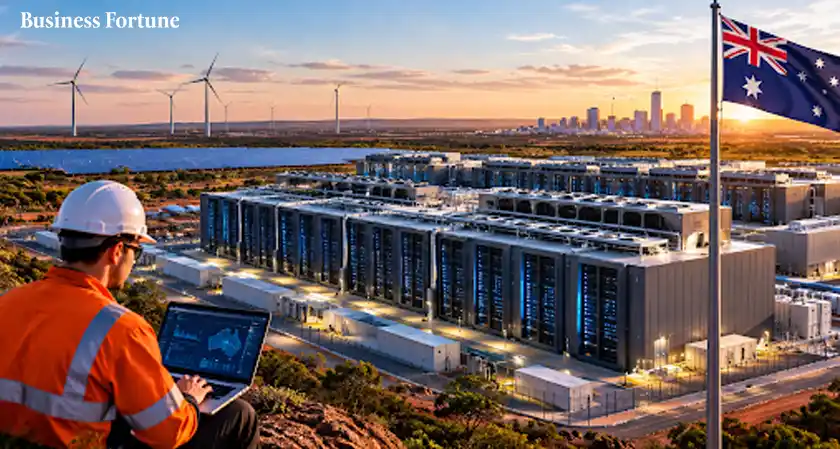
Australia’s proposed data centre energy rules mandate renewable power, sparking a federal-state dispute over Queensland and Northern Territory exemptions claims.
Australia’s data centre energy rules remain at the centre of a federal-state dispute, with Energy and Climate Change Minister Chris Bowen insisting Queensland and the Northern Territory will face the same national renewable requirements as other jurisdictions. Under the proposed framework, data centres must secure 100 per cent renewable energy and firming, while any alternative involving coal or gas would require Commonwealth approval.
Federal Government Rejects State Carve-Out Claims
Bowen said the national standards would contain “no exceptions and no carve-outs”, rejecting Queensland Premier David Crisafulli’s claim that the state had secured greater control over how new data centres are powered.
Under the framework, state-owned electricity companies could apply to use alternative generation if they can demonstrate it would be cheaper and better for the electricity grid than renewable power. The Australian Energy Regulator would assess such applications on behalf of the Commonwealth.
Key points:
-
Federal standards will apply across Australian jurisdictions.
-
Data centres must secure renewable power and firming.
-
States can request approval for alternative energy.
-
Commonwealth authorities will assess individual applications.
-
Draft legislation is expected before early 2027.
Queensland Pushes Back Against Canberra
Queensland Treasurer and Energy Minister David Janetzki argued that Bowen’s comments risk undermining the certainty national cabinet sought to provide. Queensland maintains that its ownership of generation and distribution assets gives it a distinct position within Australia’s electricity system.
Crisafulli had described the national cabinet outcome as a major economic win, arguing Queensland could use its existing mix of gas, coal and renewable generation to support data centre development. The disagreement highlights the tension between attracting investment and meeting national energy objectives.
AI Boom Raises Energy Concerns
The dispute comes as Australia prepares for rapid growth in AI-based data centre demand. The Australian Energy Market Commission has recommended that data centres bring new clean and firmed energy, operate flexibly and ensure their expansion does not leave other electricity consumers worse off.
The proposed data centre renewable energy Australia framework is intended to ensure major facilities offset their electricity consumption through new renewable generation and supporting firm capacity. The government has also indicated that data centres will need registration under the forthcoming system.
Bowen has described data centres as major electricity consumers, warning that poorly designed arrangements could place upward pressure on wholesale power prices. He said the federal government would introduce a broader draft bill before legislation is expected to pass next year.
Business Fortune believes that balancing data centre growth with renewable energy goals will remain crucial for Australia’s energy future.
FAQs
What are Australia’s new data centre energy rules?
They are proposed national standards requiring major data centres to secure renewable and firmed energy.
Can Queensland use coal or gas for data centres?
Potentially, but state-owned energy companies must seek Commonwealth approval.
Who will decide on alternative energy applications?
The Australian Energy Regulator is expected to assess applications.
Why are the rules being introduced?
They aim to manage rising electricity demand from large data centres.
When will Australia’s data centre standards become law?
The federal government expects legislation to be considered in early 2027.

.webp)





























Comments