The American appetite for a longer, healthier life has never been easier to sell. Blood tests arrive by mail. Wristbands promise a biological age. Podcasts treat NAD, mitochondria, and "stacking" like groceries.
Some of the science underneath this boom is real. And yes, some of it is getting better. However, the market around it is something else. Now there is a contest of voices, and it stands to reason that the most fluent claim often travels farther than the most careful one.
What should be considered is that the healthspan economy's quieter failure is with companies that are not, in the main, losing because their papers are weak. The reason they are losing is that patients cannot tell whom to believe.
Clinics cannot tell what their growth actually costs, and the people doing the slower work of evidence are outspent by people who are simply better at being heard.
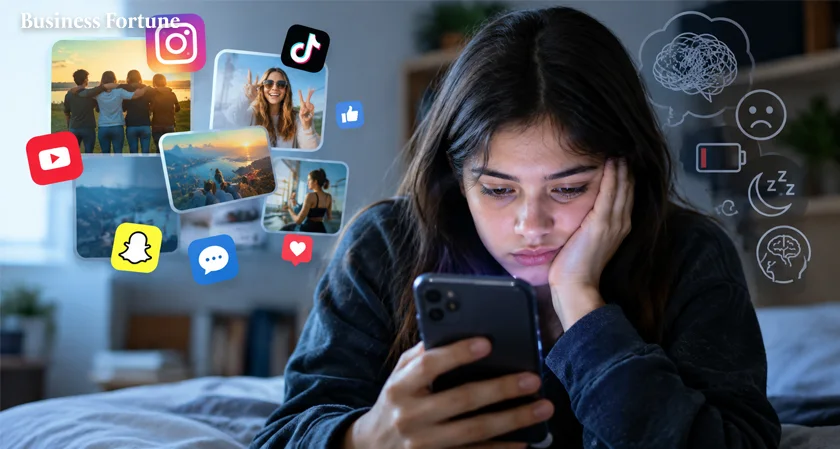
As little as a decade ago, the problem in consumer health was scarcity. Reliable guidance sat behind appointments, paywalls, and professional language. The ever-increasing prevalence of the internet in our daily lives was supposed to fix that. Yes, it did, but then it overshot. Now, there is a veritable deluge of overwhelming information. In fact, the average person has access to more health information in a single afternoon of scrolling than they could have collected in a year of office visits.
Often this information is attached to a product. And the data keeps catching the same contradiction. An EMARKETER report in March 2026 revealed an Edelman survey of global consumers. It found that influencers and AI tools now carry more sway than doctors over decisions about diet, nutrition, supplements, and longevity.
Additionally, in GCI Health's 2026 report titled "From Live Long to Live Well: The New Healthy Aging Paradigm," it cited that nine in ten U.S. adults surveyed said they trust information from healthcare professionals more than medical websites, AI, influencers, or social channels.
Both findings can sit together. Of course, people trust doctors, but they do not always hear them. Critics have a name for the resulting skepticism. They call it longevity washing. That is marketing that borrows the language of a longer life without the evidence to match. The trade press has taken up the warning. Longevity.Technology, which covers the sector, has reported experts' concern that science-lite marketing could hollow the category out as it scales.
The issue is that online followers receive guidance that has often bypassed peer review. And it goes without saying that brands can sound scientific, but they are not always doing science. The category is not a fad. Biology is serious. The demand is real, but the sorting mechanism is broken.
Distribution and Trust, Not Just Evidence
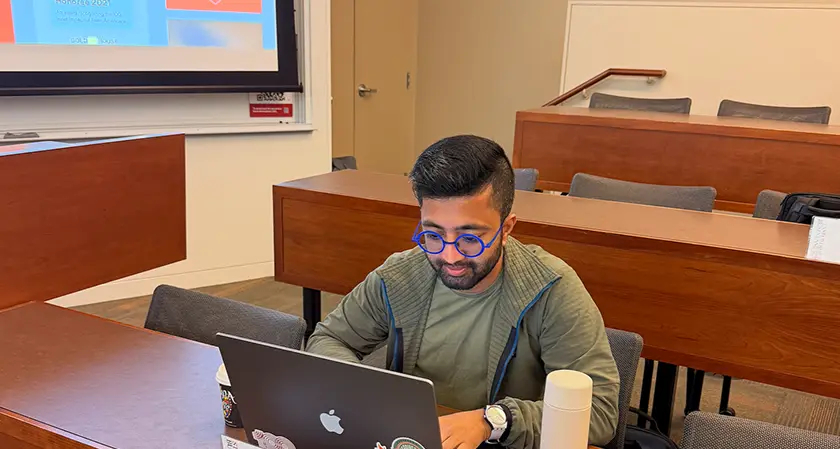
Abhinav Kejriwal has been watching that sorting mechanism from outside medicine. Before turning to healthcare software, he spent years at Bennett, Coleman & Co. Ltd., the parent of The Times of India. He ran strategy there and served as chief of staff to the vice chairman. It is a business built on getting messages to travel, and he sees its problems as a close cousin of healthspan's.
He is a co-founder of PreventiveHealth.ai, a company built to develop physician-specific software for outpatient care in the United States. Kejriwal is not a physician, and he does not pretend the gap is a lab gap.
He says his argument is about who gets heard, and at what cost. Kejriwal also has a stake in this market: the company he co-founded does better if practices accept his diagnosis.
That path gave Kejriwal a particular lens: "Health is a clinical problem and a distribution problem at the same time. Bad distribution crowds out good clinical work," he says.
He adds: "I believe health is not one problem. Getting access to the right information is just one layer. You also have to consider clinical judgment, genomics, behavior, distribution, and trust. The useful skill is not being the deepest expert in any single layer. It is putting people who are deep in different layers in the same room and making the work add up."
Twenty years ago, he argues, people could not find enough credible advice. Now the failure is volume: "People have access to too much health information, where every influencer is saying the opposite of the other, and there is always a vested interest behind what they are saying," says Kejriwal.
"The people who market unproven, expensive products tend to be good at marketing. The people doing careful clinical work often are not. That weeds out the people who are doing the right work, who have the right motivation, but are not as good marketers, and therefore they do not have as much reach."
This is not a new observation in consumer markets. But when it comes to medicine, it is an awkward one. The cost of a fluent falsehood is not a wasted subscription. It is a delayed diagnosis, a discarded protocol, a patient who stops listening.
Kejriwal sees the same gap from the patient's side, explaining: "Patients still put more stock in physicians than in tools, and clinicians worry that judgment gets flattened into a simplified AI output. I see that confidence gap as the bottleneck technology has not closed, and it is the gap PreventiveHealth.ai was founded to close."
What a Patient Actually Costs
The same bottleneck shows up in a less fashionable place: the cost of finding a patient. As Kejriwal describes it, cash-pay and functional-medicine practices, the part of American outpatient care where healthspan products actually get sold, often run Facebook and Google ads as if the number on the dashboard were the whole story.
Kejriwal puts numbers to it saying: "Google and Meta dashboards report one customer-acquisition cost. However, once the trail was rebuilt in the company's work with partner practices, the fully loaded number was seven to ten times higher. It is not the case that practices are unwilling to spend. But they do lack a clear picture of what they are actually buying. And understandably they need that clarity."
By the company's account, one engagement saw a 13 percent increase in marketing spend produce a 39 percent increase in leads. Both that result and the seven-to-ten-times gap come from PreventiveHealth.ai's own work with partner practices and have not been independently audited.
Kejriwal’s broader complaint is that healthcare marketing agencies are frequently paid to raise spend and rarely paid to lower the cost of a patient.
He says: "A practice that does not know its true acquisition cost will keep buying the story the dashboard tells." "If you are trying to sell better science to that practice, science was never the constraint. The constraint is whether anyone can explain the work, price the work, and put it in front of a person who still trusts a doctor."
The alternative he describes is slower and stranger than the ad model it replaces. The company's own early reach came from free channels: his co-founder's writing, a weekly community conversation that has hosted more than 60 guests, and a WhatsApp community of more than 4,000 people. Kejriwal says: "All of it was free. The question was how any of it paid for itself." The answer, in his account, was trust built in public: "If a practice answers real patient questions in public, trust accumulates, and some of those people later ask to become paying patients. That is an unusual sentence in healthcare."
If that pattern holds, most practices have not priced it, because they still measure spend rather than trust. It is also a slow channel, and it is not yet clear that it works beyond practices willing to spend clinician time answering strangers for free.
The Newspaper Parallel
Samir Jain, vice-chairman and managing director of Bennett, Coleman & Co. Ltd., for whom Kejriwal worked as chief of staff, draws the newspaper parallel directly: "I have spent my working life on a simple fact: the better story does not always travel. The better distributed story does. Healthspan has the same problem newspapers had when information became cheap, and trust became expensive."
The parallel is useful, but it has limits. A newspaper that loses to a louder rival loses readers. A patient who follows the louder claim can lose time, money, or a diagnosis. And years inside a media company don't prove that a particular distribution model works in medicine. That proof will have to come from practices, not from analogies.
None of this repairs the healthspan market on its own. U.S. health spending reached $5.3 trillion in 2024, or 18 percent of GDP, according to CMS. A market that large leaves plenty of room at its edges for products that are better marketed than tested. GCI Health's research adds a twist. Gen Z, not older adults, emerged as the generation most familiar with healthspan and most focused on building for it now. The audience being fought over is younger, more online, and more exposed to the loudest voices.
Kejriwal argues that the race was misdescribed from the start. The real contest, he says, has never been about science alone. It has been about who controls the distribution and the trust.
His summary of the market is blunt: "The sorting problem, not the science problem, is what has held healthspan back. If the work is good but nobody can hear it over the noise, it does not reach the patient. If it reaches the patient without a clinician in the loop, it should not have been sent."
His prescription follows from that. Explain the evidence. Make the economics clear for a practice. Leave the final medical decision with a clinician the patient believes. It is a less exciting pitch than biological-age tests or NAD stacks.
About the Author
Sowmiya Sri Mani is a prolific writer covering AI, Business, Technology, Markets, and Lifestyle. She loves turning complex subjects into something readers might enjoy and understand. For her, writing is about finding the interesting side of a subject and making it worth the reader’s time.


.webp)



























Comments