Is IBM AI mainframe losing ground in the AI race? CEO Arvind Krishna explains why the company remains confident.
IBM AI mainframe business had a difficult quarter but the company says the slowdown doesn't mean customers are moving away from its technology. Instead, IBM believes businesses are simply spending their money differently as they race to build AI-ready infrastructure.
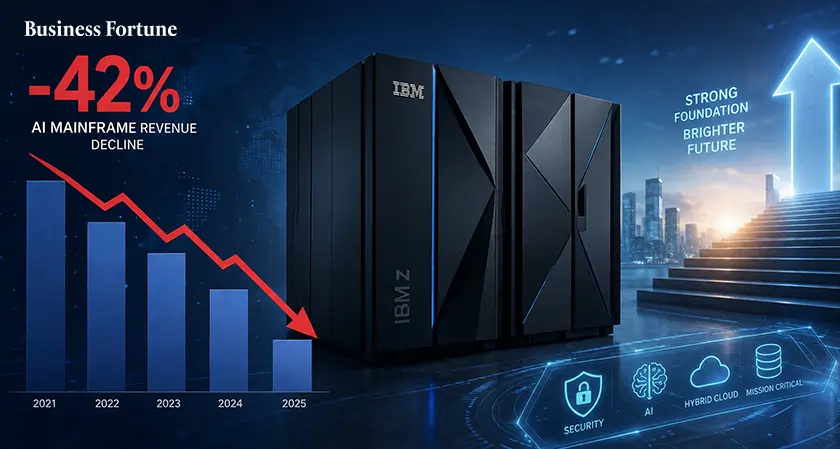
The company reported $17.16 billion in second-quarter revenue, which fell short of analysts' expectations. The biggest drop came from IBM's infrastructure business, where Z mainframe revenue fell 42%. Software revenue also grew more slowly than expected, adding to investor concerns. At first, the numbers may seem worrying. But IBM says there's more to the story.
Why are customers holding back?
Right now, many companies are putting huge amounts of money into AI infrastructure. They're buying servers, storage systems, and memory needed to run powerful AI models. Because of that, some businesses have delayed spending on software and mainframe systems.
IBM's finance team says this is more about changing priorities than shrinking demand. In fact, the company believes many of those delayed purchases will come back later this year. That means customers haven't walked away from IBM. They're simply focusing on building the foundation for AI first.
Is AI really a threat to IBM?
IBM CEO Arvind Krishna doesn't think AI will replace most of the company's software. Instead, he believes AI will create even more demand for the tools IBM already offers.
"The rest of our software really helps people get ready for AI, unlocking data in real time and reducing the cost and complexity of managing it. I believe it'll be a tailwind for us," Krishna said during an interview.
He also explained that only about 2% of IBM's software is at real risk of being replaced by AI-built applications. Most of that involves older software products that customers were already beginning to move away from.
Why does the mainframe matter so much?
Here's something many people don't realize. Every time IBM sells $1 worth of mainframe hardware, it earns roughly $3 more from software that runs on those systems. So when mainframe sales slowdown, software sales often feel the impact too.
That is exactly what happened this quarter. As fewer customers bought new mainframe systems, revenue from transaction-processing software also declined. Still, IBM says the hardware story isn't over. The company expects software sales to improve as customers start using the extra computing capacity they are adding today.
Can IBM bounce back?
IBM has lowered its revenue growth forecast for the year, showing that it expects the recovery to take some time. However, the company kept its outlook for an additional $1 billion in free cash flow and says around 75% of the delayed deals are expected to return before the end of the year.
Some of those deals have already been completed in the current quarter, giving IBM confidence that demand hasn't disappeared. For now, the company admits execution fell short during the quarter. But it believes the long-term strategy remains the right one.
As Business Fortune sees, the AI boom is changing how businesses spend their technology budgets. Today, many companies are investing in the hardware needed to power AI. Tomorrow, they'll need the software to manage that infrastructure, protect data, and run AI applications efficiently.
FAQs
Why did IBM's mainframe business decline?
Customers shifted spending toward AI infrastructure, including servers, storage, and memory, delaying purchases of IBM mainframes and related software.
Does IBM think AI will replace its software?
No. CEO Arvind Krishna said only around 2% of IBM's software portfolio is vulnerable to replacement by AI-generated applications.
How much did IBM's mainframe revenue fall?
Revenue from IBM's Z mainframe business declined 42% during the second quarter.
Did IBM lower its financial outlook?
Yes. IBM reduced its expected annual revenue growth to 4% to 5%, although it maintained its free cash flow forecast.
What does IBM expect for the rest of the year?
IBM expects most delayed customer deals to close before year-end and believes software demand will improve as AI infrastructure investments mature.


.webp)


























Comments