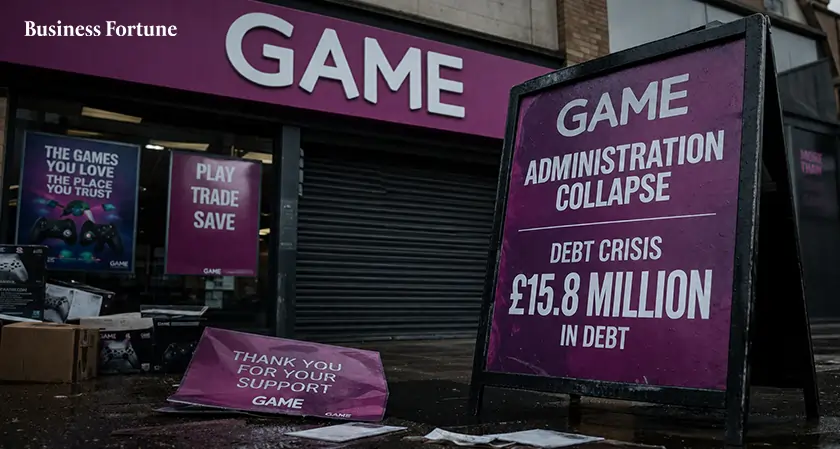
Once a leading UK gaming retailer, Game enters administration as economic pressures and digital disruption accelerate high street decline.
Game Retail Limited, the UK video games retailer, has entered administration after failing to overcome years of financial pressure, marking a major game retailer administration collapse. The company, once operating more than 300 stores nationwide, owes creditors nearly £15.8 million, including £3.5 million to a secured creditor and around £12 million to unsecured creditors.
Administrators from KR8 Advisory said the business became unviable due to changing consumer habits, digital gaming growth, rising competition and broader retail challenges.
Game’s Declining Retail Performance
Founded in 1990, Game developed into one of the UK’s best-known video game and console retailers. After being acquired from the former Game Group Plc administration in 2012, the company continued trading under the Game brand after consolidating operations and reviewing its store network.
Despite temporary periods of profitability, the retailer struggled as shoppers increasingly moved from physical game purchases to digital downloads. The shift reduced demand for traditional high street stores and affected the company’s long-term growth prospects.
Key factors behind the decline included:
-
Digital downloads replacing physical game sales
-
Rising competition across gaming retail channels
-
Brexit uncertainty affecting business confidence levels
-
Delayed console launches impacting trading performance
-
Changing consumer behaviour reshaping retail demand
Financial records showed the scale of the deterioration. Revenue fell from £584 million in 2016 to £493 million in 2017, while profit before tax dropped significantly. By 2019, Game reported losses of £43 million on turnover of £423 million, highlighting increasing pressure on its business model.
Frasers Group Support Fails to Reverse Decline
In an attempt to stabilise operations, Frasers Group acquired Game’s intellectual property and provided support for ongoing business activities and outstanding head office rent payments. However, the retailer continued facing financial difficulties despite these measures.
Administrators noted that the company’s position worsened during the final quarter of 2025, traditionally one of its busiest trading periods. Limited major console releases since 2020 and supply chain challenges, including global chip shortages, further affected sales opportunities.
The Game Retail Limited administration process began after its secured creditor withdrew financial support. Administrators concluded that the company’s financial and operational position meant the business was no longer viable.
Some Game concessions remain open through Frasers Group’s efforts to preserve parts of the brand. However, administrators expect that only secured creditors may receive payments, while unsecured creditors are unlikely to recover funds beyond the prescribed part.
According to Business Fortune, the demise of the game illustrates how digital disruption is still changing conventional retail models.
FAQs
What happened to Game Retail Limited?
Game Retail Limited entered administration after years of financial decline, rising competition and changes in how consumers buy video games.
What caused the Game retailer administration collapse?
The collapse was driven by the shift towards digital game downloads, fewer major console launches, changing customer behaviour and increasing pressure on high street retail.
How much debt did Game Retail Limited leave behind?
Game Retail Limited left approximately £15.8 million in debts, including £3.5 million owed to a secured creditor and around £12 million to unsecured creditors.
Is the Game brand shutting down completely in the UK?
Not entirely. Some Game concessions remain operational as Frasers Group continues efforts to preserve parts of the brand.
Will Game’s creditors receive repayment after administration?
Administrators expect that secured creditors may receive a distribution, while unsecured creditors are unlikely to receive significant payments beyond the prescribed part.


.webp)






























Comments