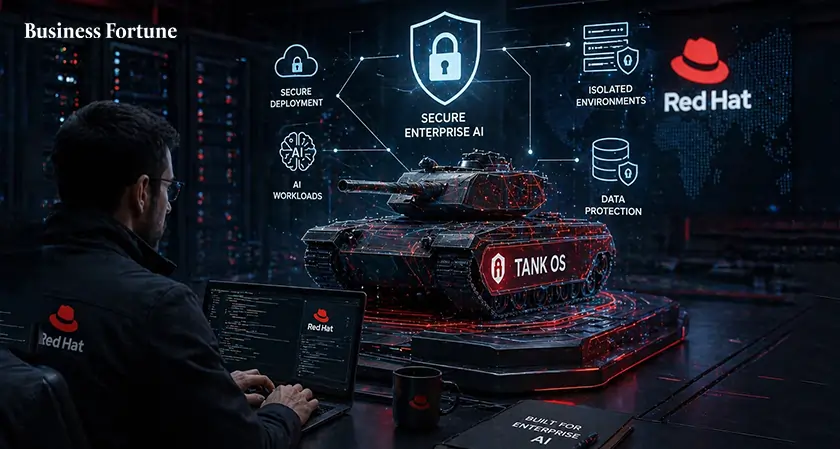
Red Hat’s Sally O’Malley introduces Tank OS, an open-source tool that simplifies secure enterprise AI deployment.
Red Hat principal software engineer Sally O'Malley has developed a new open-source tool called Tank OS, designed to simplify enterprise AI deployment in companies. Built over a single weekend, the project aims to solve a problem many enterprise IT teams have not yet fully recognized.
Tank OS packages OpenClaw, a fast-growing tool for running AI agents into a secure, ready-to-use system image. This image can be deployed across cloud servers, virtual machines, or physical computers. Instead of installing and configuring OpenClaw separately on each device, IT teams can now use one standardized image. Every machine that boots from it runs the exact same setup. Updates include simple steps like replace the image and reboot, without manual patching.
O’Malley said the project was both practical and forward-looking, adding that she wanted to make it accessible to a wider audience. Security is a key focus of Tank OS. Each OpenClaw instance runs inside a container, a controlled environment that prevents it from accessing other parts of the system. The tool uses Podman, a container platform developed at Red Hat. Podman is known for its “rootless” design, meaning containers do not get special permissions on the host machine, making them more secure.
Tank OS runs on Fedora and includes essential features like memory storage, API key management, and the ability to run multiple isolated agents on the same machine. Each agent operates independently, ensuring credentials and data are never shared.
O’Malley is also a maintainer of OpenClaw, working closely with its creator Peter Steinberger. This gives her unique insight into how the technology is evolving. While tools like NanoClaw and container solutions from Docker offer similar approaches, Tank OS stands out for its focus on enterprise use. It is especially useful for IT teams managing large numbers of AI agents.
However, O’Malley cautions that OpenClaw remains a powerful but complex tool. Without proper setup, it can prevent risks, including data loss or security breaches. Tank OS helps reduce those risks, but it still requires technical knowledge to use effectively.
Looking ahead, O’Malley believes tools like Tank OS will play a key role as AI agents become more widespread and interconnected. As AI infrastructure grows more complex, innovations like Tank OS signal a shift toward simpler and safer deployment. And as Business Fortune observes, this shift could quietly redefine how enterprises operationalize intelligent systems.
About the Author
Sowmiya Sri Mani is a writer for Business Fortune, covering AI, Robotics, Software, Entrepreneurship, and Opinion. She delivers clear and engaging insights on emerging trends and industrial developments, helping readers understand the evolving landscape of technology and innovation.


.webp)