Stakeholders gather in Abuja to address misuse of AML laws, seeking balanced solutions that protect civil society and curb illicit finance.
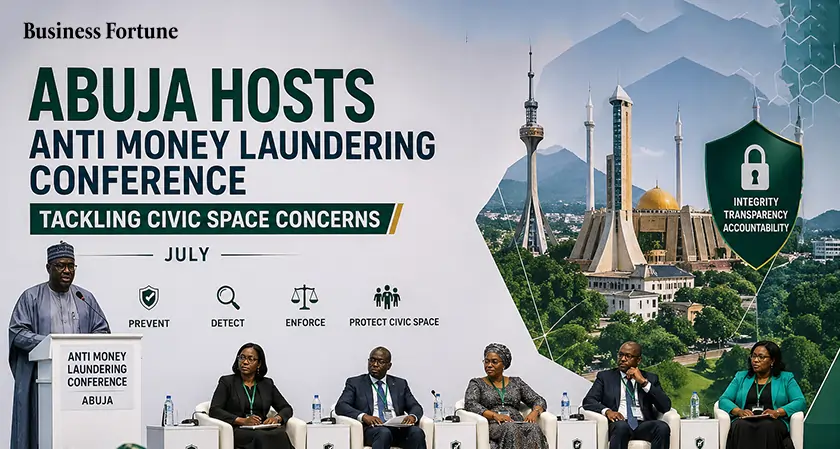
This July, Abuja will host a major continental conference on anti-money laundering that will bring together universal stakeholders, officials and leaders of civil society to discuss the delicate balance between preventing financial crimes and maintaining civic space throughout Africa.
The Third Africa High-Level Civil Society Anti-Money Laundering and Countering the Financing of Terrorism (AML/CFT) Conference was declared by Spaces for Change (S4C) and the Special Control Unit against Money Laundering (SCUML) of the Economic and Financial Crimes Commission (EFCC). The event will be held in the capital of Nigeria from July 14 to 17.
The conference's theme is "Implementing FATF Recommendation 8 Correctly: Practices, Lessons Learned and Opportunities for Reform," according to Executive Director Victoria Ibezim-Ohaeri. Around 200 people are expected to attend, including officials from the government, financial regulators, legal enforcement and international partners.
The gathering's main topic is the growing concern among civil society organizations over the improper use of anti-money laundering measures. Specifically, it has been stated that FATF Recommendation 8, which aims to stop non-profit organizations from being exploited for financing terrorists, has unintentionally restricted important humanitarian and development efforts.
The aim of the discussions, according to the organizers, will be on creating context-sensitive approaches that successfully combat illegal funding flows while maintaining civil society organizations' ability to operate freely. In underserved and conflict affected areas, these organizations frequently play a key role in providing help and services.
The conference expands on findings from earlier sessions in Kampala and Gaborone, where participants stated concerns about excessive legal and demanded risk-based frameworks that safeguard both financial systems and civic liberty, reflecting broader debates around money laundering Africa.
Panel discussions and policy discussions are all part of the 2026 program, which aims to translate international standards into workable, Africa-specific solutions. Future policy approaches are anticipated to be influenced by the conference's outcomes, which will integrate financial integrity measures with more general human rights and development objectives, reinforcing its role as a pan African summit.
Thus, Business Fortune is of the view that balanced AML reforms are essential to protect both financial systems and civic space.
About The Author
Mahadharani Vijay is a writer specializing in digital marketing, electric and concept cars, gadgets, and media and entertainment. She focuses on turning emerging trends and innovations into clear, engaging, and accessible stories for both professionals and wider audiences.


.webp)