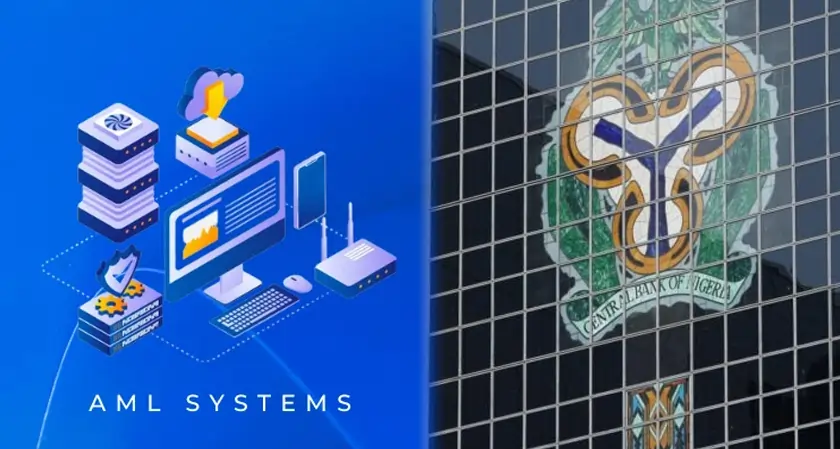
CBN requires Nigerian banks to implement automated AML technology within 18 months to strengthen detection of money laundering and other financial crimes.
The Central Bank of Nigeria (CBN) makes a significant change from largely manual compliance processes to technology-driven monitoring by establishing the Baseline Standards for Automated Anti-Money Laundering (AML) Solutions. Within 18 months, CBN mandates that banks and other financial institutions implement technology-driven systems that can identify suspicious transactions and improve financial crime compliance.
Any automated AML system must handle 12 different areas of competency, which are covered in the 27-page baseline requirements document. These include AI and machine learning-powered real-time transaction monitoring, automated KYC and customer due diligence procedures, screening for politically exposed individuals and sanctions, dynamic risk assessment, enterprise case management, regulatory reporting, audit governance, system integration, data protection, and fraud monitoring.
According to these regulations, all Nigerian financial institutions must put in place automated systems that can identify and stop money laundering, financing of terrorism, and financing of proliferation. The CBN stated in its new framework that "manual AML/CFT/CPF controls are no longer sufficient to manage evolving risks as financial services become increasingly digitized and complex."
According to the CBN, traditional compliance measures are insufficient to identify sophisticated financial crime as Nigeria's financial system grows more digital due to mobile banking, fintech platforms, and quick payments. Integration with national identity databases, such as the Bank Verification Number and National Identification Number systems, is mandated by the CBN guidelines.
The criteria are applicable to all institutions that are subject to CBN regulation. However, the extent of implementation varies according to the size, transaction volume, operational scale, and risk exposure of each institution. CBN stated that institutions that do not follow to the requirements might face regulatory penalties under current banking and financial crime laws after the implementation period was passed. Additionally, theme reviews, on-site inspections, and off-site surveillance will be used to track adherence to the framework.


.webp)