As AI agents advance, CIOs are rethinking software design, governance, and workflows while maintaining human oversight in critical operations.
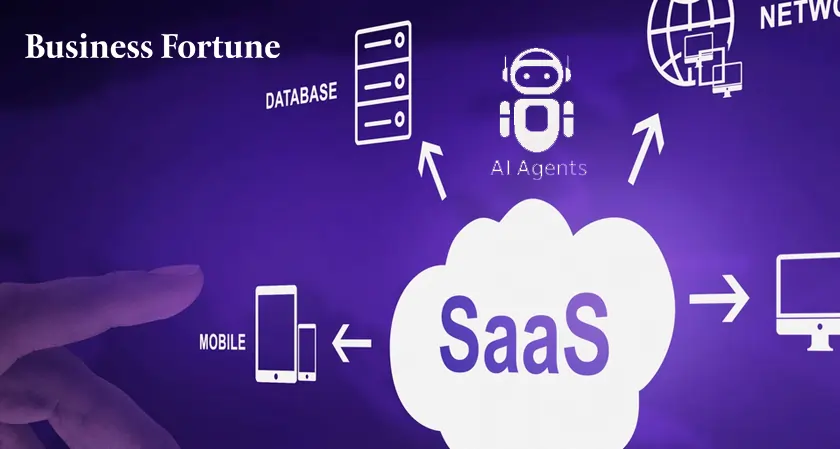
Chief information officers are forced to reconsider not only software tools but also the very framework of digital work as AI agents become more integrated into business operations. What seemed to be a direct danger to software-as-a-service platforms is now turning out to be something more subtle: reinvention rather than replacement.
The shift is causing CIOs to reexamine how software is developed, used, and governed. Some companies are utilizing AI to completely rethink workflows instead of just adding it to existing systems. AI is already being used in software development, forecasting, and customer service operations at healthcare and pharmaceutical organizations to decrease human tasks and increase process efficiency.
It's becoming evident that a significant update to the program interface itself may be imminent. AI agents are increasingly expected to manage tasks across systems, while humans monitor results through streamlined control layers, rather than employees hopping between several dashboards and applications. This indicates that workplace software will become more action-oriented and less screen-heavy in the future.
However, the majority of CIOs are not adopting complete autonomy. Reliability, visibility, orchestration, and governance issues are still too important to overlook. Business executives may embrace automation, but few are ready to let a lot of AI agents make choices on their own inside crucial systems. For the time being, enterprise adoption still heavily depends on human monitoring.
That is why, from the perspective of a CIO, SaaS is not dying, but rather entering a new phase of software complexity. Enterprise applications are unlikely to be eliminated by AI agents. They will probably change them, forcing CIOs to strike a balance between control and innovation as the next generation of corporate architecture emerges.
Thus, Business Fortune is of the view that AI agents are not replacing enterprise software, but redefining how CIOs will shape its future.


.webp)