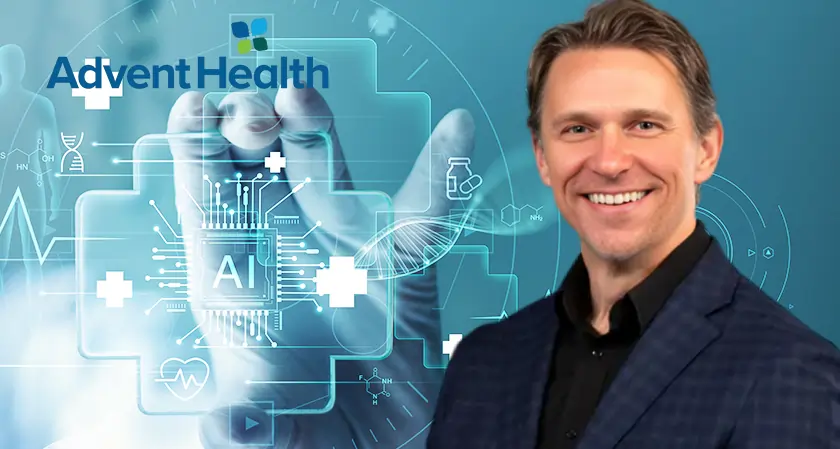
Grodack urges health IT leaders to use AI and digital tools to reduce clinician workload and improve patient trust.
Duncan Grodack, Chief Information Officer at AdventHealth, feels that the healthcare sector needs to remain focused on a single idea as it expands its use of digital tools and artificial intelligence: technology should improve, not interfere with, the human connection between patients and clinicians.
Grodack stated that trust between patients and clinicians is essential to providing successful care and that healthcare is very personal. However, that relationship may be weakened by time spent traversing digital systems, extensive documentation and administrative complexity. He claims that health IT professionals should create solutions that streamline clinical operations so that caregivers may devote more time to patient care, guidance and listening.
The future of health IT, according to the CIO at AdventHealth, is not about providing more tools but rather about creating more intelligent systems that work in the background while medical professionals concentrate on providing care. Artificial intelligence-based summaries and ambient documentation are examples of innovations that already help in lowering administrative burden and freeing up clinicians to focus more on patients.
AdventHealth is investing in technology that improves patient and family relationships in addition to increasing physician productivity. Patients can more quickly explore services, message care teams and make appointments via its mobile app. Also, the platform enables patients to get in touch with care advocates for support and direction throughout their care journey.
The health system is implementing smart rooms in hospitals so that family members may virtually participate in care discussions, get real-time treatment plan updates and have video consultations with specialists. Duncan Grodack stated, these features are intended to increase unity and provide patients and their families with clarity.
Grodack's suggestion to health IT leaders is simple: start with the human issue instead of the technology. Organizations can implement digital innovation in ways that genuinely improve care experiences while maintaining the human element of healthcare by concentrating on areas where clinicians lose time or patients feel confusion.


.webp)