A Forensic Chemistry study finds that chemical fingerprints in 3D printer filaments could help investigators track so-called untraceable ghost guns.
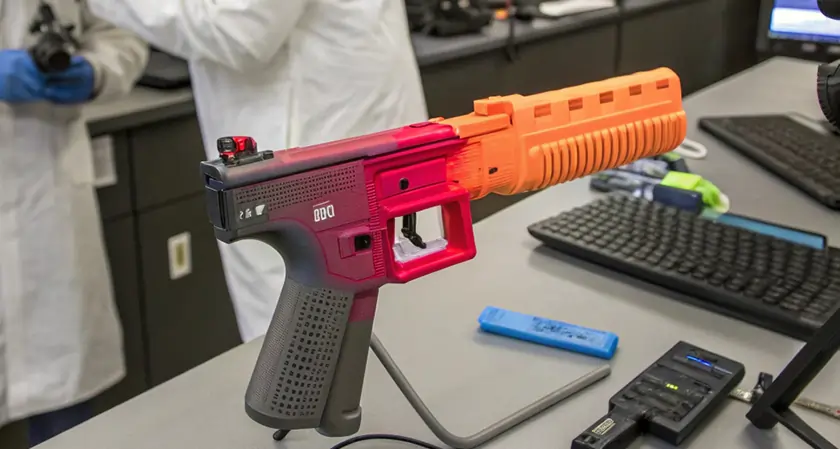
A recent study published in Forensic Chemistry casts doubt on a widely held notion regarding 3D-printed homemade guns. Often touted as untraceable, known "ghost guns" are built using hardware store components and 3D-printed pieces. However, scientists now claim that's not entirely accurate.
The study concentrated on filaments, which are microscopic plastic strands that are fed into 3D printers. Despite having the same form, these filaments have different chemical signatures. The scientists discovered that numerous filaments could be identified from one another by their chemical fingerprint using infrared spectroscopy.
This is crucial because, by comparing the chemical profile of the filament, investigators may be able to trace the origin of a handgun produced using a particular type of filament. Currently, the majority of ghost firearms don’t have serial numbers and don't leave much of a trace when examined using normal forensic techniques. The fresh approach might provide a solution to that.
Researchers studied over sixty filament samples from Australian retail establishments in a realistic test. Most filaments comprised of various polymers, such as PLA, ABS, and PETG, might be divided by them. Due to special changes, even filaments manufactured from the same base material occasionally displayed differences. Distinct infrared signals were produced by these minute changes in composition.
According to experts, this method is not yet infallible. To create a more complete chemical picture, more research with different analytical instruments is required, as not all filaments could be individually recognized. The findings, however, raise the possibility that the term "untraceable" used to describe ghost guns may be simplified.
The study also coincides with growing concerns about how easily weapon designs for 3D printing can spread online and how they may be merged with common parts to create working guns. Traceability developments may change how legal enforcement handles these cases in the future.


.webp)