One of the most frightening stories in Bondi Beach news has emerged from what started as a quiet evening by the sea. Bondi Beach, a popular tourist attraction worldwide, has become the focus of terror attack breaking news due to the terror assault, which has caused waves of pain and disbelief throughout Australia and beyond. A startling clue has surfaced from India as detectives piece together the circumstances leading up to the fatal attack: the family of accused assailant Sajid Akram asserts they did not know any purported radical mindset or extremist leanings.
Akram had no communication with family back home, according to Australian and Indian officials, which raises challenging issues around radicalization, loneliness, and warning indicators that can go unreported internationally. This changing terror attack news emphasizes the intricate, worldwide nature of contemporary security threats, as well as the human stories caught in their wake, as the investigation continues.
Bondi Beach News: What Happened at the Sydney Hanukkah Celebration
What was supposed to be a happy Hanukkah celebration at Sydney's famous Bondi Beach on December 14, 2025, instead became one of the worst days in Australia's recent history. More than 1,000 people were enjoying the festival of lights on the beach at the "Chanukah by the Sea" event when gunmen suddenly and brutally opened fire on the gathering, causing panic right away.
The massacre was eventually determined by authorities to be a terrorist attack that specifically targeted Jewish Australians who had gathered for the holiday. According to witnesses, hundreds of participants were forced to flee over the dunes and surrounding streets in fear as gunfire reverberated after the first rounds were fired in the early evening, at approximately 6:47 p.m.
The assault was allegedly committed by Sajid Akram, 50, and his son Naveed Akram, 24. While his kid was injured and is still in the hospital under guard, the older suspect was slain on the spot by the responding police.
15 people were killed in the incident, including a 10-year-old girl and an 87-year-old Holocaust survivor. Dozens more were injured, including police officers and children. Additionally, investigators discovered abandoned homemade explosives close to the location that were subsequently secured.
Prime Minister Anthony Albanese called the violence "vile" and "evil" and emphasized that it was a planned act of antisemitic terror. Australian politicians promptly denounced the incident. With repercussions both domestically and internationally, the tragedy has now turned into Australia's bloodiest mass shooting in almost 30 years.
Suspects Identified: Father and Son behind the Bondi Beach Massacre
The world got to know that a father and son duo had unleashed horrific violence at a Hanukkah celebration on Sydney's famous shoreline when police revealed the identities of the men suspected of carrying out the Bondi Beach terror attack. The perpetrators, according to investigators, were 50-year-old Sajid Akram and his 24-year-old son Naveed Akram. These two individuals are currently at the centre of the terror attack news that has engulfed Australia and the rest of the world.
Authorities claim that Sajid, who was born in Hyderabad, southern India, had lived in Australia for almost thirty years, had a firearms license, and had lawfully obtained several of the weapons used in the shooting. While his son Naveed was shot, survived, and is currently in the hospital under security, he was slain by police at the scene of the incident.
Since the Bondi Beach massacre is being investigated as a terrorist incident, Naveed has been formally charged with numerous offenses, including multiple counts of murder and performing a terrorist act. Authorities have also discovered a concerning past: intelligence services had previously investigated Naveed for ties to extremist groups, and information found indicates that the two may have been driven by ideology influenced by the Islamic State.
The identities and motivations of the father and son continue to be a major focus of reporting on the Bondi Beach terror attack as police work to piece together exactly how they planned and carried out the attack. This highlights the ongoing concerns about radicalization, familial ties, and how such atrocities can arise from seemingly ordinary lives.
Family in India ‘Unaware of Radical Mindset’: Police Statements
According to Indian officials, the family of Sajid Akram, who was implicated in the Bondi Beach terror attack, did not know any purported extremist ideology. After relocating to Australia in 1998, Akram, who was originally from Hyderabad, had little contact with family in India, according to Telangana police.
Officials claim that Akram only sporadically traveled to India for personal reasons and that neither family members nor neighbors had raised any indications of extremism or strange behavior. According to Indian authorities, he has no criminal or negative record in India, indicating that any radicalization most likely took place outside of the nation.
The revelations, which highlight how radicalization can go unnoticed across borders and leave families and communities shocked in the wake of such devastating terror attacks news, have added a complex dimension to the ongoing Bondi Beach news.
Global and Local Reaction to the Bondi Beach Terror Attack
The Bondi beach news has drawn strong reactions from political leaders, communities, and governments worldwide, marking one of the most disturbing episodes in recent Australian history. Australian Prime Minister Anthony Albanese condemned the shooting as a terrorist act fueled by hatred, stressing that such violence has no place in the country’s multicultural society. Federal and New South Wales authorities echoed the message, pledging full support to the victims’ families while reinforcing security around major public spaces, religious institutions, and community events.
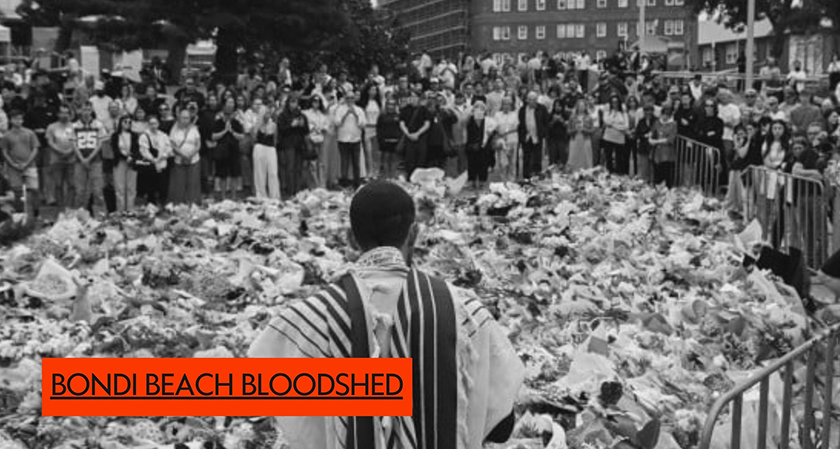
At the local level, the attack deeply shook residents of Sydney and surrounding regions. Candlelight vigils were held near Bondi beach and in major cities across Australia, where mourners laid flowers, lit candles, and observed moments of silence. Community leaders, faith representatives, and civil society groups called for unity and calm, emphasizing that fear and division must not be allowed to overshadow shared values of tolerance and coexistence.
Internationally, the incident featured prominently in terror attack breaking news, prompting condolences from world leaders and governments across Europe, Asia, the Middle East, and North America. Several countries expressed solidarity with Australia and the Jewish community, condemning the violence and reaffirming their commitment to combating extremism and antisemitism. Interfaith organisations and human rights groups also issued statements rejecting the attack and urging global cooperation to address radicalisation.
As investigations continue, the widespread reaction reflects not only collective grief but also growing concern over the rise of lone-actor and cross-border radicalisation. The tragedy at Bondi Beach has become a global reminder of the need for vigilance, community resilience, and sustained efforts to counter hate-driven violence, both in Australia and beyond.
Ongoing Investigation: Motive, Philippines Trip and Terror Links
Authorities in Australia and elsewhere have quickly broadened their investigation into the Bondi Beach news, concentrating on the potential motivations and global relationships that may have led to the fatal assault. According to preliminary research, the slaughter, which occurred during a Hanukkah celebration on Sydney's famous Bondi Beach, was motivated by extreme ideology, specifically that of the Islamic State (IS). This makes it one of the most important terror-related incidents in recent Australian history.
The two alleged attackers, father and son Sajid and Naveed Akram, traveled to the Philippines for a month in November 2025, just weeks before the shooting, which is a crucial aspect of the inquiry. According to Philippine immigration records, they arrived in the country on November 1 and left on November 28; their final destination was stated as Davao on the island of Mindanao.
Although the specific reason for this journey has not yet been ascertained by Australian authorities, investigators think it may provide information about how the two were radicalized or whether they wanted to connect with militant networks. Although extremist organizations, including branches that formerly supported IS in the area, have historically called the southern Philippines home, Manila officials claim there is currently no solid proof that the Akrams got official training there.
Police in Sydney discovered two homemade Islamic State flags and improvised explosives in a car connected to the suspects, supporting the theory that the attack was largely motivated by ideology.
Security organizations are also assembling the attackers' broader background at the same time. In order to better understand when and how extremist influences spread, investigators continue to examine digital and travel records. Australian intelligence had previously shown interest in the younger suspect. Officials have publicly described the attack as a terror act motivated by extreme ideology rather than solitary violence, even if the specifics of the motive are still being investigated.
A Nation in Mourning, a World on Alert
Australia has been shocked by the Bondi Beach terror attack, which has also brought attention to the growing threat of extremist violence on a worldwide scale. What happened at a tranquil party by the sea has shown how radicalization can happen covertly, internationally, and outside of families' and communities' understanding. The tragedy serves as a sobering reminder of the necessity of alertness, collaboration, and togetherness in the face of terror, while paying tribute to the victims whose lives were needlessly lost, as investigators continue to unearth the motivation and links behind the attack.


.webp)