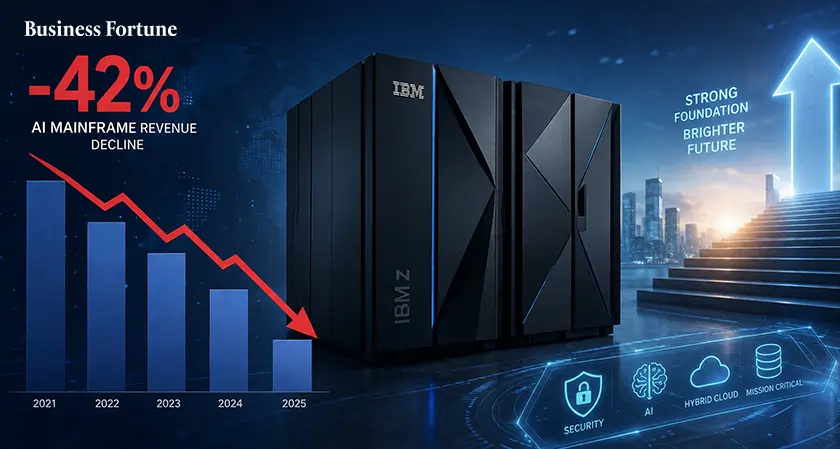
IBM has introduced a new chip that might increase AI for its clients and change the way some industries manage jobs involving a lot of data.
In an increasingly AI-driven world, the Telum II processor may offer faster, smarter operations for large enterprises that still depend on IBM's formidable mainframe systems. Banks may detect fraudulent activity faster, insurance may handle claims more precisely, and merchants may provide more individualized shopping experiences.
Due to global demand for additional processing power from enterprises, the market for AI chips is expanding rapidly. Revenues for Nvidia, AMD, and Intel have increased, while Microsoft, Amazon, and Google are among the industry behemoths creating specialized AI processors. This chip rush is a result of AI applications becoming more and more commonplace, such as chatbots and driverless cars. The ensuing rivalry has sparked innovation, cutting costs and expanding the realm of machine learning and data processing capabilities.
Experts predict that the revolution in AI chips will have a significant impact on trade. Retailers can now evaluate customer behavior in real-time and adjust inventory and promotions to maximize sales by utilizing powerful AI hardware. In order to prevent losses of billions of dollars, financial institutions are implementing advanced fraud detection systems that can handle millions of transactions per second. Supply chain managers may reduce costs and increase efficiency by using AI to forecast disruptions and optimize routes.


.webp)