30 Most Innovative Companies of the Year 2024
Business Fortune
In the past few years, tech enthusiasts have been having more and more debates about smart cities. It should come as no surprise. Forever, we have been envisioning the cities of the future. The difference now is that we possess the technological know-how to make that imagined future a reality.
Naturally, the city in question isn't a Jetsons-style one with flying automobiles and residences perched above the skies. We are discussing cities that are remarkably similar to our own but have been greatly advanced by recent technological advancements. The objective is to improve the lives of all inhabitants by utilizing various tools and technologies like automation, machine learning, and artificial intelligence.
Our cities are going to get "smarter" thanks to the Internet of Things, and software development will be crucial to that process. And 4M Analytics is building exactly that.
The first digitally updated map of subsurface and above ground utilities has been built by 4M Analytics. This one trustworthy source of information provides the assurance required for all parties involved to plan, design, and build infrastructure. The tool that allows them to achieve this is the company's technology, which combines artificial intelligence with satellite photography.
4M Analytics’ story is never talked about but touches each and every one of us
The Romans used gravity and tunnels for water, sewage, electricity, oil, gas, communication, and transportation, creating a complex underground environment. Today, the underground is filled with man-made infrastructure, and its use continues to grow.
We don't know how to manage the buried infrastructure because we lack information about its location. This problem exists even in advanced countries and leads to frequent incidents. These incidents not only pose safety concerns but also cause delays and unexpected costs, depriving people of basic necessities like electricity and gas. However, 4M Analytics has a solution. They developed a software platform that combines remote sensing, artificial intelligence, and computer vision to accurately locate underground infrastructure. This can be done from anywhere, including their offices or yours. Their platform eliminates the need for manual records, automates field investigations, and minimizes the requirement of utility exposure. Compared to current solutions, 4M Analytics provides accurate subsurface mapping at a much lower cost and in less time. And there's more to it!
4M Analytics offers a platform that goes beyond its initial purpose. It can create conflict maps, utilize an app to prevent accidents with excavators, solve RCP (Reinforced Concrete Pipe) scenarios, and assist stakeholders in obtaining necessary permits for excavation. This is just for the utility sector. The potential for what can be achieved in agriculture, the environment, and defense is even greater.
In our current reality, it is crucial to have an accurate and up-to-date understanding of the subsurface terrain. This is especially important as we face the challenge of quantifying the extent of buried infrastructure in the coming years and decades. 4M Analytics provides the ultimate solution for this.
The story of 4M Analytics begins with the Romans, continues with our present challenges, and evolves into the future. It is the story of exploring the underground world.
Never plan in the dark again — 4M Analytics’ innovative Utility Mapping
A thorough utility map is now accessible. Every site's financial plan and timeline
A digital depiction of a site's underground infrastructure and geography is called utility mapping. Utility maps are used to locate and precisely identify subterranean utility infrastructures, including sewage systems, telecom cables, electric wires, and pipes carrying gas and water. Utility mapping is a process used to locate underground infrastructure prior to starting construction or other excavation-related work. By doing this, workers and surrounding communities are protected, and subterranean infrastructure is kept safe. As a result, initiatives, including the groundbreaking process, go without problems or setbacks.
A variety of methods are used in underground utility mapping to produce maps of subsurface utilities. Digital depictions of the chosen region and its underlying infrastructure make up these maps. Before starting construction or other tasks that require breaking ground, underground mapping is necessary. Artificial intelligence (AI), ground penetrating radar (GPR) technology, and electromagnetic locators (EML) are just a few of the many technologies utilized to construct subsurface maps.
Before starting any construction work, subsurface infrastructure is identified through underground utility studies. These scans and assessments assist in removing risks to workers and communities, costly legal repercussions, and postponed project completion. Utility mapping, which gives precise and comprehensive information on the locations of subterranean utilities, is essential for preventing utility disputes. Project teams can make well-informed judgments during the planning and design stages by mapping the existing utility infrastructure, which includes gas lines, water pipes, electrical cables, and communication networks.
For accuracy and dependability while mapping utilities, the best procedures must be followed. The first stage in producing a detailed utility map is thorough record research, which may be accomplished by utilizing resources like 4M Analytics, which contains a range of utility data produced by combining AI, photography, and records. The best way to confirm the utility data you have collected would be to collect and perform GPR scans after you have the pertinent data for your region of interest.
Meet the Co-founder and CEO
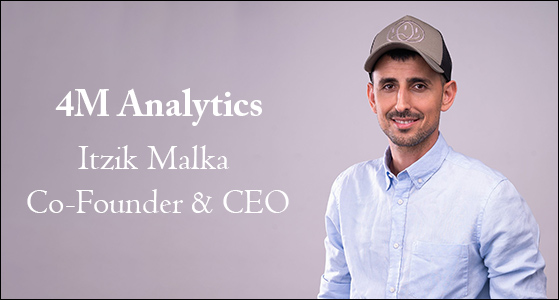
Itzik Malka is the Co-Founder and CEO of 4M Anlytics.


.webp)