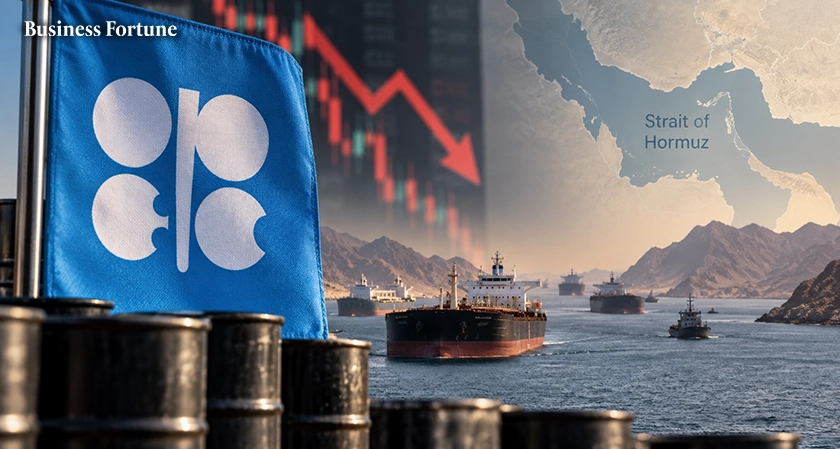
Six months into the conflict, Hormuz disruptions, weaker Asian demand, and shifting production shares are reshaping global oil market dynamics.
Six months into the Middle East conflict, OPEC+ market influence has weakened as disruptions around the Strait of Hormuz reduce the alliance’s ability to translate production decisions into physical oil supplies. OPEC+ accounted for about 40% of global oil output in July, down from more than 48% before the conflict, while its seven core producers represented only about one-quarter of global production.
Strait of Hormuz Shifts Oil Market Power
The Strait of Hormuz has become central to the changing oil market. The shipping volume via the route has been significantly lower than usual, hindering the export process from countries such as Saudi Arabia, Iraq, and Kuwait. As mentioned by Reuters, only four commercial ships transited through the Strait on September 3, whereas the 10-day average is 15.
The OPEC+ cartel has been consistently reporting an increase in production numbers; however, the actual capacity to export these barrels has been limited. The group decided on increasing production by an additional 188,000 barrels per day in September 2026.
Key developments in the global oil market include:
-
OPEC+ share fell to about 40% in July.
-
Hormuz disruptions constrain Middle Eastern oil exports.
-
Six production increases have delivered limited physical supply.
-
UAE withdrawal further reduced OPEC+ market share.
-
Asian demand is gaining greater pricing influence.
The United Arab Emirates’ departure from OPEC in May also contributed roughly four to five percentage points to the alliance’s declining global production share. The change adds to broader questions about OPEC+ coordination and its ability to manage supply during prolonged geopolitical disruptions.
Asian Demand Becomes a Bigger Market Variable
While supply constraints remain significant, weaker Asian crude demand is increasingly influencing the global oil market. China’s reduced imports have emerged as a major balancing force, limiting the potential for prices to rise despite severe disruptions to Middle Eastern supply.
For Asian refiners, the changing oil supply chain is also affecting procurement decisions and feedstock availability. Sparta Commodities has noted that Indian and Far Eastern buyers are now placing more emphasis on forward shipments from other sources due to the uncertainty about Hormuz supplies.
These implications will have an effect on the market for petrochemical feedstocks, which can be impacted by changes in crude availability, refinery usage rates, and refined product flows. Thus, chemical firms could find themselves more vulnerable to supply interruptions and demand trends.
The evolving Middle East oil market could ultimately become more multi-centred, with Gulf producers, U.S. shale output and major Asian consumers exerting influence through different channels. For energy and chemical businesses, this means geopolitical risk, shipping conditions and demand trends will increasingly need to be assessed together.
Thus, Business Fortune believes that shifting oil flows, Asian demand, and geopolitical disruptions will redefine global energy supply chains and pricing dynamics.


.webp)































Comments