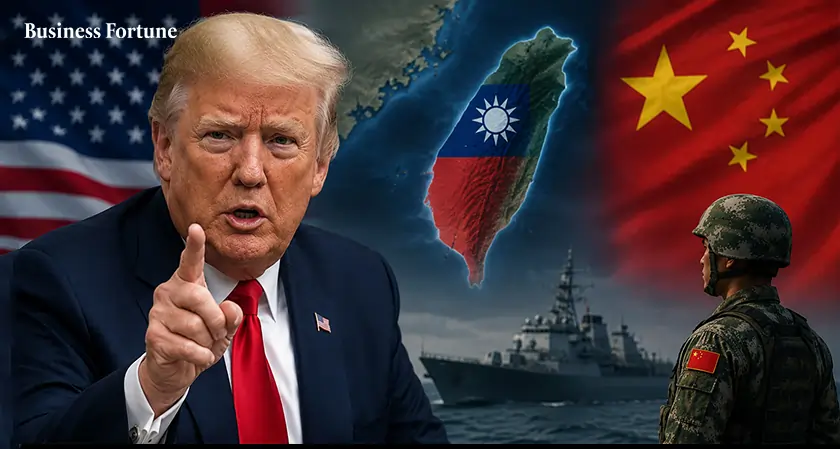
Trump cautions Taiwan against declaring independence, signaling caution after Xi meeting amid rising geopolitical tensions across the Taiwan Strait.
-
Trump warns Taiwan against declaring formal independence
-
US stresses need to avoid escalating regional tensions
-
China reiterates Taiwan is part of its territory
-
Analysts note rising military and diplomatic pressures continue
US President Donald Trump warns Taiwan against formally declaring independence from China, stating that he is not looking to take any action that may increase tensions across the Taiwan Strait. Trump stressed the need to prevent conflict in the region in an interview following a two day meeting with Chinese President Xi Jinping in Beijing.
While Taiwan, formally led by President Lai Ching-te, sees itself as a sovereign democracy, Beijing maintains that Taiwan is a part of its zone and has not ruled out the use of force to achieve unification. The majority of Taiwanese support maintaining the current situation rather than official independence or reunion.
Trump stressed that Washington has historically maintained unofficial connections with Taipei while opposing Taiwanese independence, stressing that US policy toward the island has not changed. He recognized that he had not made any specific commitments, but he did indicate that he and Xi were still discussing the island's defense.
He also declared the problems in US military preparation, stating that he did not want the US to become involved in a distant war. He stated, "I want them to cool down," referring to Washington's and Beijing's strategies concerning regional problems.
China views Taiwan as a fundamental national interest. According to claims, Xi Jinping warned Trump that the Taiwan issue is crucial to US-China affairs networks and that managing it improperly could end in conflict. According to Chinese official media, Xi is strongly opposed to any island independence movement.
Concern in regional capitals has been raised by China's intensified military exercises around Taiwan in recent years, which have worsened tensions. Beijing criticized the Trump administration late last year for approving an 11 billion dollar arms package for Taiwan, which included missile systems.
Trump stated he would examine the agreement and that he had had a thorough conversation with Xi about it. In contrast to the US norm, he also hinted that he might have an open dialogue with Taiwan's government.
Taipei officials stated they were closely monitoring the allegations. While Foreign Minister Lin Chia-lung reiterated Taiwan's commitment to peace and ongoing relationships with Washington, Deputy Foreign Minister Chen Ming-chi stated that US arms sales are protected by US law and continue to be a crucial component of regional stability.
Analysts say the latest remarks underscore Washington's efforts to maintain a balance between formal and informal ties with Taipei in the face of increasing regional unpredictability while avoiding explicit security guarantees.
Thus, Business Fortune is of the view that US-China-Taiwan tensions will remain delicately balanced amid cautious diplomatic signaling.


.webp)