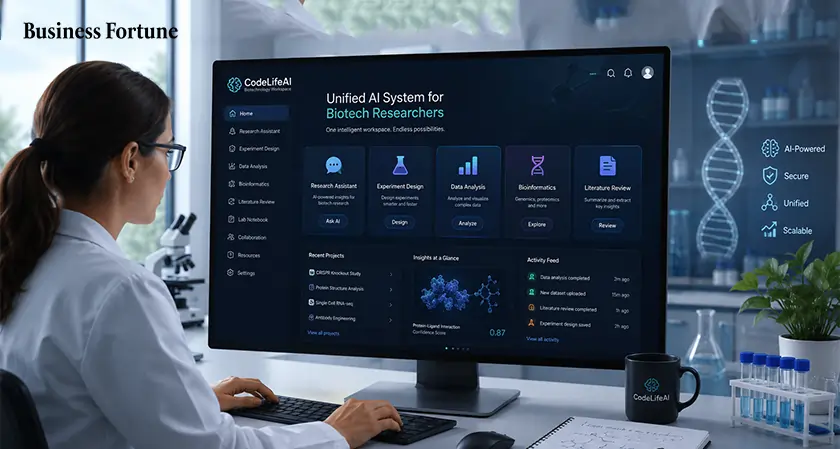
CodeLifeAI launches an AI-native workspace that unifies DNA design, protein engineering, cell simulation, and research management into a single platform for biotechnology researchers, academic labs, and biotech startups.
CodeLifeAI has launches a new AI-native workspace designed to change how biotechnology research is planned, built and managed. CodeLifeAI biotechnology workspace brings key scientific tasks into one system, aiming to reduce the fragmentation that slows down modern life science work.
The company believes biotechnology is moving toward a more integrated and AI-driven future. Instead of separate tools for each step, research will happen inside unified environments that combine computation, simulation and planning.
Why is biotechnology research becoming harder to manage
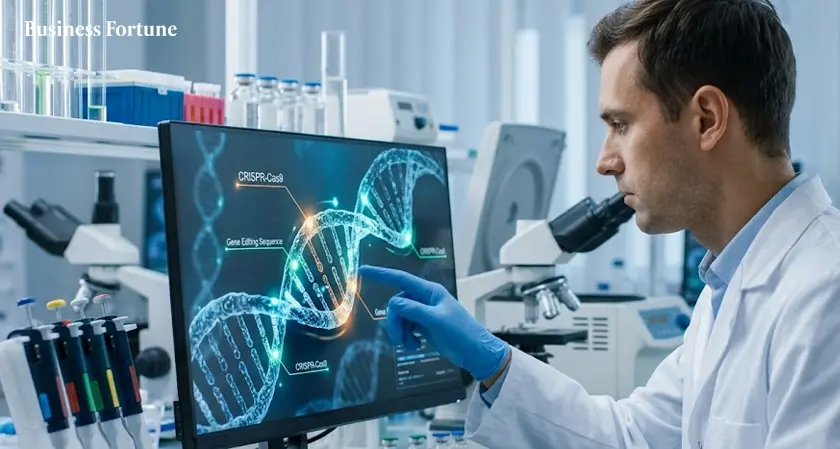
Biotechnology today depends heavily on computing tools. But most researchers still use separate platforms for different tasks like DNA design, protein modeling, data analysis, and writing research papers. This creates gaps in workflow and slows down progress.
CodeLifeAI says it was built to fix this problem by offering one connected environment where biological ideas can move smoothly from concept to simulation and then to execution.
What exactly does the platform include
The workspace is designed as a complete research system, not just a single tool. It combines multiple scientific functions into one interface.
Key modules include:
-
DNA Design workspace for plasmid planning, CRISPR-related design, sequence analysis, and genetic constructs
-
Protein Engineering workspace for structure prediction, molecular visualization, and protein design
-
Cell Simulation workspace to study biological behavior and test ideas virtually before lab work
-
AI Scientific Assistant for experiment planning, reasoning, interpretation, and scientific writing support
-
Research management tools for lab coordination, data organization, and project tracking
Together, these tools aim to help researchers move from idea to result without switching between disconnected systems.
“Biology needs a system that thinks with researchers”
Founder Dr Keith Kwong says the platform was created to match the growing complexity of biotechnology. He explains that modern research is no longer a linear process. Scientists often need to design DNA, analyze proteins, plan experiments, and manage data all in the same workflow. According to him, existing tools do not fully support this level of integration.
The goal of CodeLifeAI is to create a workspace that understands biological logic and helps researchers think through problems, not just store data or run isolated tasks.
Who can benefit from this platform
The system is designed for a wide range of users working in life sciences, including:
-
Synthetic biology researchers
-
Protein engineering teams
-
Academic laboratories
-
Biotech startups
-
University research groups
-
Advanced research students
It is also positioned as a learning environment for students who want exposure to real-world biotech workflows in a structured setup.
What does this mean for the future of biotech
CodeLifeAI describes this platform as the next stage of scientific work, where researchers can move more quickly between ideas, experiments, and results. With the launch now public, CodeLifeAI is inviting researchers, universities, and biotech companies to test the platform, request demonstrations, and explore partnerships. As Business Fortune observes, the company’s long-term aim is to make biotechnology research more connected, faster, and easier to manage in one intelligent workspace.


.webp)